

 Tiếng Việt
 ភាសាខ្មែរ
In this article, we will learn about the aspects of steel base plate processing services at Bao Tin Steel, from the production process to widespread applications in different industries.
Learn about steel base plates.
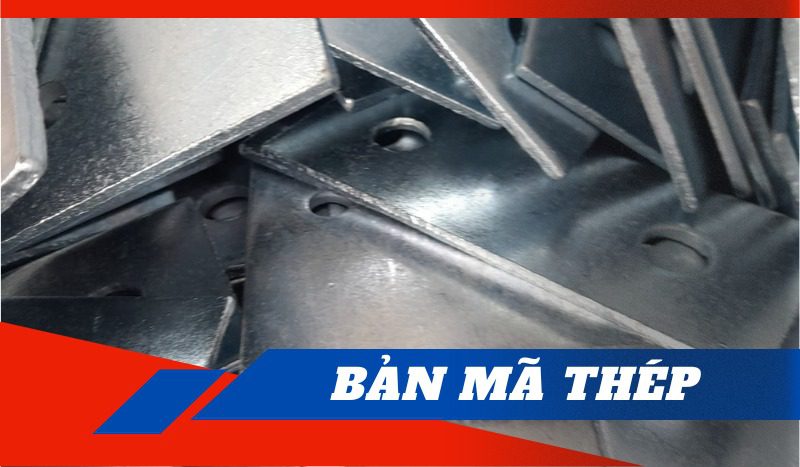
Steel base plates are pieces of steel cut into specific shapes, and holes are punched into them according to the drawings.
Normally, to facilitate construction, the base plate is cut according to:
- Square
- Trapezoid
- Rectangle.
A few are cut rectangular or square but bent 90 degrees.

What type of steel is the steel base plate made from?
If it is a material, it is also a material for structural construction. It’s impossible to ignore the most important factor, steel grade, right?
Steel grades depend on your project design drawings. If the project requires any steel grade, use that steel grade to cut the base plate.

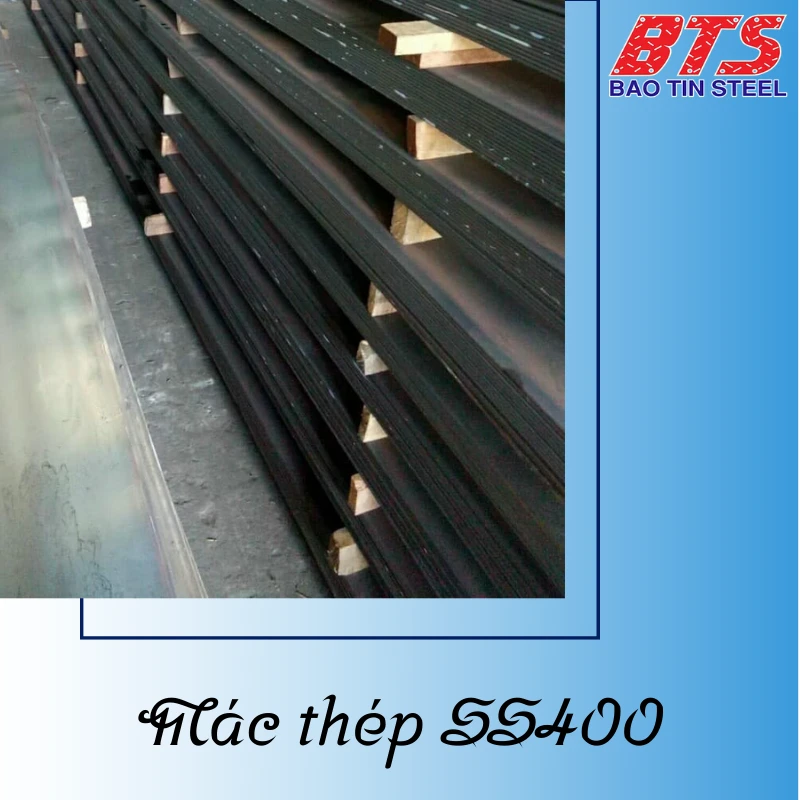
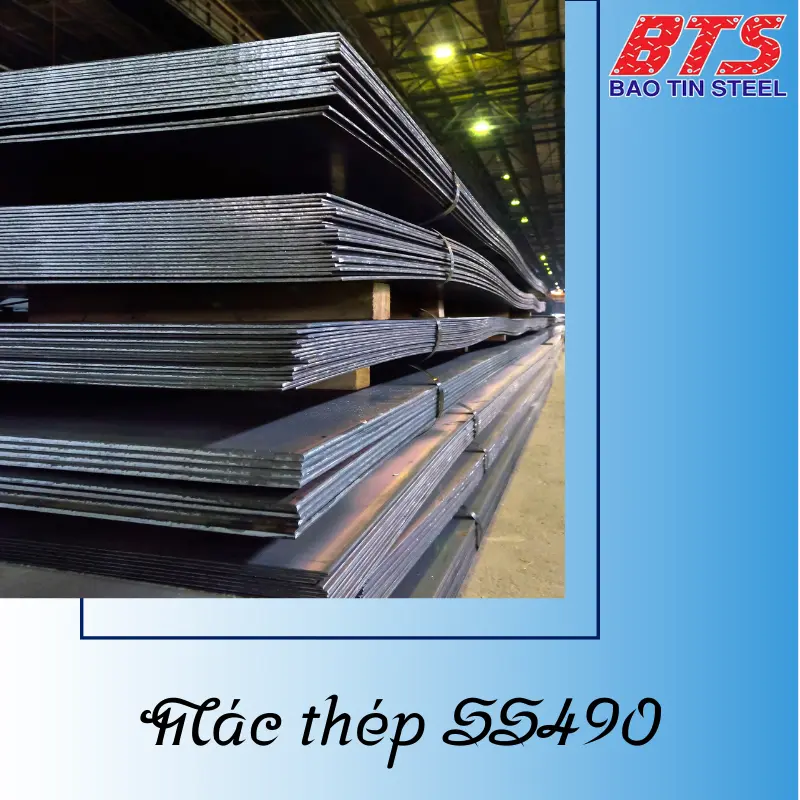
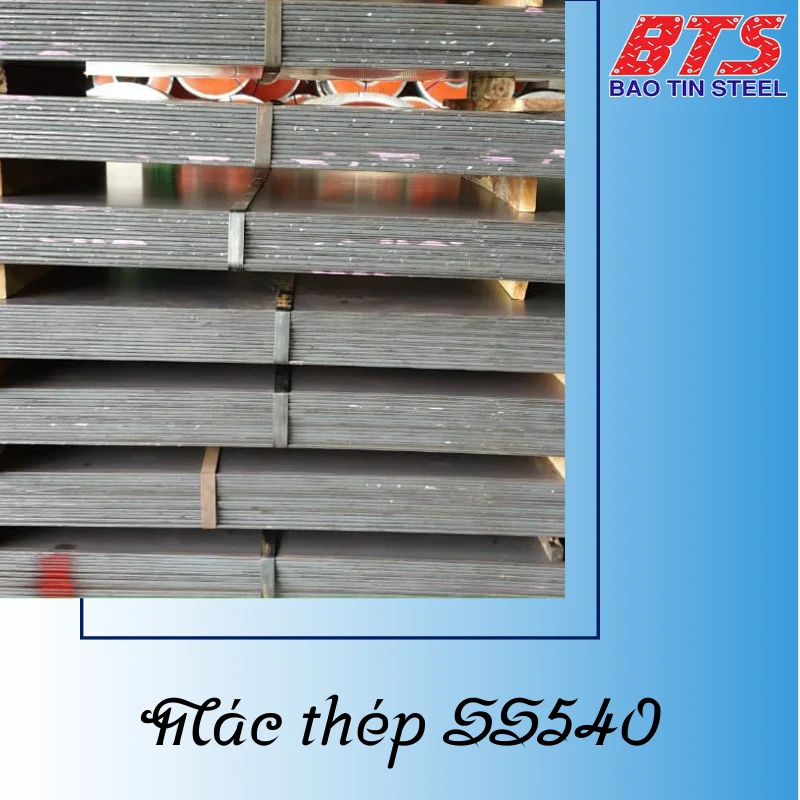
At Bao Tin Steel, we often receive orders requiring steel grades produced according to JIS G3101 standards:
| STEEL GRADE | CHEMICAL COMPOSITION | MECHANICAL PROPERTIES | |||||||||||
|---|---|---|---|---|---|---|---|---|---|---|---|---|---|
| pull test | Bending test | ||||||||||||
| Flow limit (Mpa) | Durability limits (Mpa) | Thickness T | Test sample | Elongation (%) | Góc uốn | Bending radius | Test sample | ||||||
| C | Si | Mn | P | S | T ≤ 16 | ||||||||
| SS330 | – | – | – | ≤ 0.050 | ≤ 0.050 | ≥ 205 | 330÷430 | T ≤ 5 | Template 5 | 26 min | 180 ◦ | 0.5 x T | Sample 1 |
| 5 < T ≤ 16 | Template 1A | 21 min | |||||||||||
| SS400 | – | – | – | ≤ 0.050 | ≤ 0.050 | ≥ 245 | 400÷510 | T ≤ 5 | Template 5 | 21 min | 1.5 x T | Sample 1 | |
| 5 < T ≤ 16 | Template 1A | 17 min | |||||||||||
| SS490 | – | – | – | ≤ 0.050 | ≤ 0.050 | ≥ 385 | 490÷610 | T ≤ 5 | Template 5 | 19 min | 2.0 x T | Sample 1 | |
| 5 < T ≤ 16 | Template 1A | 15 min | |||||||||||
| SS540 | ≤ 0.30 | – | ≤ 1.60 | ≤ 0.040 | ≤ 0.040 | ≥ 400 | ≥ 540 | T ≤ 5 | Template 5 | 16 min | 2.0 x T | Sample1 | |
| 5 < T ≤ 16 | Template 1A | 13 min | |||||||||||
You can view and download the JIS G3101 standard here.
Types of steel base plate currently on the market
- Perforated base plate: popular material in many fields such as construction, mechanics, furniture, and decoration.
Folded steel base plate: multi-shaped product meeting technical and aesthetic requirements, usually U or L-shaped.
Galvanized steel base plate: galvanized steel, anti-corrosion, suitable for projects requiring high aesthetics or humid, high-temperature environments. - SS400 base plate steel: hard steel, good tensile strength, widely used in construction, but high cost and difficult to process and weld.
- Base plate stainless steel (SUS 304 and SUS 201): stainless steel, good rust resistance, high durability.
- Steel base plate for column legs: a popular product used to connect beam and column systems and construct house foundations.
- Steel base plate pile head: a square box-shaped product used to connect two concrete piles when pressing the pile into the ground.
- Steel base plate cut according to samples: Bao Tin Steel provides steel gusset processing services according to customer requirements with various popular sizes such as 100x100x10, 200x200x10, 250x250x10, etc.
You may not know about base plate cutting methods.
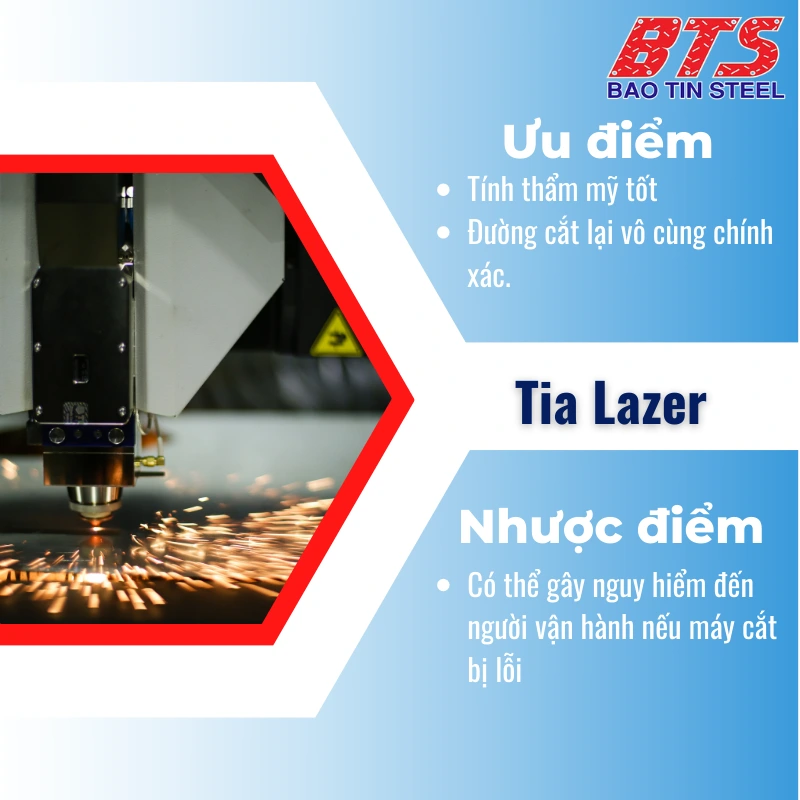
Actual production shows that steel base plates are produced mainly using the following four main methods: The detailed advantages and disadvantages of each method are annotated in the picture!
Oxy-gas cutting: This is a fairly old cutting technology. The operating principle is to use compressed air to burn the material to be cut to form oxides, then melt and blow them off the cutting surface.

Plasma cutting
Applying the electric arc phenomenon to melt metal at the cutting position.

>>> For those who are not electrical majors to clearly understand the phenomenon of the electric arc.
Laser cutting
This method uses cutting machines that apply semiconductor technology. Burning semiconductors called galium-arsenic diodes produce a laser beam capable of emitting extremely short pulses: milliseconds (ms), nanoseconds, and picoseconds, allowing extremely large laser energy to be concentrated in a short period of time. extremely short. This beam generates a large amount of heat, enough to cut, burn, and vaporize materials in engineering.
Use water jets.
Water with added abrasive particles will be pumped and compressed into a high-pressure compressor, then the water is sprayed through a small nozzle (cutting torch); cutting into the metal surface occurs due to the bombardment of this high-speed water jet. Cutting pressures can range from 40,000 psi to over 87,000 Psi.

In structural construction, where should base plates be used?
In most steel-structure buildings and factories, we will see steel base plates in the following 3 locations:
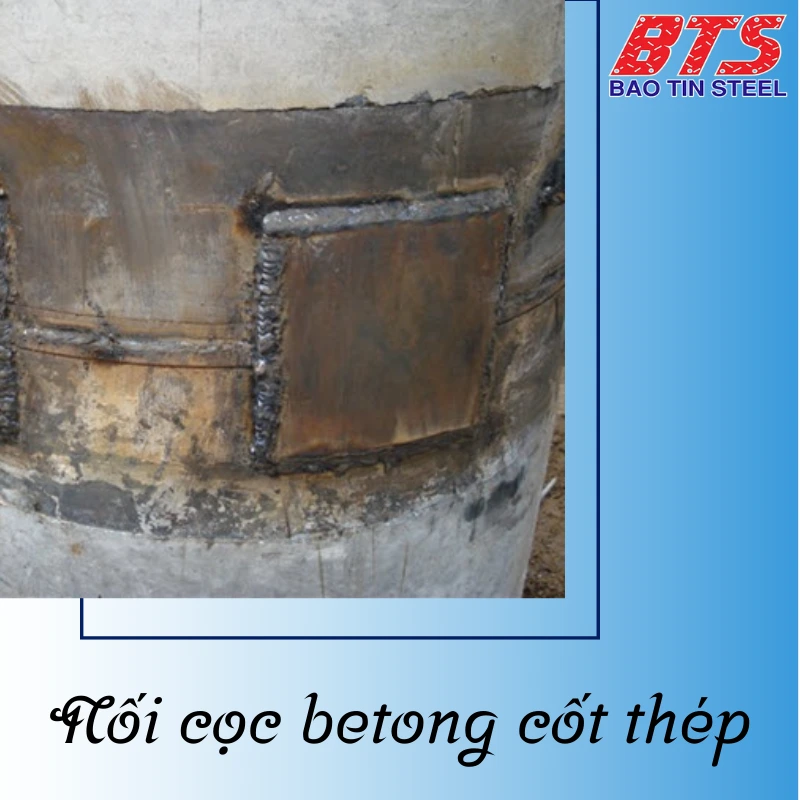
Connecting reinforced concrete piles is difficult because the transportation process is quite difficult. Therefore, concrete piles are only produced in short sections of 5, 12, 15, 18, 21, and 25 meters. To ensure the quality of the project, it is necessary to connect them with code.
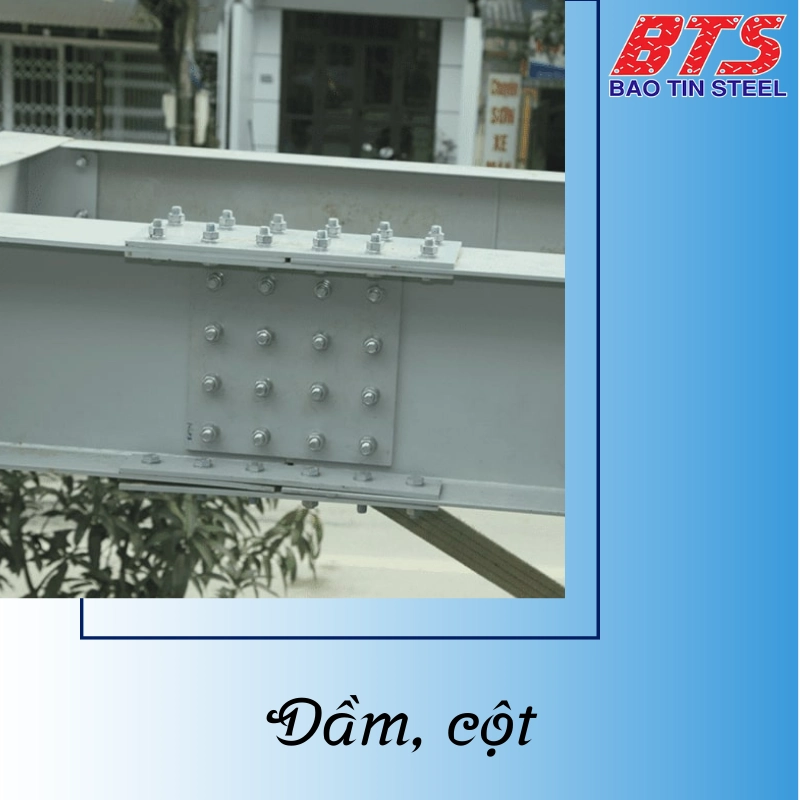
Beam frame system: The base plate transmits force and load smoothly from the floor to the secondary beam and main beam. Then the main beam is transmitted to the column grid, and the column is transmitted to the foundation system, which then transmits the load to the ground. Especially in the position of horizontal and vertical beam structures
Positioning foundation anchor bolts: The base plate serves as an intermediate link to position anchor bolts and spread the load evenly onto the pier foundation.

Connecting the concrete pile system to the main columns makes the building more solid and transmits force well.

To evaluate the quality of the base plate, what criteria should be based on?
At first glance, it seems that making a base plate is very easy. Just take the steel plate and cut it into small pieces, then punch holes.
It’s not as easy as it looks. Only those who work in the field of mechanical engineering and steel structures will understand that calculating a base plate is not easy.
You must calculate the force that the base plate must endure to choose the steel grade. Determine exactly where holes need to be punched to ensure force transmission throughout the entire structure.
Therefore, for steel base plates to be of good quality when brought to the market, the following criteria must be paid attention to:
- The size of the base plate must comply with the requirements of the design drawing.
- The finished product must be aesthetically pleasing and not warped.
- The punched details must be accurate in both hole size and position.
- All products in the shipment must be of equal quality.
- If the drawing requires any type of constituent material, the correct type of material must be used.

Base plate processing process at Bao Tin Steel Company Limited
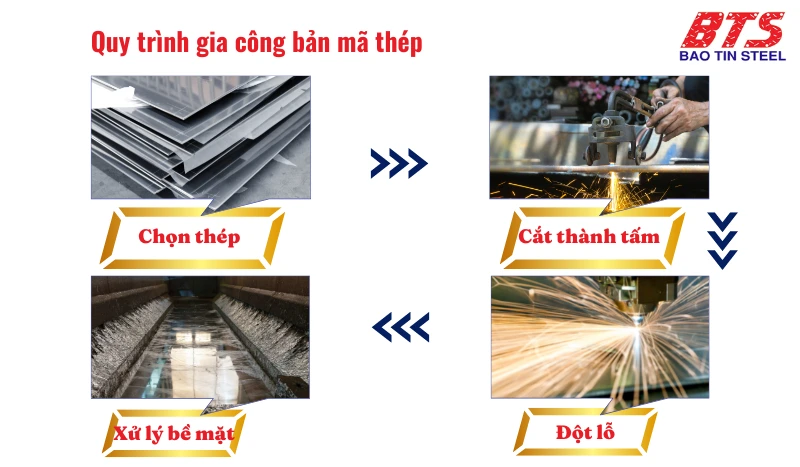
To make a quality base plate, this is the process that Bao Tin Steel has followed:
- Step 1: Choose steel grade. Depending on the technical requirements of the project and the design, choose the appropriate type of steel.
- Step 2: Read and compare with the design drawings. This step is for engineers to program the parameters accurately. Then the large-sized steel plates will be put through cutting machines to be cut to the required size.
- Step 3: Punch holes in the newly cut steel pieces. Engineers will program the machine according to parameters, such as the drawing to punch holes.
- Step 4: Surface treatment. The base plate that has just been cut will be subjected to surface treatment to increase the aesthetics and durability of the product. Can be black or galvanized upon request.
Because, in reality, each project requires a steel base plate cut differently. It can be stone-cutting, laser-cutting, etc. Therefore, to get advice on choosing a cutting method that suits cost, aesthetics, and product quality,.
You can contact the sales team at Bao Tin Steel for detailed answers!