

 Tiếng Việt
 ភាសាខ្មែរ
ssMechanical Float Valve – also known as a float valve – is currently one of the most widely used devices for controlling water levels in storage tanks, underground tanks, or water towers. Thanks to its simple structure, fully mechanical operating principle, and no requirement for electricity, along with its low cost, ease of installation, and long service life, it has become a popular choice for many households and businesses.
Today, with the continuous advancement of technology, in addition to the traditional mechanical float valve, the market also offers various modern versions, including smart float valves, automatic float valves, and next-generation float valves. These new types provide faster water supply, leak prevention, and greater durability. In this article, Baotin Steel explores this product in detail.
What is a Mechanical Float Valve?
A mechanical float valve (also known as a float valve, tank float, or anti-overflow float) is an automatic mechanical device designed to control the water level in storage tanks, underground tanks, reservoirs, or toilets. The distinctive feature of a mechanical float valve is that it operates entirely based on the principles of buoyancy and lever action, requiring no electricity or any additional energy source.
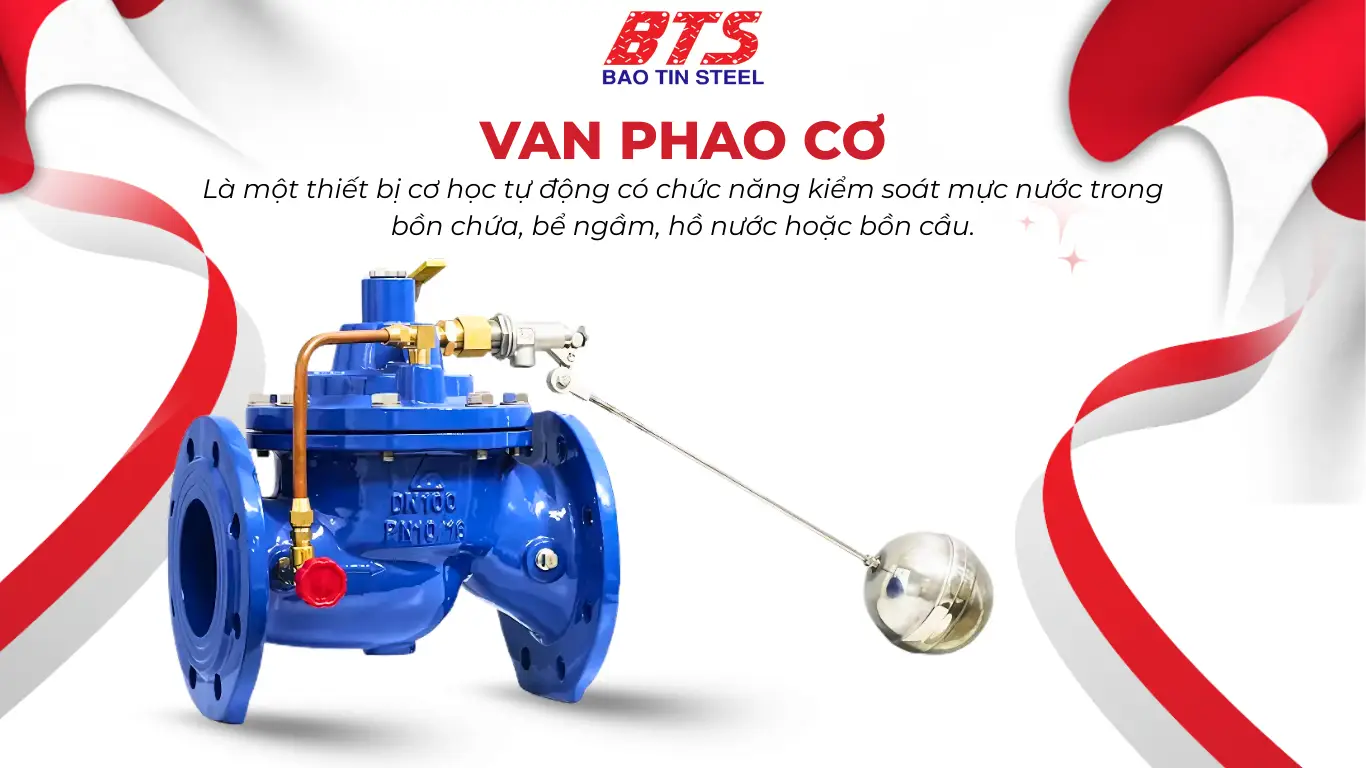
When the water level drops, the float ball lowers, pulling the valve lever to open the valve and allow water to flow into the tank. Conversely, when the water level reaches the preset limit, the float rises, and the valve lever automatically closes, preventing further water flow. This entire process occurs continuously, automatically, and stably, maintaining the desired water level without manual intervention.
Today, in addition to the traditional type, mechanical float valves have been developed into various modern versions, including smart float valves and automatic shut-off float valves, with improvements in durability, water supply speed, and leak prevention. These enhancements provide greater efficiency for both households and industrial facilities.
Structure & Operating Principle
Structure of a Mechanical Float Valve
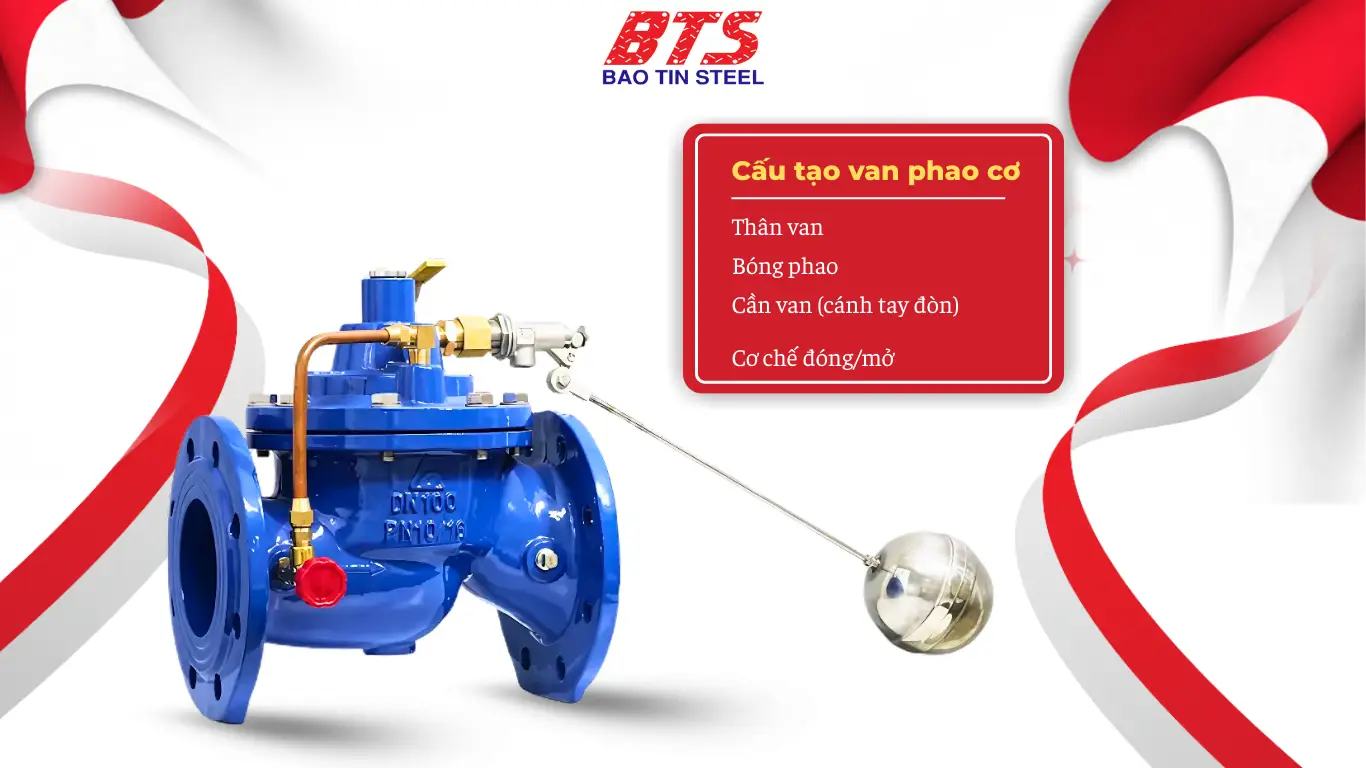
A standard mechanical float valve is typically designed with four main components, which interact closely to ensure automatic opening and closing of the water flow:
- Valve Body: The central part housing the valve mechanism that controls water flow. It can be made from various materials such as brass, stainless steel, plastic, or cast iron, depending on the application environment.
- Float Ball: Usually spherical and hollow, made of stainless steel or plastic. It acts as the “water level sensor” of the system, rising or falling with the water level.
- Valve Lever (Arm): Connects the float ball to the valve body and transmits the movement.
- Opening/Closing Mechanism: Includes the valve stem, valve disc, and rubber gasket, ensuring a tight seal when the tank is full and opening when water is needed.
Operating Principle
The operating principle of a mechanical float valve is based on buoyancy and the lever mechanism:
- When the water level in the tank drops, the float lowers → the valve lever pulls the valve disc away from its seat → water flows from the supply line into the tank.
- When the water rises to the preset level, the float rises → the valve lever pushes back → the valve disc closes the inlet → water stops flowing.
This entire process is fully automatic, requiring no electricity, ensuring a stable water level and effective overflow prevention. This is the key advantage that makes mechanical float valves widely used in households, residential constructions, and certain industrial applications.
Common Types of Mechanical Float Valves
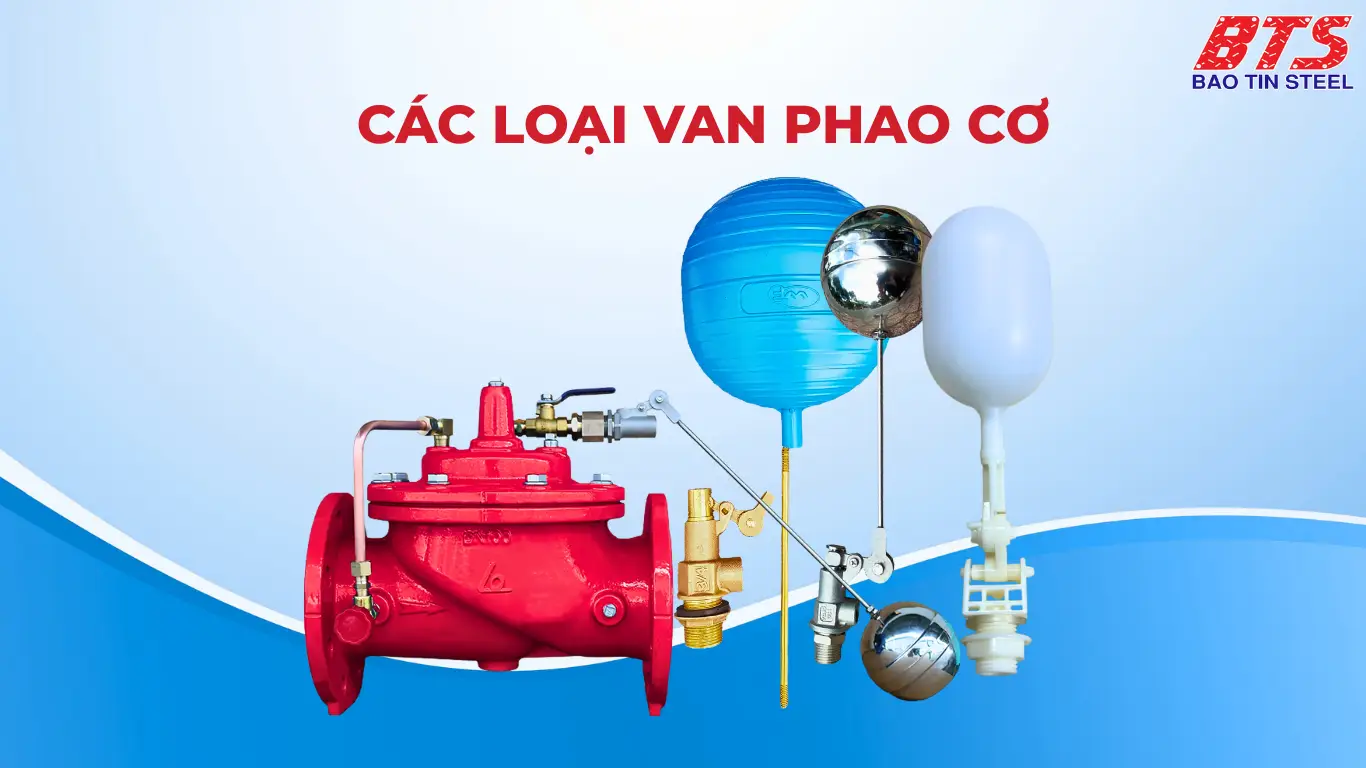
Today, mechanical float valves are available in a wide variety of materials, designs, and technologies, meeting diverse application needs. The main types include:
Classification by Material
- Brass Float Valve: Commonly used in household water supply systems. Brass offers good heat resistance, durability, and minimal deformation, making it suitable for both cold and hot water.
- Stainless Steel Float Valve: Excellent corrosion resistance, able to withstand saltwater, wastewater, or chemical environments. This is the optimal choice for industrial projects and harsh conditions.
- Plastic Float Valve: Usually made from PVC, PP, or ABS. Advantages include lightweight, easy installation, and low cost. Suitable for household water tanks, agricultural irrigation, or aquariums.
- Cast Iron Float Valves: Durable, high-strength, and heat-resistant, often coated with epoxy to prevent rust. Suitable for large-scale water supply systems.
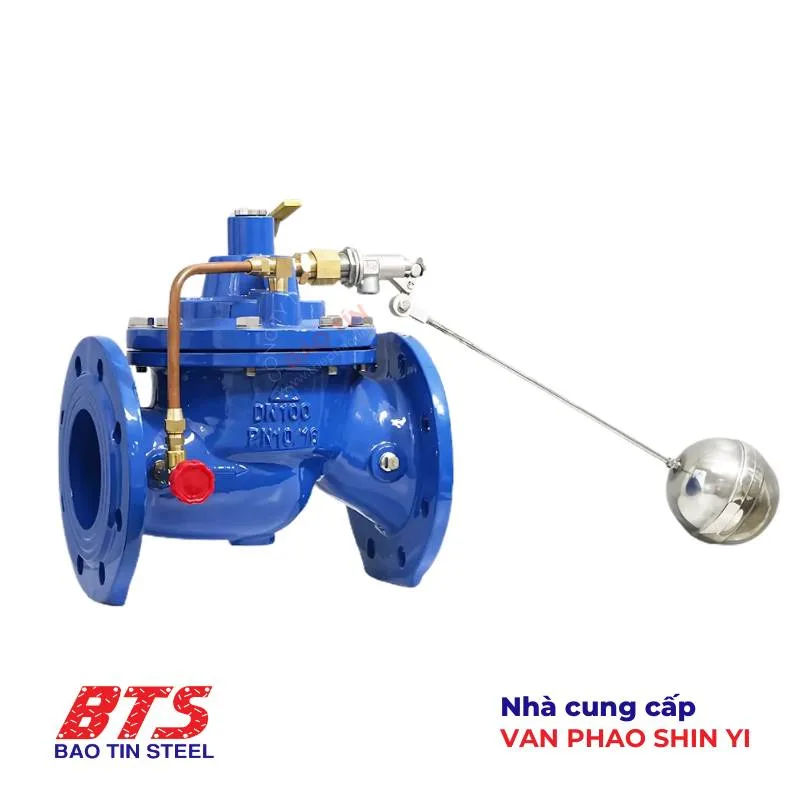
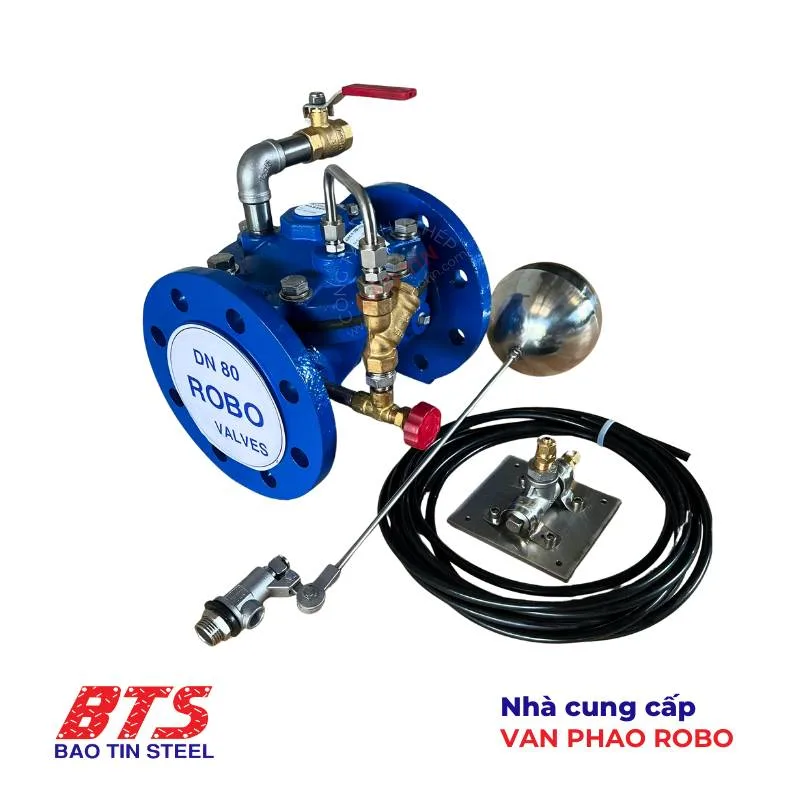
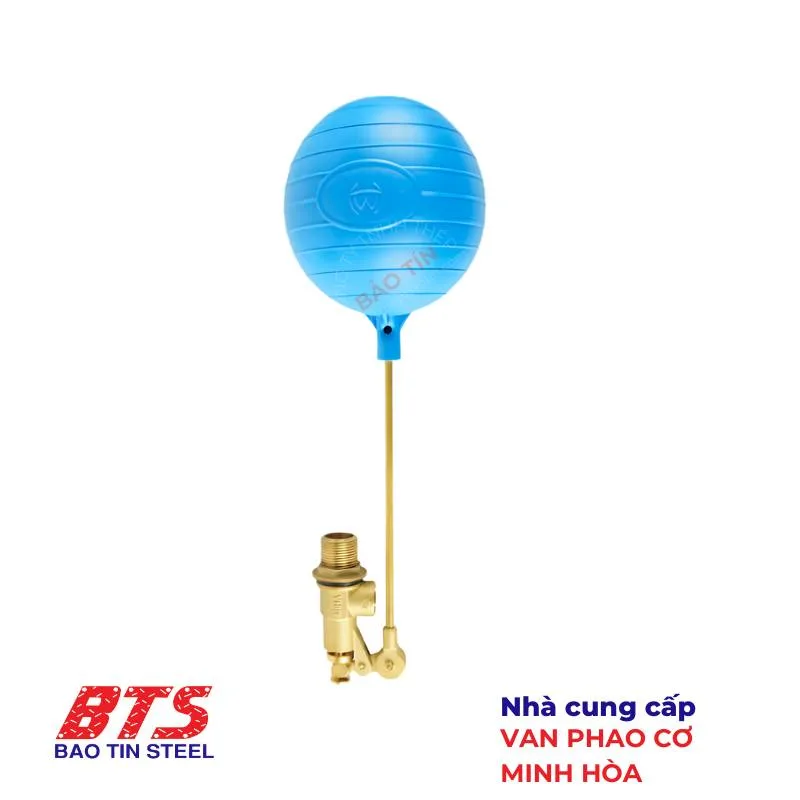
Refer to float valve models at Bao Tin Steel:
Classification by Generation/Technology
- Traditional Mechanical Float Valve: Operates simply using a lever mechanism. However, its drawbacks include slow water supply and susceptibility to rust or jamming after long-term use.
- Next-Generation Mechanical Float Valve (Smart Float Valve, Automatic Shut-off Float Valve): Improved with a closed-design mechanism and minimal gasket contact, allowing faster water supply through a straight-flow path. Equipped with a 304 stainless steel mesh filter to prevent debris. Some models also feature magnetic assist technology for more responsive and tighter opening/closing.
Advantages of Mechanical Float Valves
- Energy-saving: Operates entirely mechanically, relying on buoyancy and lever action, without electricity.
- Low cost: Much cheaper than electric or hydraulic float valves.
- Easy installation: Simple installation process requiring no complex skills; a few basic tools like a wrench and PTFE tape are sufficient.
- Versatile applications: Suitable for various uses, from household water tanks, reservoirs, and aquariums to irrigation systems or small-scale constructions.
- Relatively long lifespan: Typically 3–5 years with minimal maintenance required.
Limitations to Consider
- Slow water flow: Filling the tank takes longer due to the relatively low discharge speed.
- Low pressure tolerance: Suitable only for household water systems or low-to-medium pressure applications.
- Potential for corrosion or leakage: Long-term use may cause rust, mechanical jamming, or gasket leakage.
- Limited functionality: Lacks dry-run protection or remote control features available in electric or automatic float valves.
Comparison: Mechanical Float Valve vs. Electric and Hydraulic Float Valves
In the current market, besides mechanical float valves, users can also choose electric float valves and hydraulic float valves. Although all types share the common purpose of controlling water levels, each operates based on different principles and is suitable for specific needs and system scales.
Overview comparison table
| Criteria | Mechanical Float Valve | Electric Float Valve | Hydraulic Float Valve |
|---|---|---|---|
| Operating Principle | Direct mechanical operation; buoyancy opens/closes the valve | The electric switch controls pump | Float pilot controls pilot valve; pilot valve controls main valve using water pressure |
| Power Source | No electricity required | Requires electricity | Requires water pressure |
| Main Function | Prevents tank overflow | Prevents overflow & dry-run, protects pump | Controls large flow rates at high pressure |
| Applications | Residential, small to medium scale | Large tanks, groundwater pumping systems | Industrial, fire protection, urban water supply & drainage |
| Cost | Low, widely used | Medium; higher than mechanical | Highest; industrial use only |
=> Learn more: What is a float valve? Structure, principle, application and how to choose to buy
Applications of float valves in practice
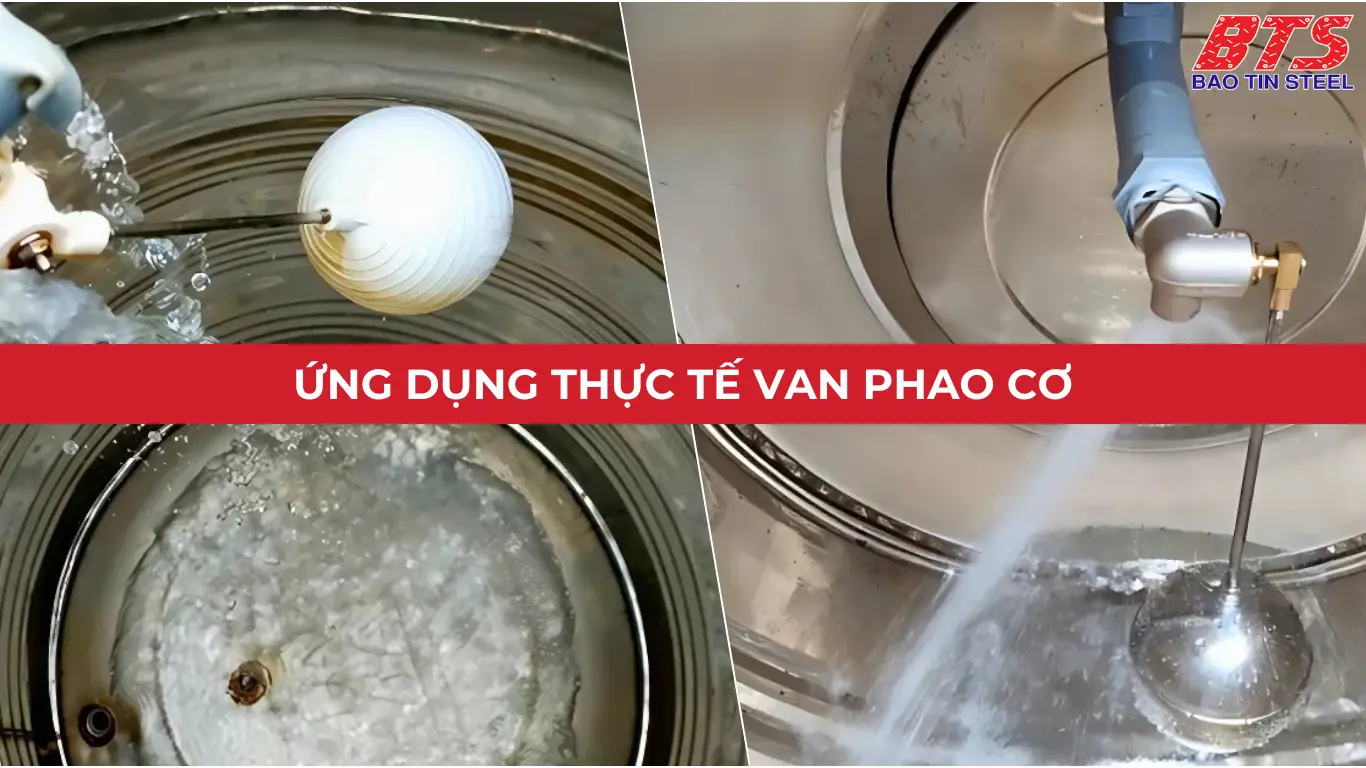
Although its design is relatively simple, the mechanical float valve delivers reliable performance. As a result, it is widely used in applications ranging from household water supply to industrial systems. Some typical applications include:
- Household water tanks
- Industrial reservoirs and water towers
- Agriculture and aquaculture
- Fire protection systems (Firefighting & Sprinkler Systems – FSS)
Reference price list of float valves 2025
Minh Hoa bronze float valve (MIHA)
| Size (DN) | Thread Size (Φ) | Unit Price (VND/piece, excl. VAT) |
|---|---|---|
| DN15 | Φ21 | ~167,000 |
| DN20 | Φ27 | ~225,800 |
| DN25 | Φ34 | ~269,000 |
| DN32 | Φ42 | ~696,000 |
| DN40 | Φ49 | ~916,000 |
| DN50 | Φ60 | ~1,500,000 |
New generation mechanical float valve (Smart – Automatic shut-off)
| Product | Reference Price (VND/piece) |
|---|---|
| Plastic Float Valve (Φ21) | 99,000 – 127,000 |
| Plastic Float Valve (Φ27) | 119,000 – 179,000 |
| Stainless Steel Float Valve (Φ21) | 77,000 – 191,910 |
| Stainless Steel Float Valve (Φ27) | 85,000 – 218,250 |
Note: The above price is for reference only and may change depending on the time and quantity ordered.
Installation & Maintenance Guide
Steps to Install a Mechanical Float Valves
Installing a mechanical float valve is fairly simple, but to ensure stable and long-term operation, you should follow the correct technical procedure:
- Prepare the tools: Include a new float valve, wrench, pliers, Teflon tape, saw or pipe cutter.
- Turn off the water supply: Close the main valve before starting to avoid water leakage.
- Determine the installation location: Choose a suitable spot on the tank where the float ball can move freely without obstruction.
- Cut the pipe and install the connector: Cut the pipe at the selected position and wrap Teflon tape around the threads to prevent leakage.
- Install the float valve: Screw the valve tightly into the connector and check for stability.
- Adjust the water level: Turn on the water supply and observe the operation; adjust the float height (usually 2–3 cm below the tank rim) to achieve the desired water level.
With the new generation mechanical float valve (smart, automatic shut-off), the operation is even simpler: you just need to connect the threaded end and make a quick adjustment to start using it immediately.
Periodic Maintenance & Cleaning
To ensure the stable and long-term operation of a mechanical float valve, attention should be paid to maintenance:
Regular inspection: Every 3–6 months, check the float ball, lever arm, and valve body.
Cleaning deposits: Remove and clean the valve if the water flow becomes weak or the valve does not close completely. Pay special attention to the strainer (if any).
Common troubleshooting:
- Valve does not close completely: This may be due to a stuck float or worn gasket → clean the parts and replace the gasket if necessary.
- Leak at the connection joint: This can result from improper installation or poor Teflon tape → remove, rewrap with tape, and tighten securely.
Use clean water: Minimise debris that could jam the mechanism.
Replace when necessary: If the valve is too old, rusted, or the float ball is punctured, it should be replaced to prevent water overflow.
Buy Genuine Mechanical Float Valves at Bao Tin Steel
When choosing a float valve, the most important factors are not only the price but also the product quality and the reputation of the supplier. Currently, the market has many counterfeit or low-quality products that can cause rapid damage, water leaks, and high repair costs.
Bao Tin Steel is proud to be a trusted supplier of steel pipes, industrial valves, and fire-fighting equipment, including a full range of mechanical float valves made of brass, stainless steel, cast iron, and plastic from reputable brands such as Minh Hòa, Shin Yi, ROBO, and more.
Why choose Bao Tin Steel:
- 100% genuine products with full quality certificates.
- A diverse warehouse with many sizes and types available.
- Competitive pricing, updated for 2025.
- Technical support and consultation to select the right valve for each need (domestic, industrial, fire-fighting).
- Clear warranty policy and fast nationwide delivery.
If you are looking for a mechanical float valve, a smart float valve, or an automatic shut-off float valve, contact Bao Tin Steel now for expert advice and the best quotation.