

 Tiếng Việt
 ភាសាខ្មែរ
Foot Valve (Pump Strainer) – Definition, Classification, Operating Principle & Latest Price List 2025
In every liquid pumping system – from household well pumps to large-scale industrial wastewater treatment plants – the foot valve is an essential component that is often underestimated. Despite its compact design, the foot valve performs two extremely important functions: maintaining pump priming and preventing backflow, while simultaneously protecting the pump from debris and sediments that can cause serious system damage.
In this article, Thép Bảo Tín will provide a comprehensive overview of foot valves, including their definition, structure, operating principles, selection guidelines, and the latest updated price list. If you are looking for a durable, efficient, and cost-optimised solution for water supply, drainage, or fire protection systems, keep reading!
What Is a Foot Valve?
A foot valve (also known as a suction strainer, pump strainer, bottom valve, check valve with strainer, luppe, or crepin) is a specialised valve installed at the suction inlet of a pump. This device integrates two essential functions: a check valve and a filter/strainer.
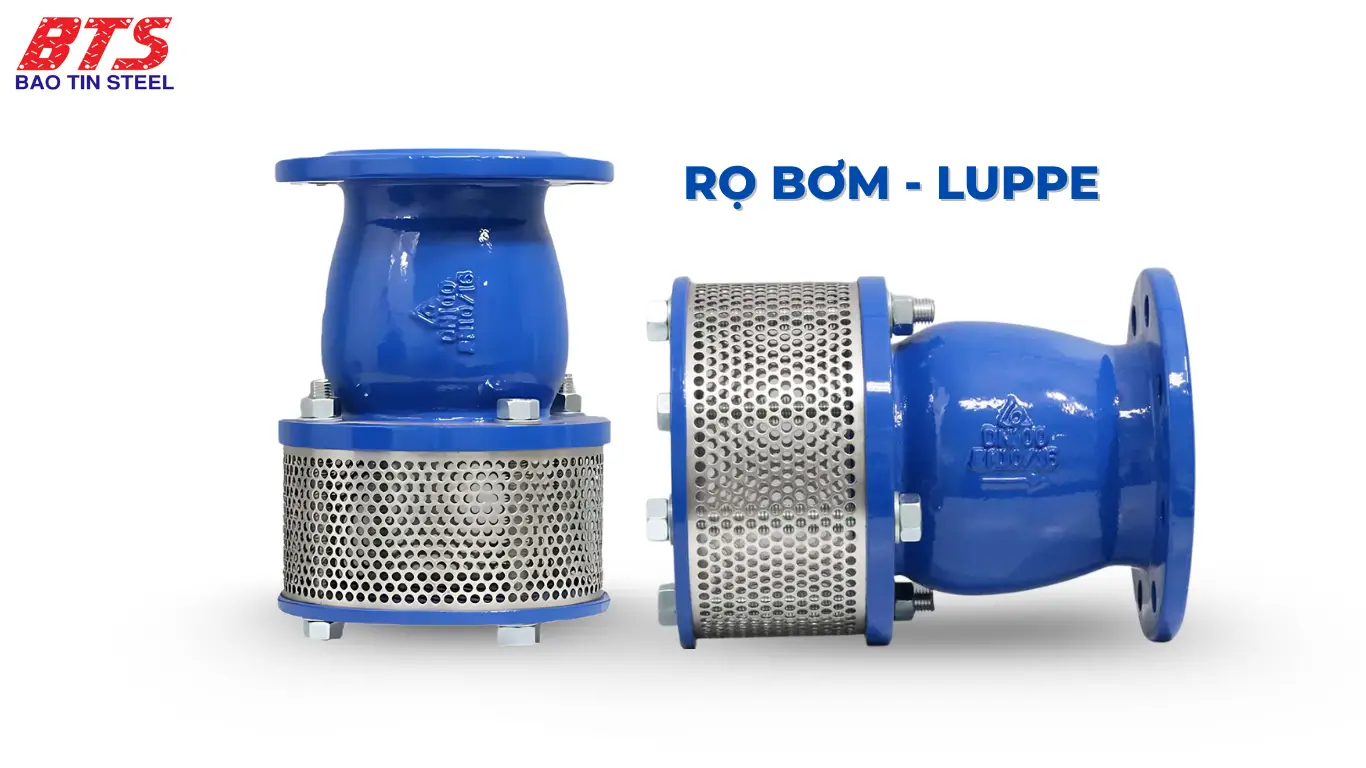
Specifically, the foot valve allows water or liquid to flow into the piping system while preventing it from flowing back to the source when the pump stops operating. This helps maintain pump priming and prevents dry running, which can cause severe damage to the pump. At the same time, the integrated strainer blocks debris, sand, gravel, and solid particles from entering the pump impeller or clogging the pipeline.
Key Features of Foot Valves:
- Compact design with multiple functions
- Fully automatic operation, no electricity or external control required
- Extends pump lifespan and reduces maintenance costs
- Flexible applications in industrial, agricultural, and domestic systems
Thanks to these combined functions, the foot valve acts as a “silent gatekeeper,” playing a critical role in every liquid pumping system.
Common Types of Foot Valves on the Market
Depending on the material, connection type, and application, foot valves are available in various designs to meet the diverse requirements of residential, industrial, and agricultural systems.
Classification by Material
Cast Iron Foot Valve
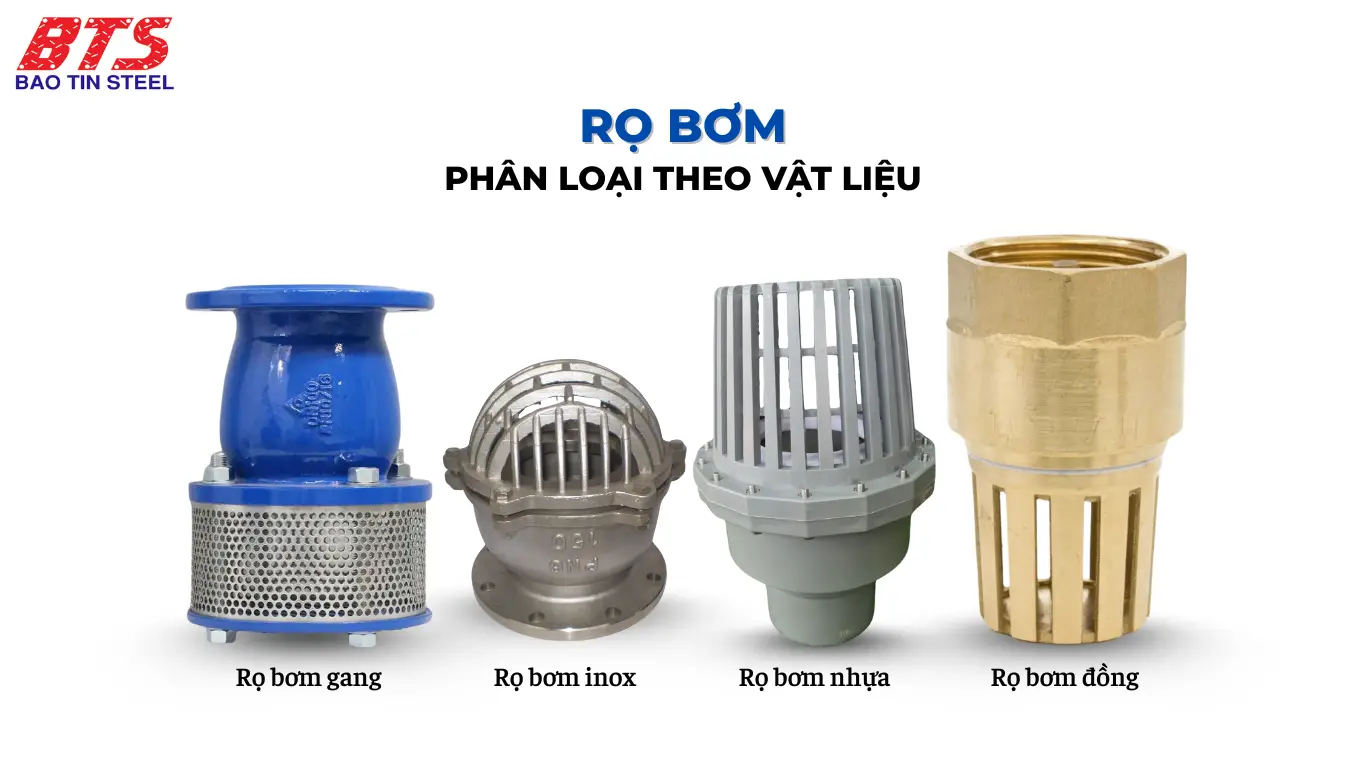
- Features: Strong, durable, epoxy-coated for corrosion resistance
- Applications: Industrial water supply systems, wastewater treatment plants, fire protection systems, municipal drainage
- Common sizes: DN50 – DN500 and above
Stainless Steel Foot Valve (SS 201, 304, 316)
- Features: Excellent corrosion resistance, high durability in harsh environments
- Applications: Food processing, pharmaceuticals, chemical industry, seawater, wastewater treatment
- Price: Higher than cast iron, but longer service life
Plastic Foot Valve (PVC, UPVC, CPVC)
- Features: Lightweight, chemical-resistant, non-corrosive
- Applications: Domestic water supply, clean water systems, mildly corrosive chemical systems
- Advantages: Low cost, easy installation
Brass Foot Valve
- Features: Good corrosion resistance, compact threaded connection
- Applications: Domestic water systems, residential buildings, small bore wells
- Common sizes: DN15 – DN100
Classification by Connection Type
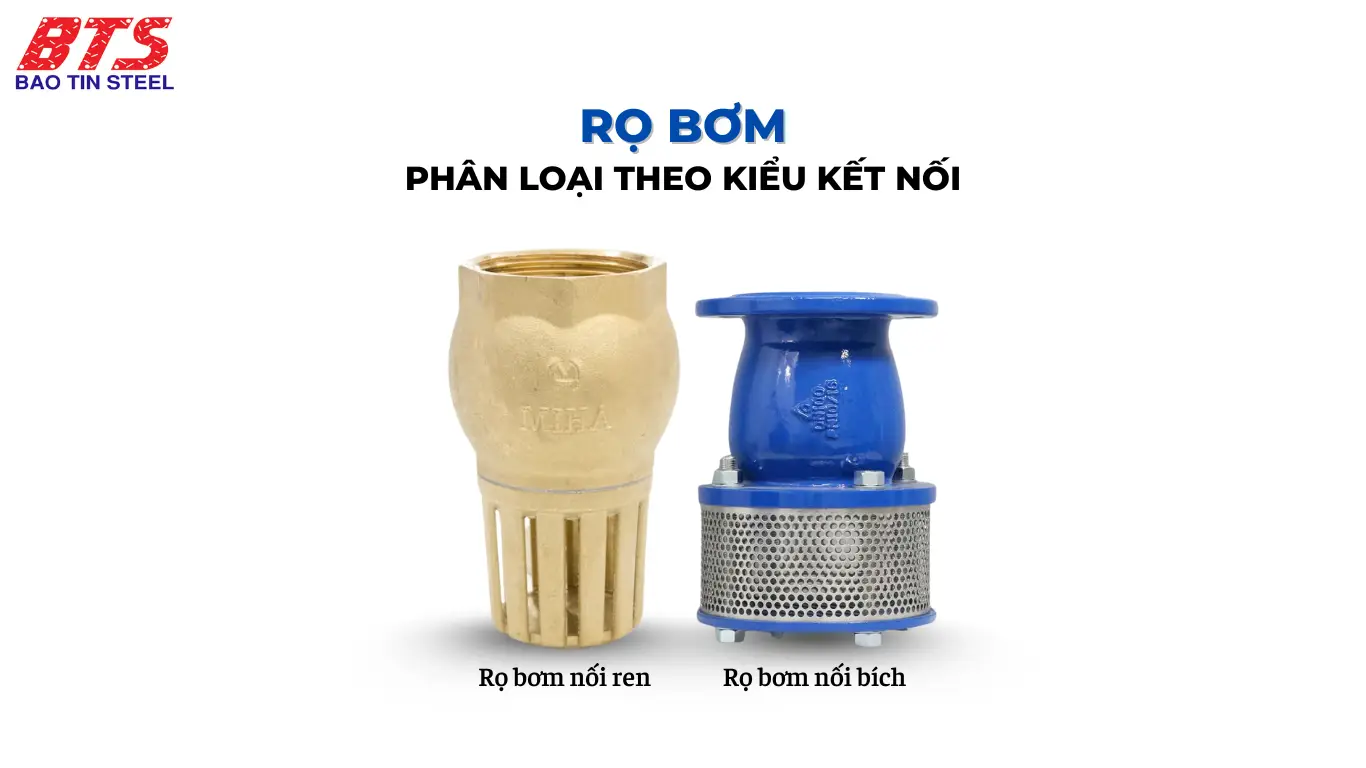
Threaded Foot Valve
- Easy installation
- Suitable for small-scale, residential systems with low flow rates
- Thread standards: BS21, ISO 228-1
- Common sizes: DN15 – DN100
Flanged Foot Valve
- Secure bolted flange connection with high sealing performance
- Suitable for industrial systems and high-pressure applications
- Flange standards: JIS10K, DIN, ANSI, BS
- Common sizes: DN50 – DN500 and above
Selecting the correct foot valve not only improves system efficiency but also helps reduce investment costs and operational risks.
Functions and Operating Principle of Foot Valves
Core Functions of a Foot Valve
Although it is a small component in the piping system, a foot valve performs several vital functions:
- Prevents backflow: When the pump stops, the valve closes, preventing liquid from flowing back to the source (well, tank, reservoir). This maintains suction pressure and priming.
- Maintains pump priming: By keeping the suction line filled with liquid, the foot valve prevents dry running, a major cause of seal, impeller, and motor failure.
- Filters debris to protect the pump: The integrated strainer removes leaves, sand, gravel, and solid particles that could clog or damage the pump.
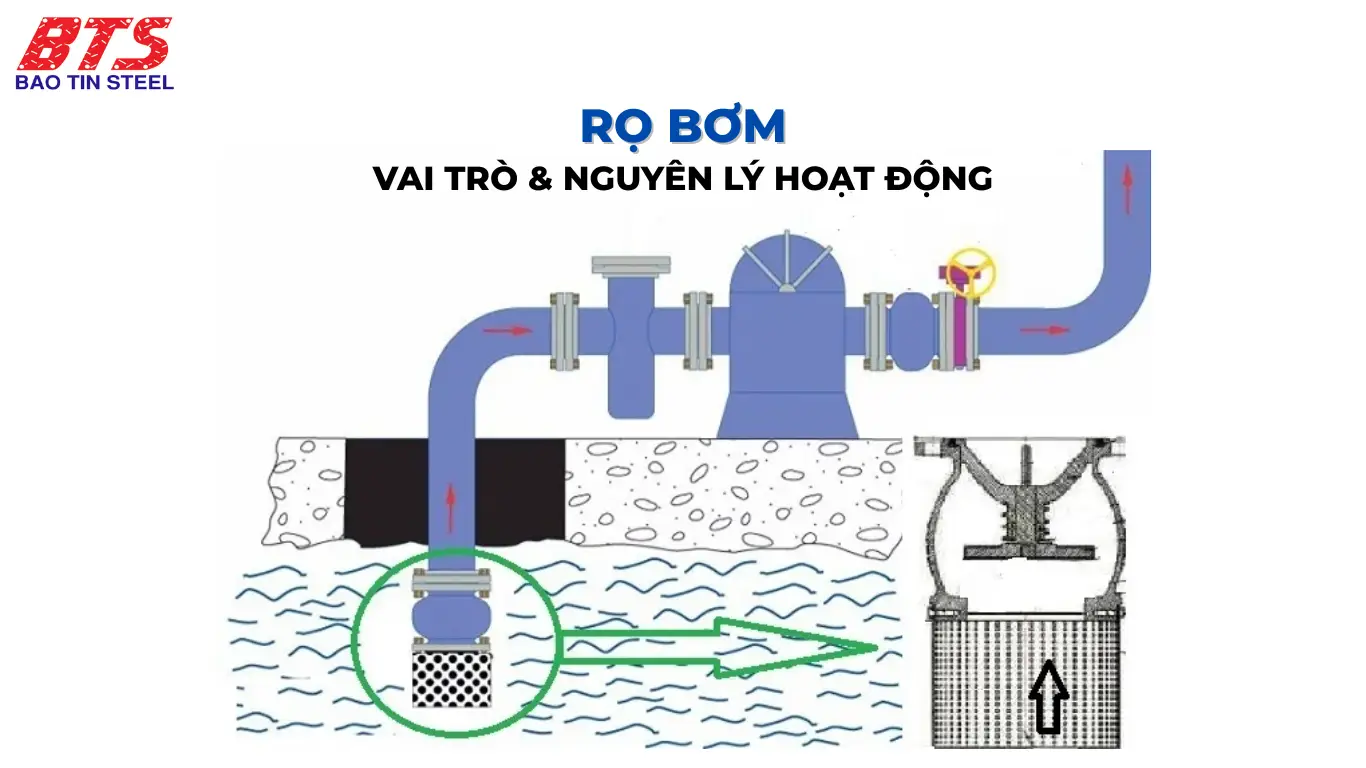
Operating Principle
Foot valves operate automatically based on flow pressure and gravity, without electricity or external control:
-
When the pump is running:
The pump creates suction → pressure inside the pipe drops → the valve disc opens → liquid flows through the strainer into the suction line. -
When the pump stops:
Suction force disappears → reverse pressure from the liquid column pushes the valve disc closed.
If equipped with a spring, it helps the disc close faster and more tightly, preventing water loss or cavitation.
This opening–closing mechanism ensures stable priming and prevents air from entering the system, which could lead to pressure loss or pump failure.
Latest Foot Valve Price List 2025 (Reference)
Foot valve prices depend on material, size (DN), connection type (threaded or flanged), and brand.
| Foot Valve Type | Size (DN) | Reference Price (VND / Unit) |
|---|---|---|
| Cast iron flanged foot valve | DN50 – DN100 | 450,000 – 950,000 |
| DN125 – DN200 | 1,100,000 – 2,000,000 | |
| DN250 – DN400 | 2,500,000 – 6,500,000 | |
| Stainless steel 304 threaded | DN25 – DN50 | 300,000 – 700,000 |
| DN65 – DN100 | 850,000 – 1,600,000 | |
| Stainless steel 304 flanged | DN50 – DN100 | 1,500,000 – 3,000,000 |
| DN125 – DN200 | 3,200,000 – 6,000,000 | |
| Plastic foot valve (PVC, UPVC) | DN25 – DN80 | 80,000 – 280,000 |
| DN100 – DN200 | 350,000 – 900,000 | |
| Brass threaded foot valve | DN15 – DN50 | 120,000 – 480,000 |
Notes:
- Prices may vary depending on origin, technical standards (JIS, ANSI, DIN), order quantity, and supplier policies.
- Bao Tin Steel provides quotations based on specific requirements, ensuring competitive pricing and genuine products.
Trusted Foot Valve Supplier – Bao Tin Steel
Looking for genuine, high-quality foot valves at competitive prices for water supply, wastewater treatment, or fire protection systems?
Bao Tin Steel is a leading importer and distributor of foot valves in Vietnam and Cambodia, offering a full range of cast iron, stainless steel, plastic, and brass foot valves suitable for projects of all sizes.
Our Commitments:
- Genuine products from reputable brands: Wonil, YDK, SHINYI, WAHSIN, ARV, Minh Hòa, BTL…
- Wide size range: DN15 to DN500+
- Full CO–CQ certificates, compliant with JIS, BS, DIN standards
- Free technical consultation and product selection support
- Competitive prices with attractive discounts for agents and projects
- Fast nationwide delivery, especially in Ho Chi Minh City, Hanoi, Bac Ninh, Dong Nai, Binh Duong, and Long An
Contact Bao Tin Steel:
- Head Office (HCMC): 551/156 Le Van Khuong, District 12
- Hoc Mon Warehouse: Tien Lan Road, Ba Diem
- Bac Ninh Branch: Yen Phong Industrial Park
- Cambodia Branch: 248 National Road 1, Phnom Penh
Hotlines:
- Southern Vietnam: 0909 323 176 (Ms. Dung) – 0906 909 176 (Ms. Truc) – 0767 555 777 (Mr. Huong)
- Northern Vietnam: 0932 022 176 (Ms. Huyen) – 0936 012 176 (Mr. Phuc) – 0938 784 176 (Mr. Hoan)
Website: www.thepbaotin.com