

 Tiếng Việt
 ភាសាខ្មែរ
In modern fire protection systems, the fire angle valve is a critical component that directly connects the water supply to the fire hose reel and fire nozzle. With its characteristic L-shaped (90°) design, this valve acts as a “bridge” between the high-pressure water source and the fire hose, allowing firefighters or users to regulate water flow quickly and accurately.
More than just a simple piping accessory, the fire angle valve is a strategic link that determines the ability to access water promptly during the very first moments of a fire incident. Therefore, clearly understanding what a fire angle valve is—its structure, applicable standards, latest pricing, and proper installation and maintenance methods—helps investors, contractors, and end users make the right choices when equipping their projects, ensuring effective operation of the fire protection system.
In this article, Bao Tin Steel will guide you through a comprehensive overview of fire angle valves—from definitions, classifications, and applications to practical instructions and trusted purchasing sources.
What is a Fire Angle Valve?
A fire angle valve (also known as a firefighting angle valve) is a specialized device used in fire protection systems. It features a distinctive L-shaped (90-degree) design, is installed directly on the water supply pipeline, and is typically located inside wall-mounted fire hose cabinets or at fixed water supply points.
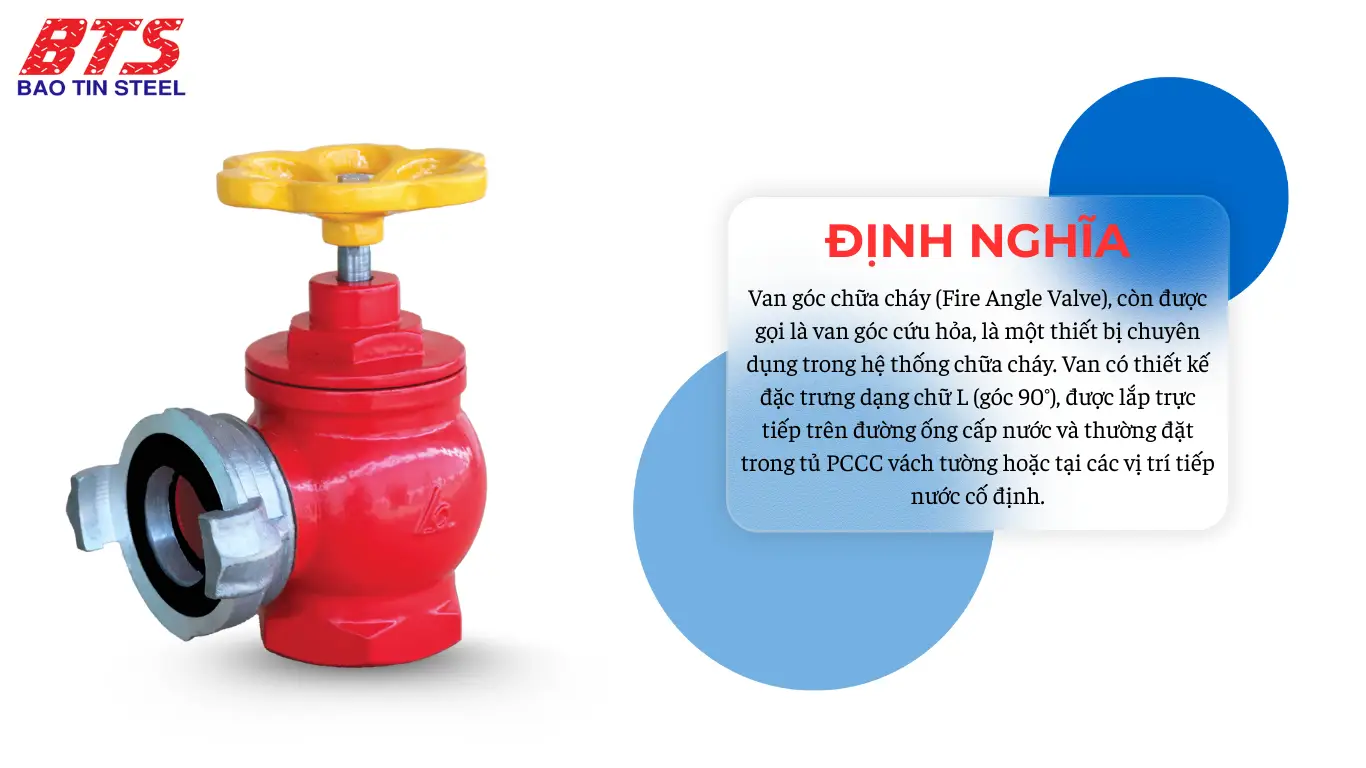
The primary function of a fire angle valve is to regulate and control the water flow from the fire water supply system to the fire hose reel and nozzle. In the event of a fire, firefighters or users simply need to open the cabinet, connect the hose to the valve coupling, and turn the handle to discharge water for rapid fire suppression.
Fire angle valves are commonly used in conjunction with equipment such as:
- Wall-mounted fire hydrants (fire hose cabinets)
- Fire hoses
- Fire nozzles
In addition, this device can also be installed on specialized fire engines or in high-pressure water supply systems at factories and warehouses.
It can be said that the fire angle valve is the “strategic water outlet” in a fire protection system, allowing flexible control of water flow and pressure, and playing a decisive role in the effectiveness of initial fire-fighting efforts.
Structure and Operating Principle
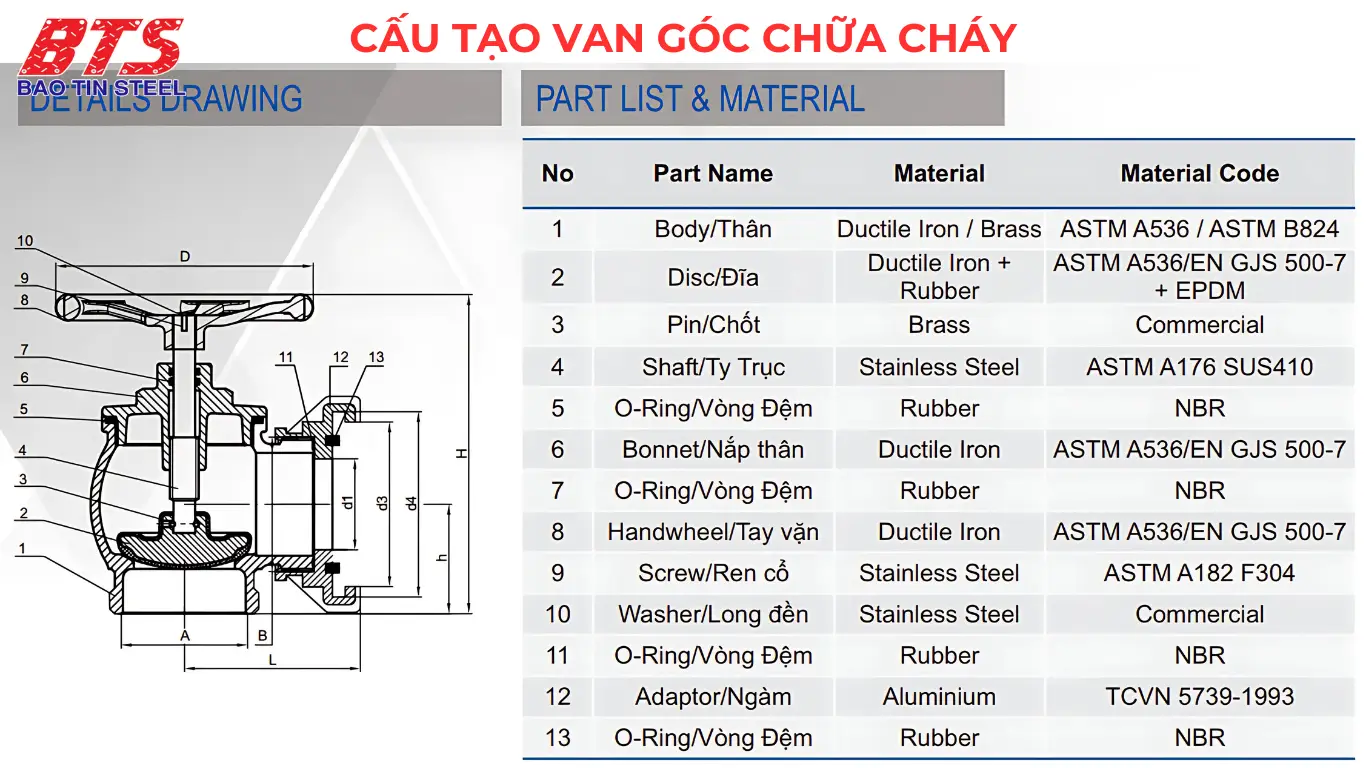
Structure of a Fire Angle Valve
Operating Principle
The operating principle of a fire angle valve is quite simple and is based on manual operation via the handwheel:
- When the handwheel is turned counterclockwise, the valve stem moves upward, pulling the valve disc away from the closed position. This creates an opening that allows water to flow through and be supplied to the fire hose.
- When the handwheel is turned clockwise, the valve stem moves downward, pressing the valve disc firmly against the sealing gasket and completely shutting off the water flow.
Key feature: The valve remains in the closed position when not in use, helping to maintain system pressure and prevent water leakage. Thanks to its compact design and quick, flexible operation, the fire angle valve enables firefighters to respond promptly, minimising damage when an incident occurs.
Common Types of Fire Angle Valves
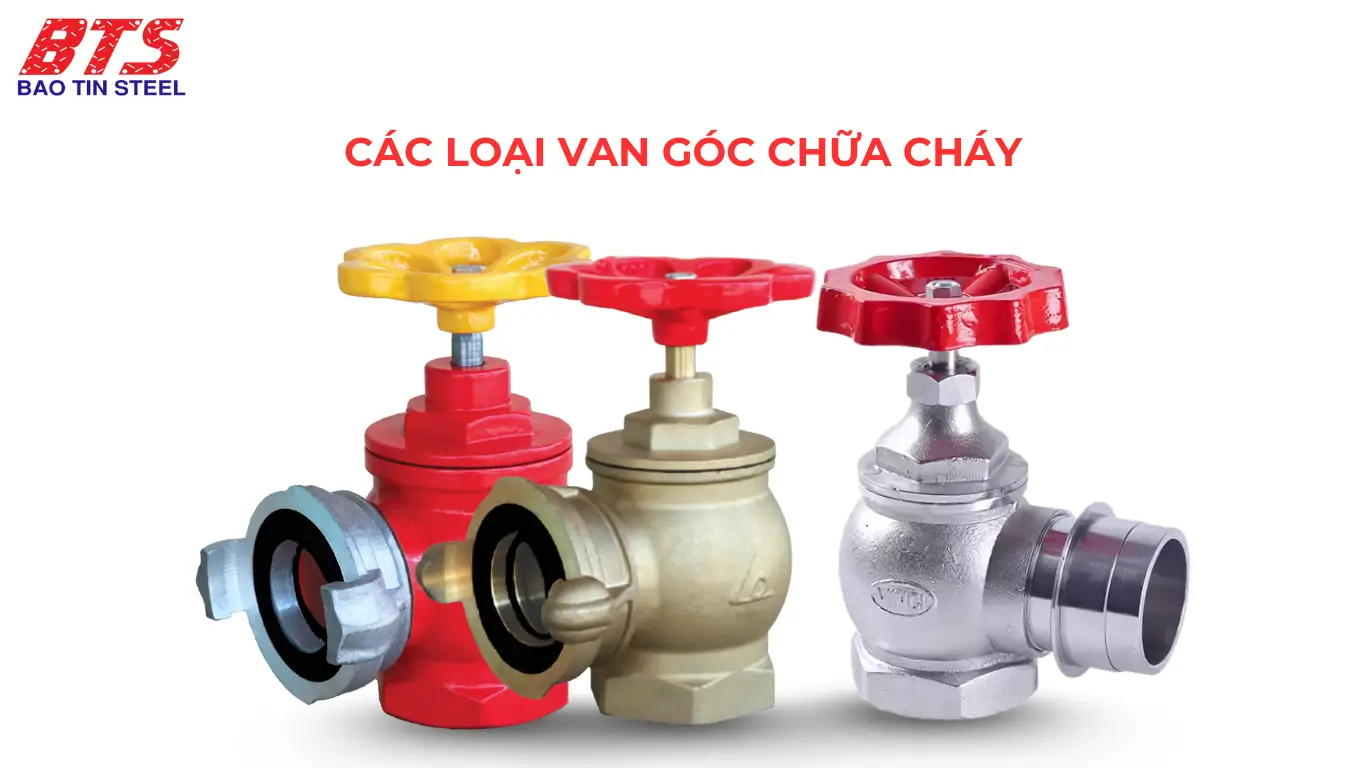
On the current market, fire angle valves are manufactured in a variety of materials, sizes, and connection types to suit different types of projects. They can be classified as follows:
Classification by Material
Cast Iron Fire Angle Valves
- Body: Ductile cast iron, coated with red epoxy for corrosion resistance.
- Advantages: Affordable, good pressure resistance (10–16 bar).
- Disadvantages: Needs protective coating; may oxidise in humid environments.
- Applications: Residential buildings, apartments, office buildings.
Brass / Bronze Fire Angle Valves
- Material: Corrosion-resistant, withstands harsh environments.
- Features: Often chrome-plated for aesthetics.
- Advantages: More durable than cast iron.
- Applications: Factories, outdoor installations, coastal areas.
Stainless Steel / Aluminium Alloy Fire Angle Valves (less common)
- Features: High mechanical strength and corrosion resistance.
- Applications: Specialized environments such as chemical plants or marine/harsh conditions.
Threaded Fire Angle Valve (Female / Male Thread)
- Connects directly to the pipeline using threads.
- Commonly used for small-diameter piping systems and for easy installation.
Flanged Fire Angle Valve
- Uses flanges for tight fastening, ensuring high sealing and safety.
- Typically applied for DN65 valves or high-pressure systems.
- Example: DN65 fire angle valve with flange connection.
Clamp / Grooved Fire Angle Valve
- Designed for quick and convenient connection during installation.
- Suitable for systems that require fast assembly or flexible disassembly.
Classification by Brand and Origin
Shinyi Valve (Vietnam – Taiwanese Technology)
- Widely trusted for stable quality and competitive price.
- Complies with Vietnamese standards (TCVN), suitable for domestic project acceptance.
Tomoken Valve (Vietnam)
- Features a centrally threaded brass stem, effectively preventing leaks.
- Popular in many fire protection projects in Ho Chi Minh City.
Imported Valves
- Ayvaz (Turkey, UL/FM standard): High-quality, working pressure up to 20 bar, higher price.
- Chinese Valves: Low cost but inconsistent quality; careful selection of reputable suppliers is required.
- Taiwanese and Korean Valves: Mid-range quality, reliable performance, commonly used in industrial projects.
Relevant National Standards
To ensure safety and obtain fire protection approval, fire angle valves must comply with national standards (TCVN) as well as technical regulations issued by the Ministry of Construction and the Ministry of Public Security. Some important standards include:
TCVN 5739:1993 / TCVN 5739:2023 – Firefighting Equipment – Connectors
- This is the core standard, specifying detailed technical requirements, materials, durability, and testing methods for coupling and plug-type connections of fire angle valves.
- TCVN 5739:2023 is the updated version, replacing the 1993 standard. It imposes stricter requirements on pressure resistance and sealing performance to ensure the device does not leak during use.
TCVN 6379:1998 – Fire Hydrants
- Although this standard applies to fire hydrants, it provides general regulations regarding the size of outlets and connection accessories.
- Fire angle valves are often installed as part of hydrant systems, so they must comply with this standard to ensure proper compatibility.
TCVN 7336:2021 – Automatic Water and Foam Fire Extinguishing Systems
- This standard specifies the design and installation requirements for automatic fire suppression systems.
- Fire angle valves are a critical component of wall-mounted fire protection systems, so their installation must comply with regulations regarding positioning, pressure, and connectivity.
QCVN 06:2022/BXD – National Technical Regulation on Fire Safety for Buildings and Construction Works
- This regulation provides comprehensive guidelines for the design, layout, and inspection of fire protection equipment.
- Fire angle valves must be installed at a height of 1.2–1.5 meters from the floor, inside fire hose cabinets or near emergency exits, ensuring easy access and operation during emergencies.
Inspection Certificates and CO, CQ Certification
- In addition to the standards mentioned above, all fire angle valves circulated in Vietnam must be inspected by the Fire Police Department and accompanied by a Certificate of Quality (CQ) and a Certificate of Origin (CO).
- These documents provide the legal basis to ensure the product meets acceptance requirements and helps prevent legal and safety risks when put into use.
Applications of Fire Angle Valves in Modern Fire Protection Systems
Applications in Modern Fire Protection Systems
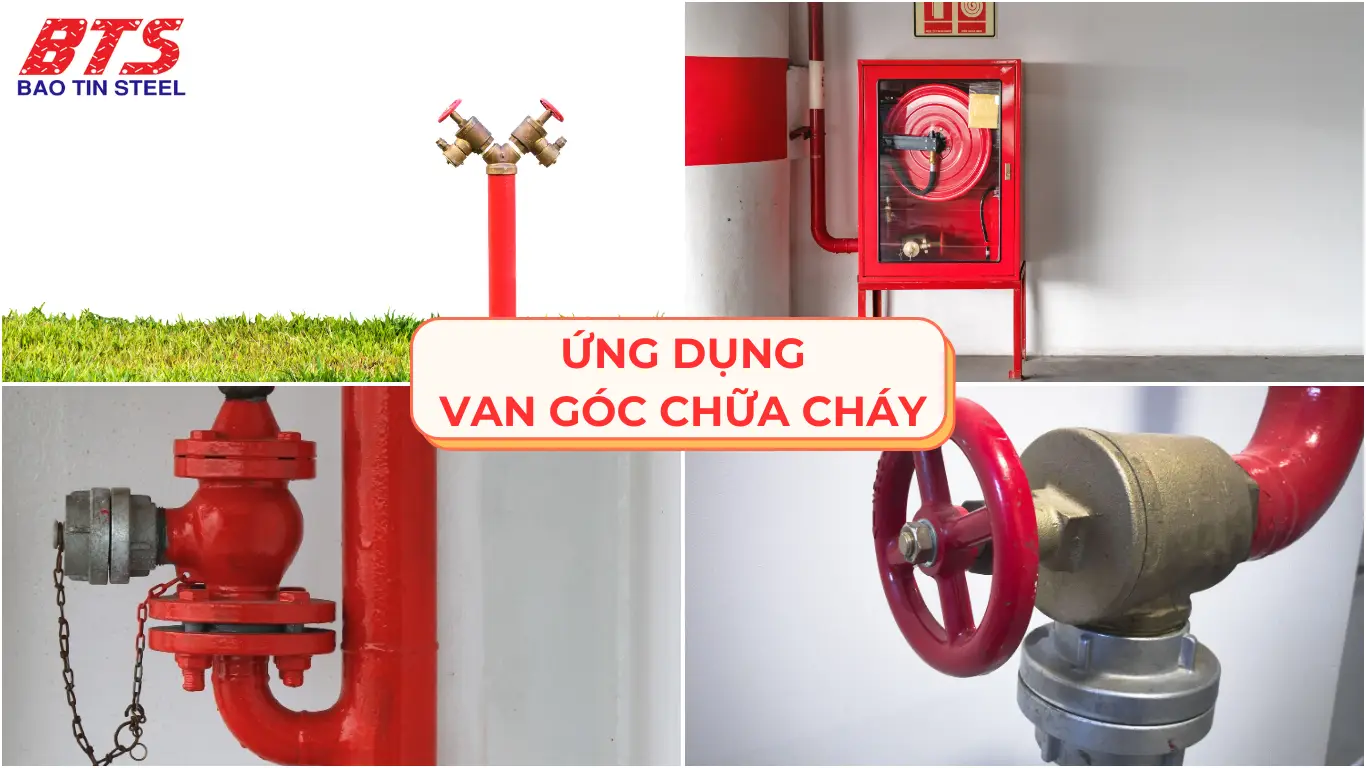
In today’s fire protection systems, fire angle valves serve as “strategic water outlets”, allowing firefighters or on-site personnel to quickly access high-pressure water to handle emergencies. Their applications are diverse, ranging from residential to industrial settings:
- Wall-mounted fire hydrants: The valve is installed inside fire hose cabinets, directly connected to the hose reel and nozzle.
- Outdoor fire hydrants
- Factories and industrial warehouses: DN50 or DN65 fire angle valves are typically used, combined with hose reels and fire pumps.
- Public facilities and specialised infrastructure: Hospitals, schools, train stations, airports, coastal areas, and chemical zones.
- On specialised fire trucks
2025 Fire Angle Valve Price Reference
Prices vary by size (DN50, DN65), material (cast iron, brass, alloy), brand, and origin. Below is a reference table from reliable sources:
| Brand / Origin | Material | Size (DN) | Applicable Standards | Reference Price (VND) |
|---|---|---|---|---|
| Shinyi (Taiwan – Manufactured in Vietnam) | Cast iron, Brass | DN50, DN65 | TCVN 5739, JIS | ~450,000 (DN50) – 550,000 (DN65) |
| Tomoken (Vietnam – Japanese origin) | Cast iron, Brass | DN50, DN65 | TCVN 5739 | ~309,000 (DN50) – 398,000 (DN65) |
| Fuji Vietlink (Domestic) | Cast iron | DN50, DN65 | N/A | ~283,000 – 348,000 |
| Ayvaz (Imported – UL/FM) | Brass | DN45 – DN65 | UL/FM | ~570,000 (DN65) |
| China | Cast iron | DN65 | N/A | ~220,000 |
| Korea | Cast iron / Brass | DN50, DN65 | KFI, UL/FM (depending on type) | ~500,000 – 700,000 |
Important Notes:
- The price table above is for reference only and may vary depending on the time of purchase and order quantity.
- Imported products (UL/FM, CE) usually have higher prices but offer superior quality.
To receive accurate pricing and the best offers, contact Bao Tin Steel directly – a supplier of genuine fire angle valves from brands such as Shinyi, Tomoken, ROBO, etc., with full CO, CQ documents and fire safety inspection certificates.
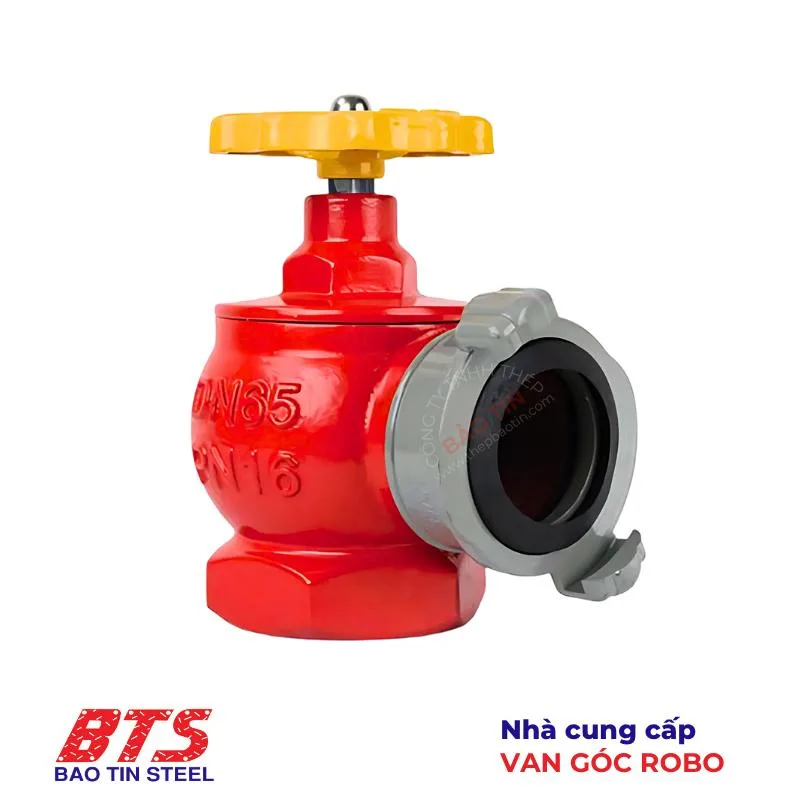
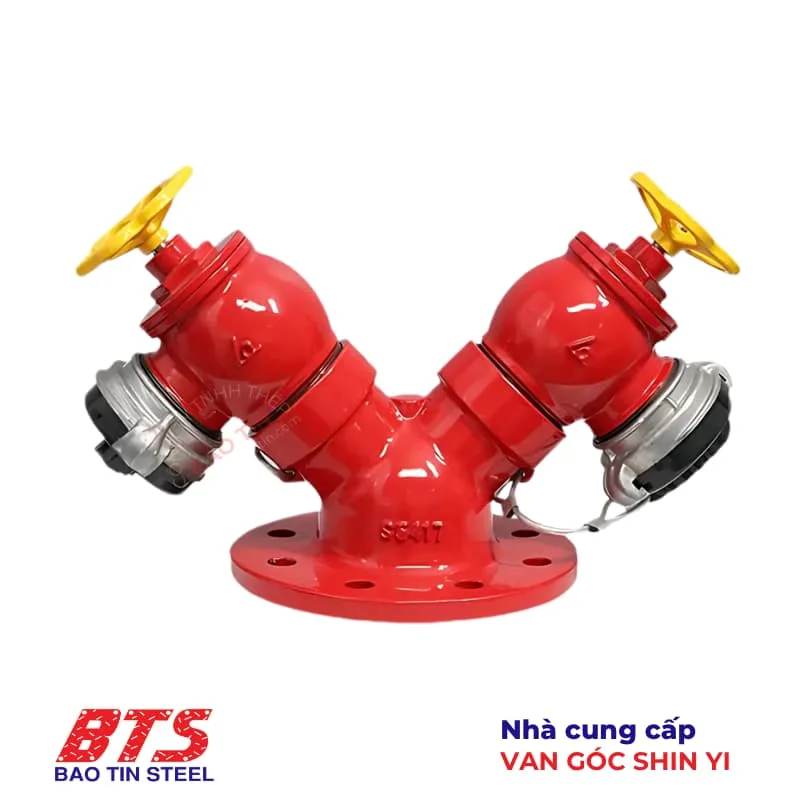
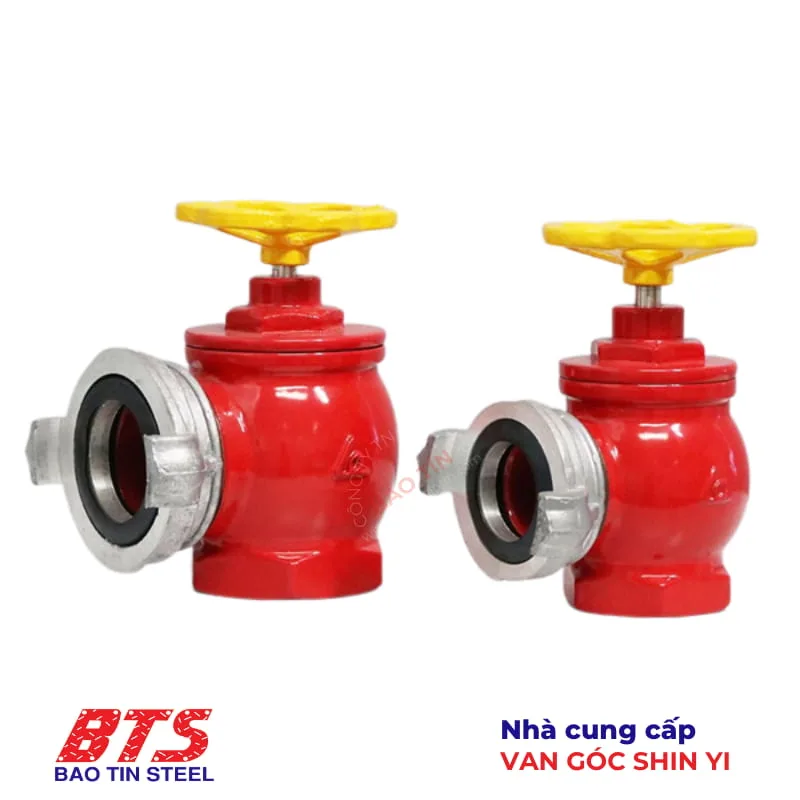
Installation & Maintenance Guide for Fire Angle Valves
To ensure fire angle valves operate at maximum efficiency, installation and maintenance must follow proper standards. Below is a basic guide to help investors and installation teams carry out the process effectively.

Installation and Maintenance Guide for Fire Angle Valves
Installation Instructions
Prepare Materials and Tools
- Select the appropriate valve (DN50 or DN65) with CO and CQ certificates.
- Prepare accompanying accessories: couplings, rubber gaskets, PTFE tape, wrenches, and pliers.
Installation Location
- Typically installed inside wall-mounted fire hose cabinets, hallways, or near emergency exits.
- Height from floor to valve handwheel: 1.2–1.5 m, according to QCVN 06:2022/BXD.
Installation Orientation
- Ensure the valve is positioned for easy hose connection without obstruction.
- The handwheel should face outward for easy operation.
4Connection
- Threaded type: Use PTFE tape to prevent leaks.
- Flanged type: Tighten bolts evenly, with a high-pressure rubber gasket.
Pressure Test
-
After installation, perform a water pressure test at ≥1.5 times the working pressure to ensure tightness and safety.
Maintenance Instructions
Inspection Frequency
- Monthly: Visual check for rust, cracks, or damage.
- Every 6–12 months: Periodic inspection by a professional unit, including pressure testing and handwheel operation.
- Every 1–2 years: Comprehensive maintenance, replace damaged rubber gaskets, and tighten connections.
Basic Maintenance Steps
- Function check: Ensure the handwheel turns smoothly, and the valve opens/closes properly.
- Lubrication: Apply grease periodically to ensure smooth stem operation.
- Replace accessories: Replace sealing gaskets, couplings, and hose connections if damaged.
- System cleaning: Flush water and remove debris in pipes to prevent flow blockage.
Purchase Genuine Fire Angle Valves at Bao Tin Steel
When choosing a fire angle valve, the most important factors are not only the price but also the quality, certification, and reputation of the supplier. Currently, the market has many low-quality, uncertified products, which pose significant risks during project acceptance and in the event of a fire.
Bao Tin Steel Co., Ltd proudly distributes genuine fire angle valves from reputable brands such as Shinyi, Tomoken, as well as imported products from Korea and China. All products come with full CO, CQ documents and fire safety inspection certificates, meeting TCVN and UL/FM standards.
Why choose Bao Tin Steel for fire angle valves?
- Genuine products with complete documentation.
- Large warehouse with ready stock – ensures timely project delivery.
- Wide variety: DN50, DN65, threaded, flanged, grooved, clamp connections – suitable for all PCCC systems.
- Competitive pricing – direct import without intermediaries.
- Technical support & professional consulting – experienced team ready to assist.
If you are looking for DN50, DN65 fire angle valves, Shinyi, Tomoken, or high-quality imported valves, contact Bao Tin Steel now for detailed pricing and the best offers in 2025.