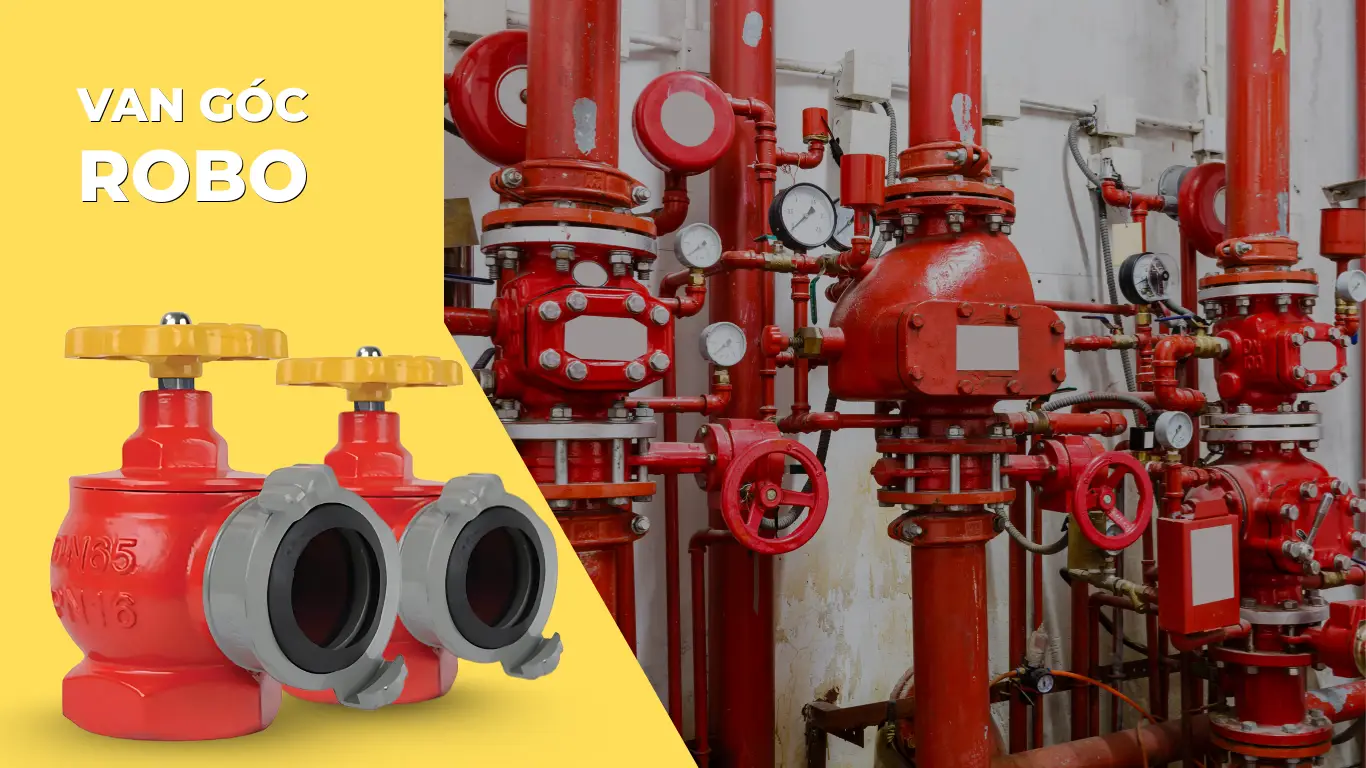
The ROBO angle valve is a specialised device used in fire prevention and firefighting (PCCC) systems, playing a critical role in controlling and regulating the flow of water supplied to equipment such as fire hoses or spray nozzles. The product is designed in accordance with Vietnamese standards TCVN 5739-1993 and TCVN 6379-1998, ensuring a high level of safety and suitability for installation in a wide range of civil, industrial, and technical infrastructure projects.
Outstanding Features of the ROBO Angle Valve
The ROBO angle valve stands out thanks to its harmonious combination of standardised engineering design, high-quality materials, and durable operating performance. Below are the key features that make this product highly favoured in modern fire protection systems:
Designed in compliance with TCVN 5739-1993 and TCVN 6379-1998, ensuring excellent compatibility with fire-fighting equipment and accessories used in Vietnam.
Stable working pressure at PN10 or PN16, meeting operational requirements in environments with high and consistent water pressure.
Wide operating temperature range from -10°C to 80°C, suitable for diverse climatic conditions and areas with significant temperature variations.
Valve body and disc made of ASTM A536 ductile iron, stainless steel stem, and high-quality NBR/EPDM rubber seals, providing durability, corrosion resistance, improved sealing, and extended service life.
Handwheel-type valve handle made of sturdy cast iron, allowing smooth and flexible opening/closing even in emergencies.
The entire valve is coated with red electrostatic powder paint, complying with fire protection identification standards and enabling quick and easy location during emergency use.
Integrated aluminium outlet connector manufactured to TCVN standards, compatible with common fire hoses and easy to install or replace in practical applications.
ROBO angle valve
Technical Specifications of the ROBO Angle Valve
The ROBO angle valve (FHV model) is manufactured in two common sizes, DN50 and DN65, making it suitable for standard fire water supply systems in Vietnam. Below are the detailed technical specifications:
>> Check out the catalogue of ROBO valves now to learn more about this brand!
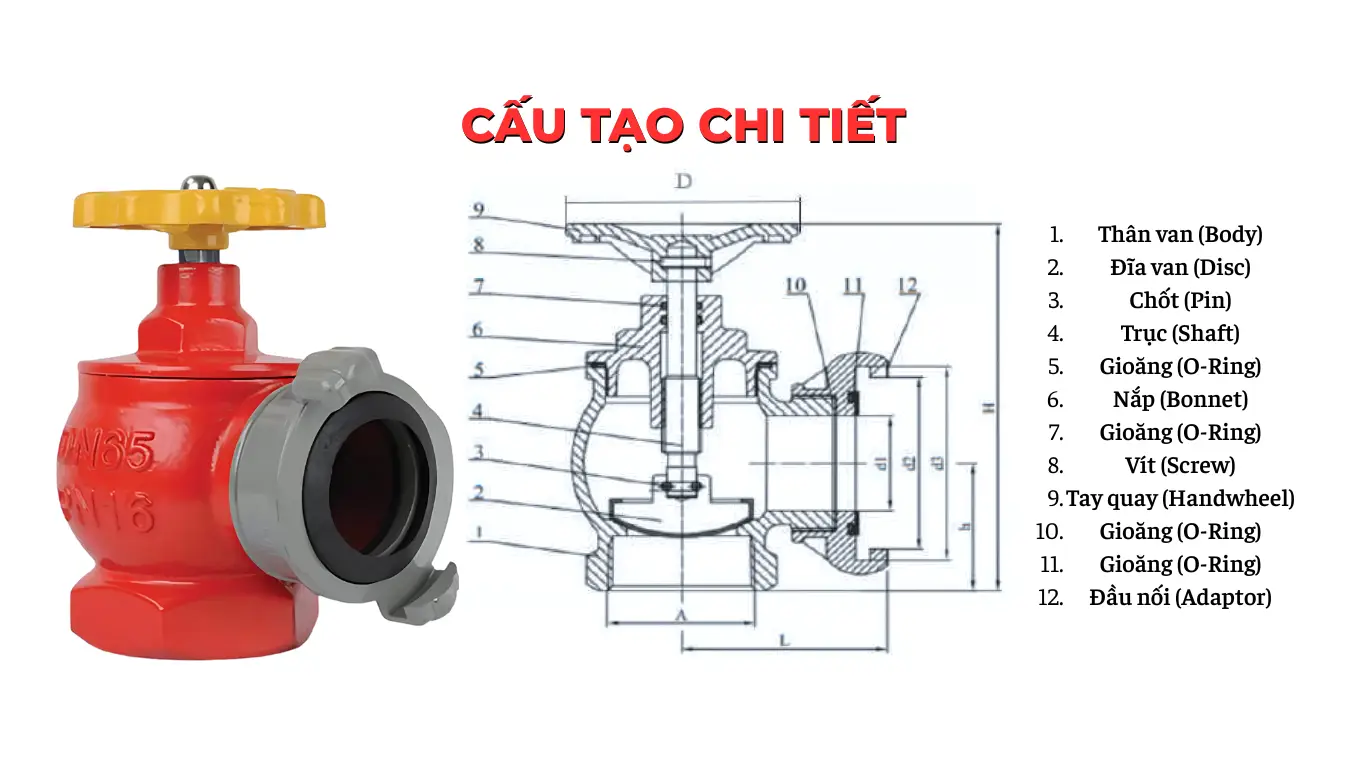
Detailed Structure of the ROBO Angle Valve
Practical Applications of the ROBO Angle Valve
With its standardised design and stable performance, the ROBO angle valve is an indispensable component in fixed fire water supply systems. Thanks to its flexibility and high reliability, the product is widely used in various environments and projects, including:
Installation inside outdoor fire hydrants
Indoor fire hose cabinets
Factories, workshops, and industrial zones
Infrastructure and public facilities such as hospitals, schools, shopping centres, railway stations, and bus terminals
Economic Benefits of Using the ROBO Angle Valve
In addition to ensuring operational efficiency and fire safety, the ROBO angle valve provides significant economic value to investors, contractors, and installation teams:
Reasonable investment cost: ROBO angle valves are competitively priced compared to imported valves in the same segment while fully meeting TCVN technical standards. This makes them an optimal choice for reducing initial material costs without compromising system quality.
Easy installation and assembly: With standard Rc2 and Rc2 1/2 threads, the valve can be easily connected to common pipes and fittings, shortening installation time, saving labour, and minimising technical errors.
Durable and low maintenance: Made from ductile iron, stainless steel, and EPDM/NBR rubber, the valve offers high durability, pressure resistance, and corrosion protection. It operates reliably over long periods with minimal maintenance, reducing operational and repair costs.
Easy replacement and system compatibility: The valve is readily available in the market, compatible with various fire protection devices such as fire hoses, nozzles, and quick couplings, simplifying maintenance and system expansion.
Enhanced long-term investment efficiency: Thanks to its long service life and stable performance, the ROBO angle valve protects the fire protection system from potential damage, ensures continuous operation, and improves overall reliability and investment effectiveness for the project.
Preparation Before Installation
Check all valve components, including the handwheel, connectors, and gaskets.
Ensure that the water pipes and connectors have compatible threads (Rc2 or Rc2 1/2).
Clean pipes and connection points thoroughly to remove dust, debris, and metal shavings.
Suitable Installation Location
Valves are typically installed in indoor fire hose cabinets or outdoor fire hydrants.
Valve orientation can be upward or horizontal, depending on the cabinet or hydrant design.
Avoid installing in areas with prolonged high humidity, corrosive chemicals, or direct sunlight.
Basic Installation Steps
Wrap PTFE tape around the pipe threads to ensure a tight seal.
Hand-tighten the valve onto the threaded pipe, then use a tool to moderately tighten (avoid over-tightening to prevent thread damage).
Attach the quick connector (adaptor) to the fire hose according to TCVN standards.
Install the handwheel and check that the opening/closing operation is smooth.
Proper Usage Instructions
Turn the handwheel counterclockwise to open and clockwise to close.
After use, close the valve completely, remove the hose, and check for any leaks.
Avoid applying excessive force to the handwheel or valve body while under water pressure.
Maintenance and Periodic Inspection
Clean the valve and rotate the handwheel once a month to prevent sticking.
Check for water leaks at gaskets and threaded connections.
Perform maintenance immediately if leaks or stiff operation are detected to ensure readiness in emergencies.
Conclusion
The ROBO angle valve is an optimal solution for modern fire protection systems, fully meeting Vietnamese technical standards. With its robust design, flexible operation, long service life, and reasonable cost, this valve not only ensures the safety of buildings but also provides significant economic benefits for investors and contractors.
Whether you are constructing a high-rise building, a factory, or replacing equipment in an existing fire protection system, the ROBO angle valve is a reliable choice, suitable for both new installations and system upgrades.
For advice on selecting the right angle valve for your project:
Contact Bao Tin Steel – official distributor of genuine fire protection equipment, offering professional service and dedicated technical support.


 Tiếng Việt
 ភាសាខ្មែរ