

 Tiếng Việt
 ភាសាខ្មែរ
In both civil and industrial piping systems, ball valves are essential devices for controlling the flow of water, gas, or liquids. With their simple design, easy operation, and quick open/close capability, ball valves are widely used in various fields, including water supply and drainage, chemicals, food processing, fire protection, and many other engineering sectors.
So, what is a ball valve? What components does it consist of? How does it work, and what are the common types of ball valves available today? Let’s take a detailed look at the following article by Bao Tin Steel to help you choose the most suitable valve for your needs.
What is a ball valve?
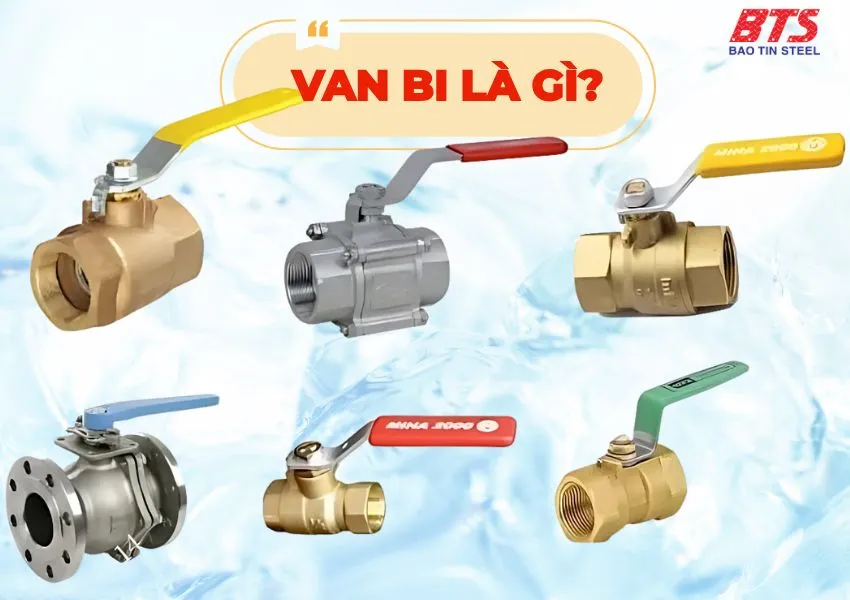
A ball valve is an industrial valve used to control the flow of liquids or gases in piping systems. It works by opening or closing the flow through a hollow ball placed inside the valve body. By rotating the handle or actuator 90 degrees, the ball also rotates, allowing the flow to pass through or completely blocking it.
With its quick open/close mechanism and simple yet effective design, ball valves are widely used in various applications, from domestic water supply and drainage systems, pneumatic systems, and chemicals, to industrial plants, fire protection systems, food processing, pharmaceuticals, and more.
Structure and Working Principle of a Ball Valve
Basic Structure of a Ball Valve
A standard ball valve typically consists of the following main components:
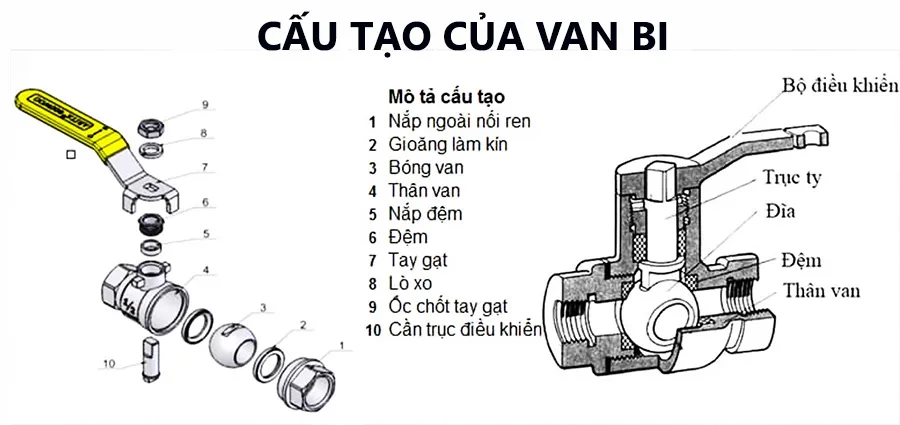
Body: The outer shell that protects all internal components. The body is typically made from stainless steel, cast iron, brass, or plastic, depending on the application and working environment.
Ball: A spherical component with a hole drilled through its centre. When the ball rotates, this hole allows the flow to pass through or blocks it. The ball is the most crucial part of the valve, determining its functionality.
Handle or Actuator: Used to rotate the ball inside the valve body. A handle is usually applied to smaller valves for manual operation. For automatic systems, the valve can integrate an electric or pneumatic actuator.
Sealing Gasket: Made from rubber, Teflon, or heat-resistant materials, the gasket ensures a tight seal at the contact points, minimising leakage of the fluid.
Connection Types: Ball valves can be connected to pipes through various methods such as threaded connections, flanged connections, clamp fittings, or direct welding, depending on the system design.
Working Principle of a Ball Valve
The working principle of a ball valve is quite simple: When you rotate the handle or actuator by 90 degrees, the ball inside the valve body also rotates. When the valve is open, the hole in the ball aligns with the flow path, allowing the fluid to pass through. Conversely, when the valve is closed, the hole in the ball is perpendicular to the flow direction, completely blocking the flow.
Ball valves are particularly well-suited for systems that require quick, precise operation and high sealing performance, such as fire protection systems, water treatment, chemical handling, or pneumatic systems.
Common Types of Ball Valves Today
Ball valves are highly diverse in types and can be classified based on several criteria, such as valve body construction, flow port configuration, connection type, materials of construction, and control components. Below are the common types of ball valves:
Classification Based on Valve Body Construction
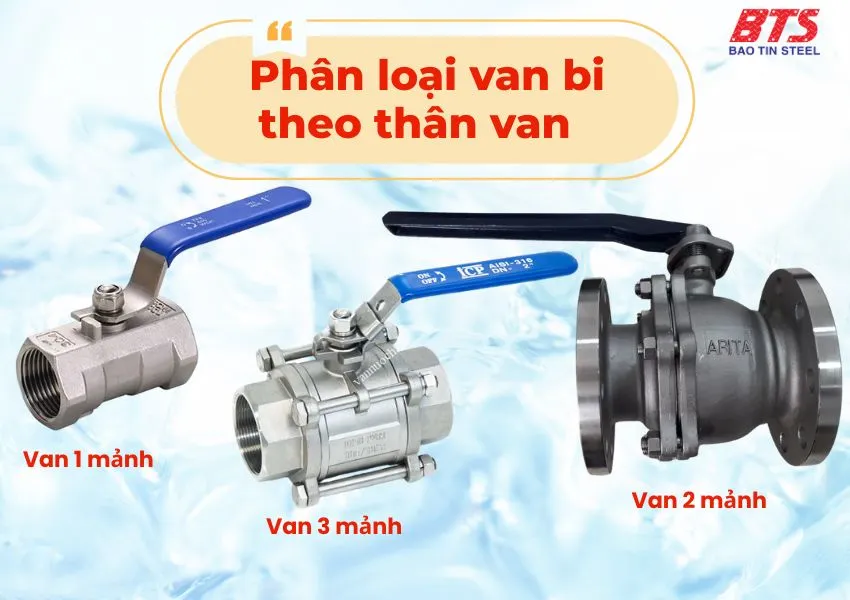
One-Piece Ball Valve: The valve body is cast as a single piece. This type is compact and cost-effective, but is more difficult to maintain or repair internally due to its integrated design.
Two-Piece Ball Valve: The valve body is divided into two parts, connected by bolts. This type is more common and allows easier access to the ball and seals for maintenance or replacement.
Three-Piece Ball Valve: The valve body consists of three parts, bolted together. This is the most flexible type, allowing the central part (ball and stem) to be removed from the pipeline without disassembling the entire valve. It is very convenient for maintenance, repairs, and cleaning.
Classification Based on Flow Port Configuration
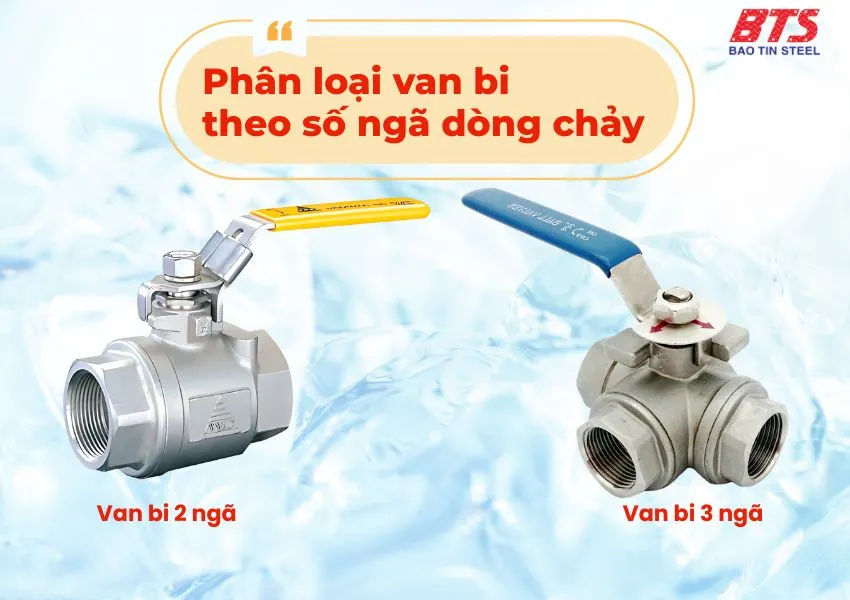
Two-Way Ball Valve: This is the most basic type, with two ports (one inlet and one outlet), and it only serves the function of opening or closing the flow. When open, the flow passes straight through.
Three-Way Ball Valve: This type has three ports that connect to the pipeline. The ball has a special structure (usually an “L” or “T” shaped hole) that allows the flow to be redirected in various ways:
-
L-Shaped Port: Closes one port and opens the other two, allowing flow to be redirected between the two open ports.
-
T-Shaped Port: Can either close one port and open the other two, or open all three ports simultaneously to mix or split the flow.
A three-way ball valve is very useful in applications that require flow direction change or fluid mixing.
Classification Based on Connection Type to the Pipe
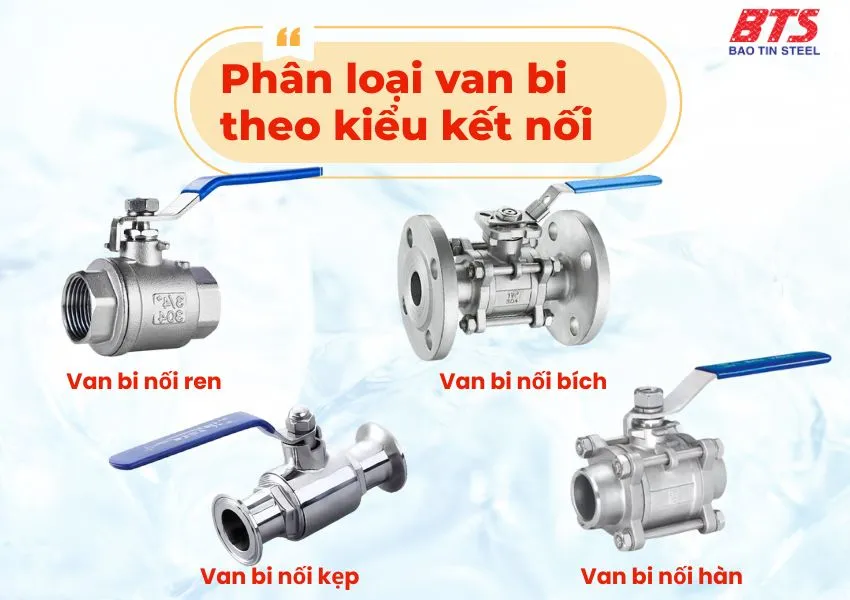
Threaded Ball Valve: The valve ends have threads to screw directly into the pipeline. This type is commonly used for small piping systems (DN15 – DN100) and low to medium pressure applications.
Flanged Ball Valve: The valve ends have flanges that are bolted to flanges on the pipeline, using gaskets for sealing. This type is typically used for larger pipelines (DN50 and above). It requires high sealing capability and can withstand high pressure and temperature. The installation is secure, stable, and minimises leakage.
Welded Ball Valve: The valve ends are welded directly to the pipeline. This type ensures an absolute seal and is commonly used for high-pressure, high-temperature applications or special environments where leakage is not permitted.
Clamp Ball Valve: Commonly used in industries like food processing and pharmaceuticals, where high sanitary standards are required. It is easy to disassemble for cleaning and maintenance.
Phân loại theo vật liệu chế tạo
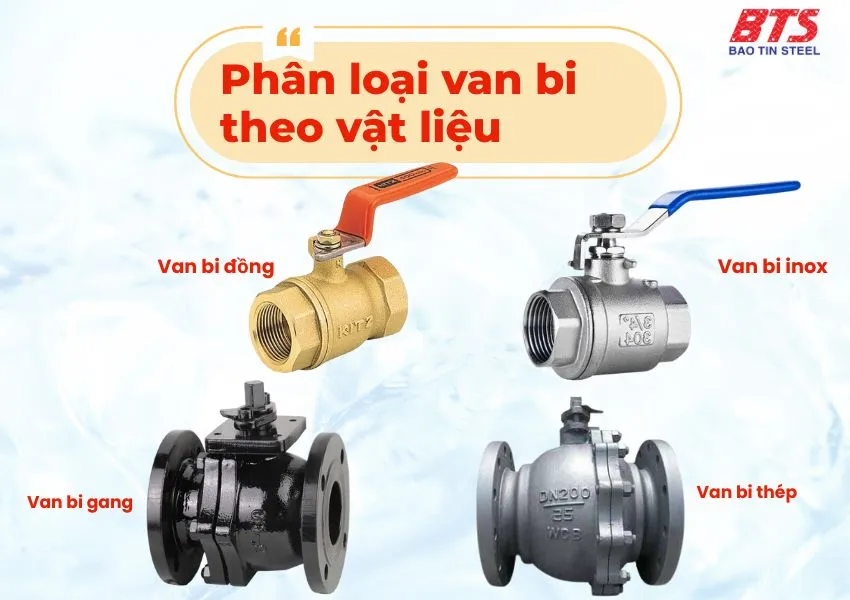
Brass Ball Valve: Commonly used for residential applications, clean water, pneumatic systems, and in conditions with low temperature and pressure. They are cost-effective and compact.
Stainless Steel Ball Valve (SUS304, SUS316): Known for excellent corrosion and oxidation resistance, they can withstand high temperatures and pressure. Stainless steel ball valves are widely used in industries such as chemicals, food, pharmaceuticals, wastewater treatment, and oil & gas.
Cast Iron Ball Valve: Typically used for medium to large-sized pipes. They can withstand pressure but have lower corrosion resistance compared to stainless steel. They are affordable and commonly used in water supply and drainage systems, as well as fire protection systems (PCCC).
Steel Ball Valve (Carbon Steel, Alloy Steel): These valves have high mechanical strength and can endure very high pressures and temperatures. They are ideal for heavy industrial applications, including oil & gas, petrochemical, and power generation industries.
Classification Based on Control Components
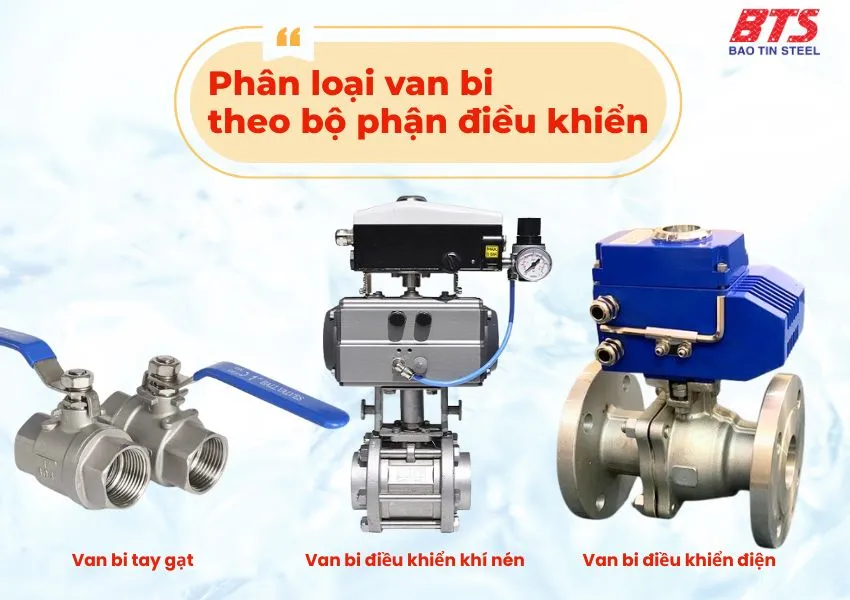
Lever Operated Ball Valve: Manually controlled by a lever, rotating 90 degrees to open or close the valve. Simple, easy to use, and ideal for small to medium-sized valves.
Pneumatically Operated Ball Valve: Uses a pneumatic actuator to open and close the valve automatically. Suitable for automation systems that require fast opening and closing, particularly in environments where flammable or explosive materials are present.
Electrically Operated Ball Valve: Uses an electric actuator to open and close the valve automatically. It can be controlled remotely and is ideal for automation systems that require precise control. However, the opening and closing speed is slower compared to pneumatic valves.
Each type of ball valve has its own advantages and applications. The choice of the suitable valve type depends on factors such as the working environment (fluid, temperature, pressure), pipe size, control requirements, and cost.
Advantages and Applications of Ball Valves
Advantages of Ball Valves
–Quick Operation: A 90-degree turn (1/4 rotation) is all it takes to fully open or close the valve. This makes it ideal for emergencies, such as in fire protection systems (PCCC) or manufacturing plants.
–Tight Seal: The ball and seal are designed to fit tightly together, preventing maximum leakage even in high-pressure systems or when handling corrosive fluids.
–Simple Construction: With fewer moving parts and durable materials, ball valves have a long lifespan and provide stable operation over time without frequent maintenance.
–Versatility: Ball valves come in various materials, sizes, connection types, and control styles, making them suitable for almost any piping system, from residential to heavy industrial applications.
Applications of Ball Valves
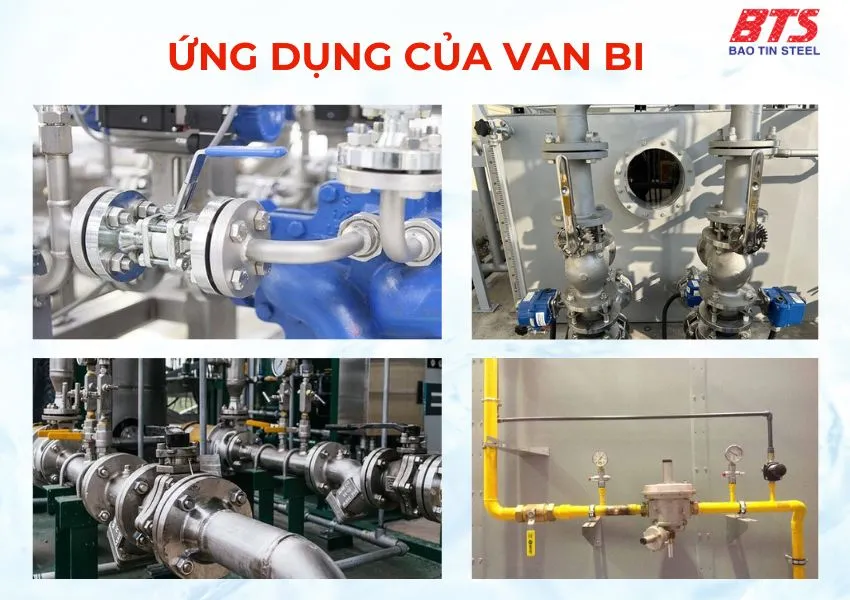
With the advantages mentioned above, ball valves are widely used in various fields, specifically:
- Control of clean water, wastewater, and domestic water in buildings, apartments, and residential areas.
- Used in source valve systems and quick shut-off valves to ensure water is available in case of fire or explosion emergencies.
- Stainless steel 304 or 316 ball valves are used to ensure hygiene and safety in systems that transport water, milk, beer, wine, and other consumables.
- Due to their excellent corrosion resistance, ball valves are used in environments with chemicals, dilute acids, or cleaning agents.
- Lever-operated, pneumatic, or electric ball valves are commonly found in oil refining plants and gas pipeline systems.
Conclusion
A ball valve is a crucial component in systems that control and regulate the flow of liquids and gases. They are widely used across various industries and play an important role in ensuring the performance and reliability of systems.
TBao Tin Steel – The Trusted Supplier of Genuine Ball Valves at Competitive Prices

Quality – Price, Origin are the key factors you want to consider when purchasing ball valves for your project. Look no further than Bao Tin Steel, as we provide all these qualities. Specifically:
-
Ball valves are imported directly from the manufacturer, 100% brand new.
-
Complete certification and inspection documents are available.
-
A wide variety of types, materials, and specifications.
-
Competitive pricing.
-
A delivery team that ensures products are delivered directly to the customer’s location.
With over 13 years of experience in distributing steel pipes, pipe fittings, and industrial valves, BaoTin Steel is proud to be a trusted address for both domestic and international customers.
Contact Bao Tin Steel now for the fastest support and quotation on ball valves!
Above are the most basic details about the different types of ball valves. If you have any further questions, feel free to leave them. We are always here to assist you in the best way possible!
Tiger Steel is a subsidiary of Bao Tin Steel.