

 Tiếng Việt
 ភាសាខ្មែរ
What Is a Mill Certificate? What Are CO and CQ?
In the construction industry, even a minor oversight in documentation can turn the acceptance process into a nightmare. In reality, many engineers and contractors have faced situations where materials have already been delivered to the site—or reinforcement steel has even been fully installed—only for the paperwork to be rejected by the supervising consultant. The simple reason? Confusing a factory test certificate with CO/CQ. Failing to clearly distinguish between these documents not only delays payment progress but also complicates the process of proving material quality to the investor.
The following article by Bao Tin Steel will help you understand: What is a factory test certificate? What is CO/CQ? And the practical role of CO/CQ in construction.
What Is a Mill Certificate?
A Mill Test Certificate (MTC) is a document issued directly by the manufacturer to confirm that the products have been inspected, tested, and verified to meet the required technical standards before leaving the factory.
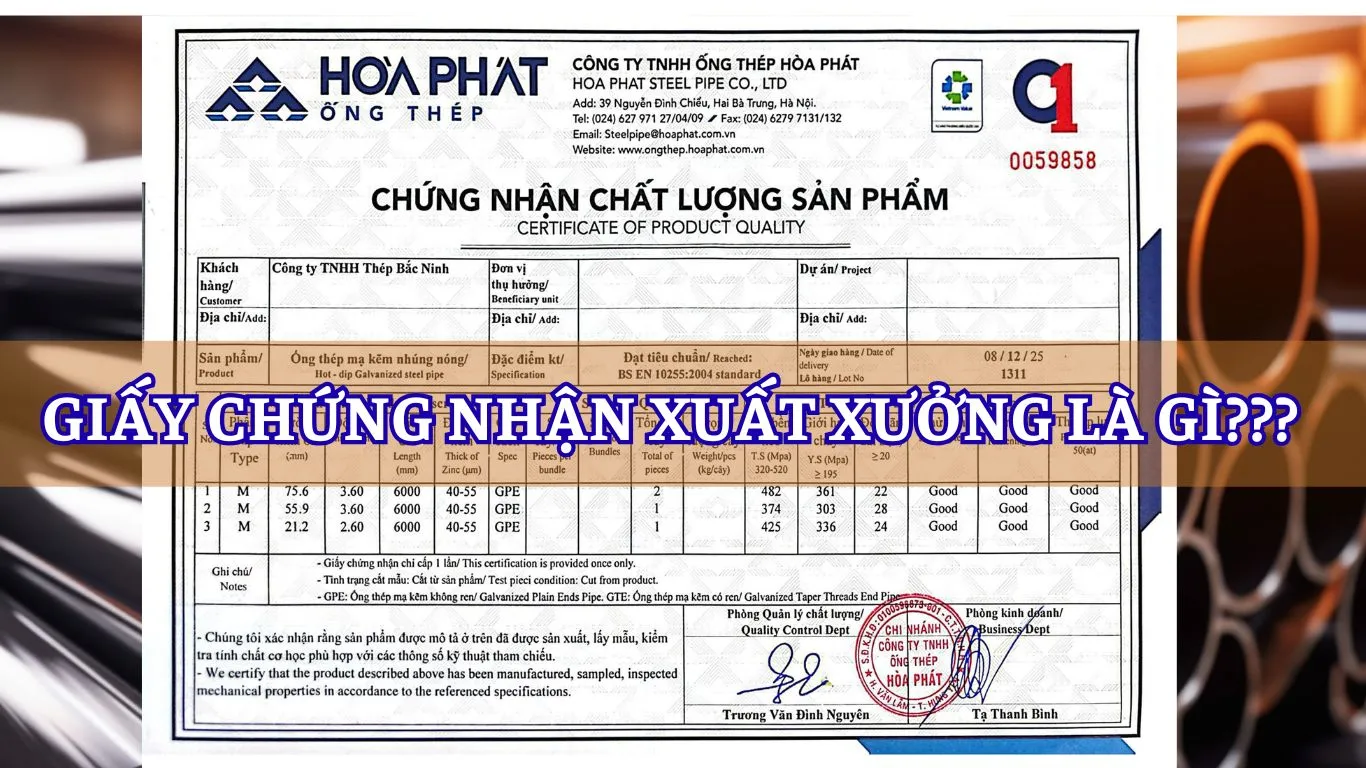
A mill certificate usually includes the following information:
- Manufacturer information
- Product name, steel grade, and applicable standards
- Dimensions, thickness, and length
- Heat Number / Batch Number
- Actual test results, including:
- Chemical composition
- Mechanical properties (yield strength, tensile strength, elongation)
- Signature of the QC department and factory stamp
What Are CO and CQ? What Do CO and CQ Stand For?
What Is a Mill Certificate? What Are CO and CQ?
CO (Certificate of Origin) is a Certificate of Origin. It is used to confirm the country or territory where a product is manufactured. This helps customs authorities apply import taxes correctly and helps buyers verify whether the product truly comes from the stated origin (for example: Japanese steel, Korean steel, or Chinese steel).
This document is typically issued by organizations such as the Chamber of Commerce and Industry (VCCI) or the Ministry of Industry and Trade of the exporting country.
CQ (Certificate of Quality) is a Certificate of Quality. It is used to confirm that the product meets the declared technical specifications, such as strength, chemical composition, and load-bearing capacity, in accordance with published or international standards.
This is an important basis for consulting engineers and project owners to approve the material for use in construction projects.
CQ is usually issued by the manufacturing plant or an independent inspection/verification organization.
When are Factory Test Certificates and CO/CQ used in construction?
In construction, CO/CQ and Factory Test Certificates are used at the following three main milestones:
When approving material samples (Before purchasing)
The contractor submits the CO/CQ to the Investor and the Supervisor to prove: “The materials I intend to purchase have a clear origin and meet the technical specifications of the project.” Without this document, the materials will not be allowed into the project.
When receiving materials at the construction site (Incoming Material Inspection)
- When the delivery truck arrives, engineers use this document for cross-checking:
- Verify if the batch number, material type, and specifications on the document match the actual goods.
- Serve as the basis for signing the Material Acceptance Minutes, allowing the goods to be unloaded and proceed to construction.
When preparing as-built documentation (For payment)
- This is the most critical stage for the contractor to secure fund disbursement.
- All CO/CQ documents must be attached to the as-built dossier to prove that the project was constructed using the strictly committed materials.
- Without this set of documents, the investor will not sign the handover minutes, making it impossible to finalize the financial settlement.
*Note:
- CO/CQ does not reflect the actual test results of each material batch.
- It does not display specific mechanical properties or chemical compositions.
- It cannot replace the Factory Test Certificate in items requiring high technical acceptance standards.
Therefore, for items such as steel structures, technical piping, and firefighting systems, CO/CQ is only supplementary. The Factory Test Certificate remains the primary basis for acceptance.
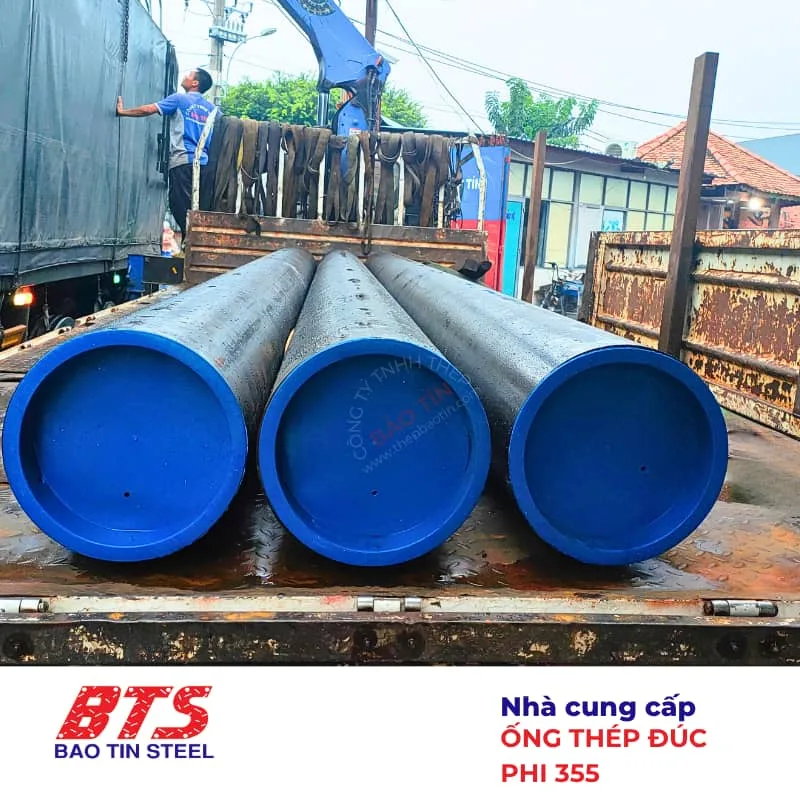
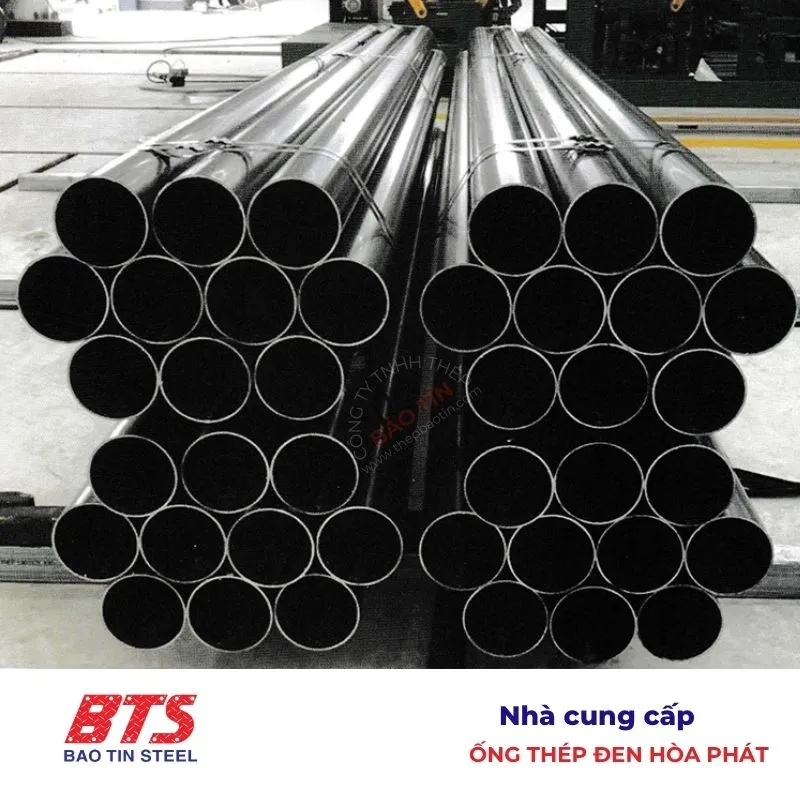
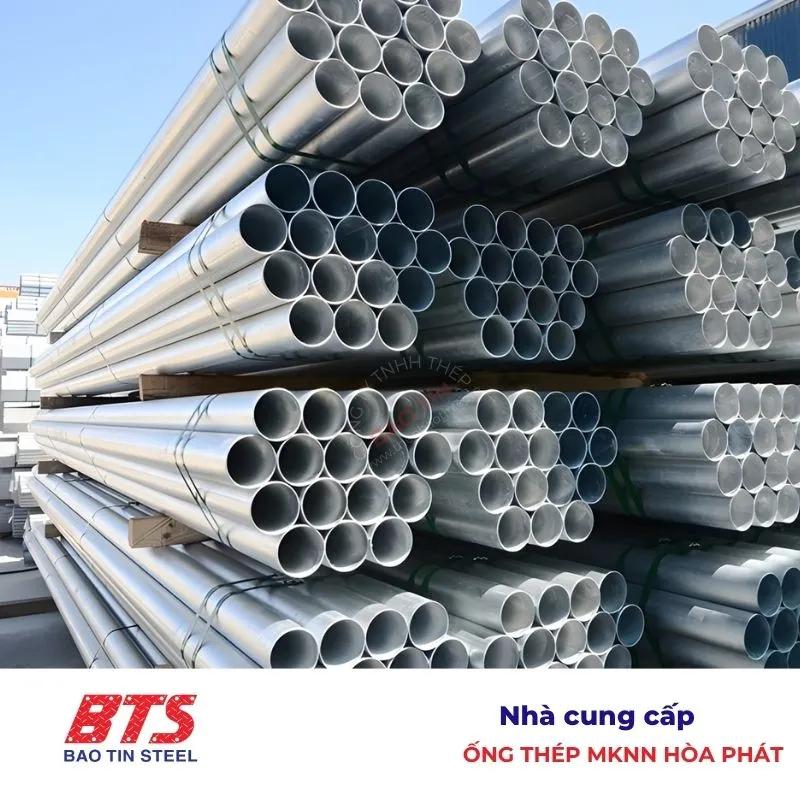
Refer to some types of steel pipes distributed by Bao Tin Steel:
Do domestic goods have CO/CQ and Factory Test Certificates?
In theory, a CO (Certificate of Origin) is exclusively for imported goods to pass through customs; therefore, goods manufactured and consumed domestically do not have a CO. Instead, enterprises use the Factory Test Certificate to verify the manufacturing location and origin of the goods.
Regarding quality, domestic goods are still strictly required to have a CQ (Certificate of Quality). However, in reality, Vietnamese manufacturers often integrate technical testing metrics directly into the Factory Test Certificate. Therefore, when purchasing domestic materials, you only need to request the Factory Test Certificate, as it provides sufficient legal and technical validity for acceptance, instead of demanding a full CO/CQ documentation package like imported goods.
Standards applied to Factory Test Certificates
The standards applied to a Factory Test Certificate are not a set of generic regulations; rather, they depend on the specific type of material and the project’s requirements. Specifically, they consist of three main categories:
National and international standards
These are the technical benchmarks used by factories for cross-checking and issuing the Factory Test Certificate. For example, in the iron and steel industry:
- Vietnamese Standards (TCVN): Such as TCVN 1651:2018 for ribbed steel bars.
- American Standards (ASTM): Such as ASTM A615/A615M.
- Japanese Industrial Standards (JIS): Such as JIS G3112.
- British Standards (BS): Such as BS 4449.
Management System Standards (ISO)
For a Factory Test Certificate to hold high validity and credibility, the manufacturing plant typically must achieve the ISO 9001 standard. This proves that the quality control process—from raw billets to the finished product—is strictly monitored, ensuring that the technical data stated on the certificate is completely accurate.
Mandatory National Technical Regulations (QCVN)
Certain construction materials are strictly required to comply with the National Technical Regulations (for example, QCVN 16 regarding construction material products and goods). The Factory Test Certificate will typically state clearly that the product has achieved conformity certification (chứng nhận hợp quy) according to this regulation, making it fully eligible for market circulation.
What documents can Bao Tin Steel provide?
At Bao Tin Steel, every batch of steel pipes, square/rectangular steel tubes, and structural steel (U, I, V, H, etc.) is accompanied by full legal documentation upon dispatch. For domestic goods from major brands such as Hoa Phat, SeAH, or VinaOne, we provide either the original Factory Test Certificate or a certified copy with an official stamp.
Customers can thoroughly cross-check the technical specifications and batch numbers on the document against the actual tags and labels right at the construction site before signing the delivery and acceptance minutes. This serves as the clearest proof of the quality and transparency of the materials we supply.
Below is a sample Factory Test Certificate from the Hoa Phat factory for your reference:
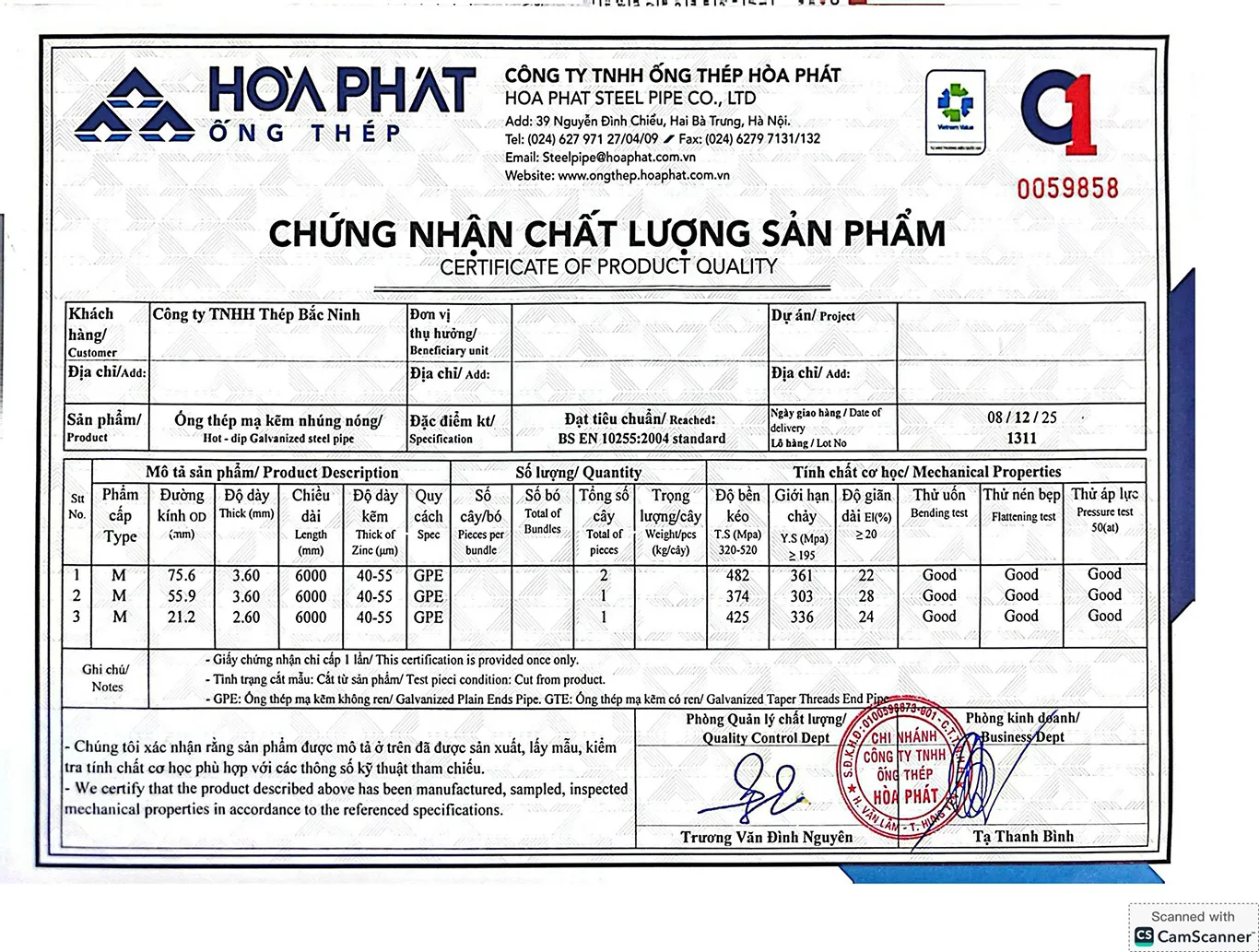
For imported seamless steel pipe lines and international fittings, Bao Tin Steel will provide the accompanying CO/CQ certificate package. Providing this comprehensive set of certificates not only gives customers peace of mind regarding quality but also ensures that the project’s acceptance and as-built documentation process is always convenient and swift.
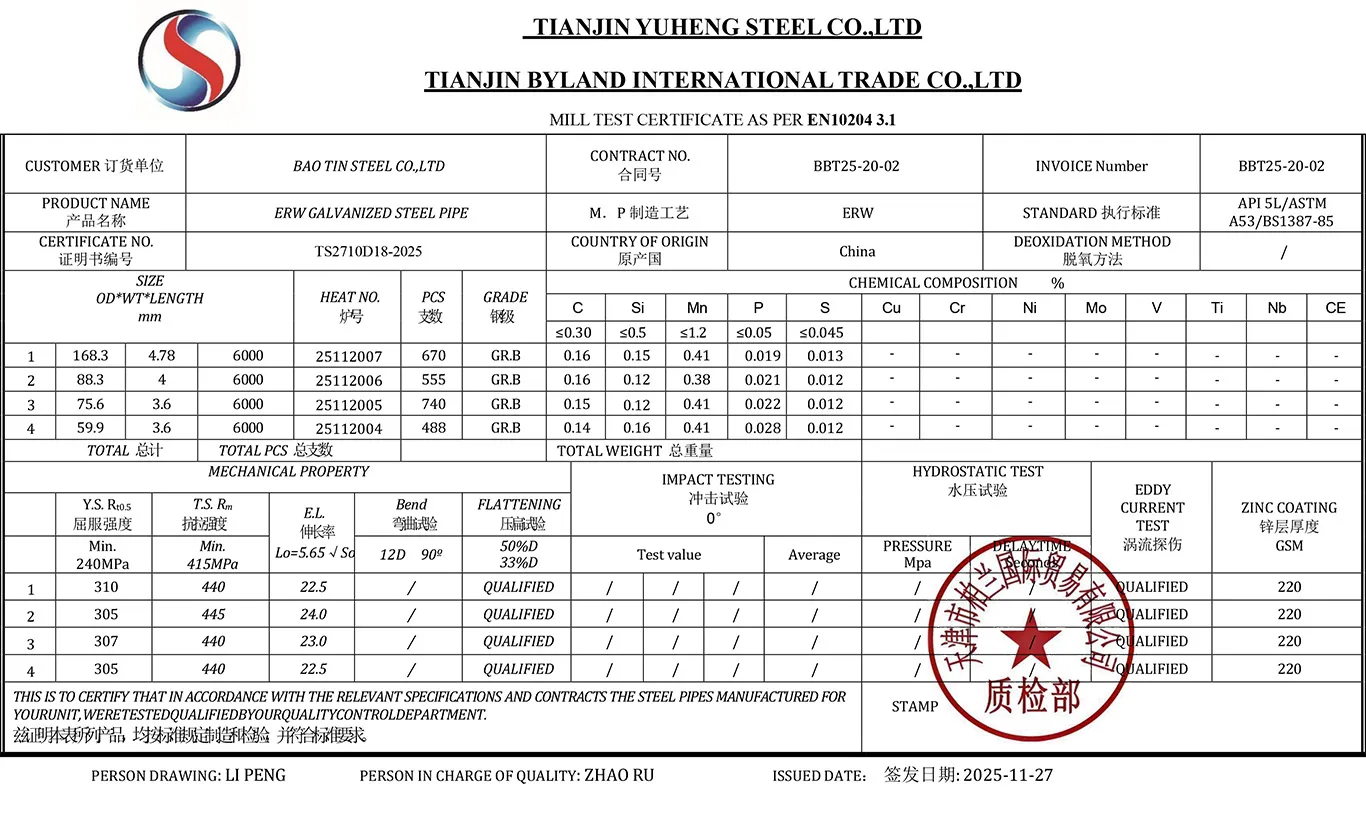
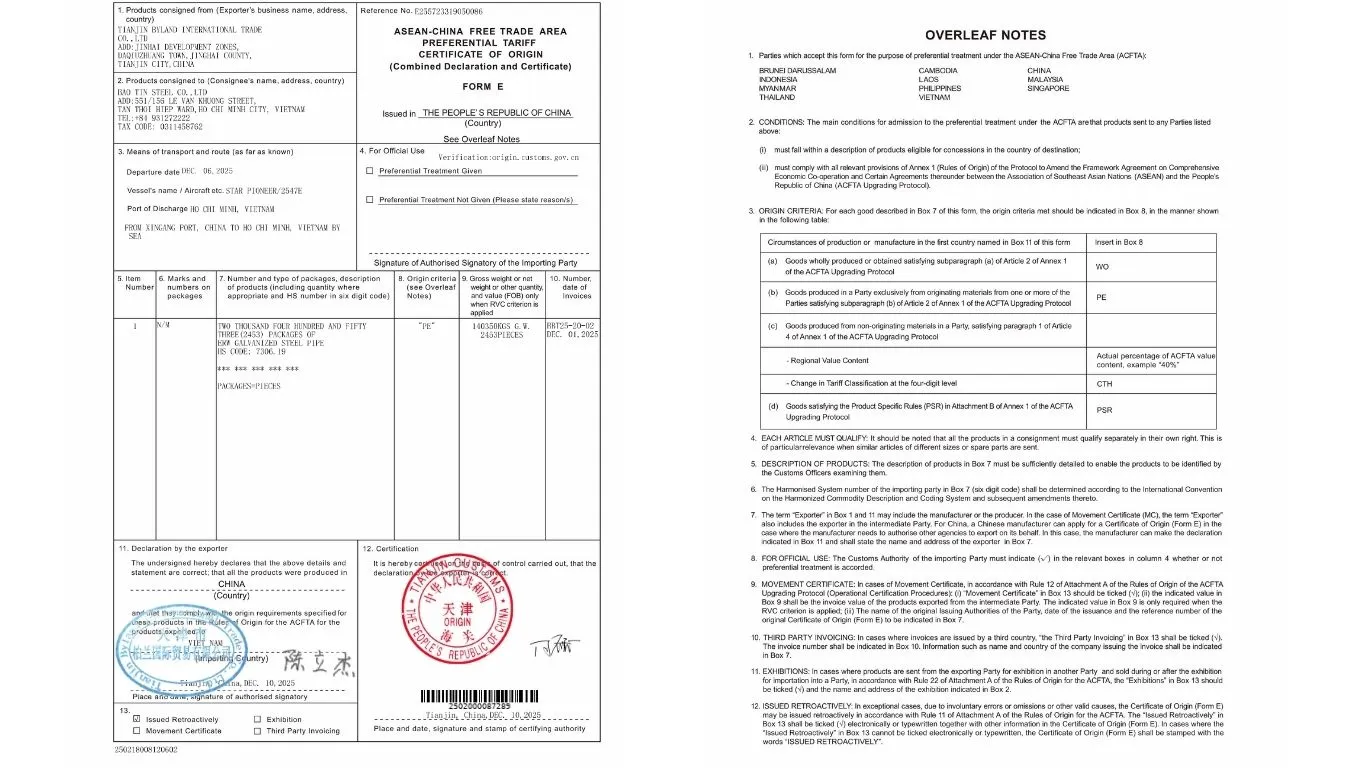
The information above covers everything you need to know about Factory Test Certificates and CO/CQ certificates. If you have any further questions regarding these documents, please feel free to contact Bao Tin Steel for assistance. Hotline: 0932 059 176.