

 Tiếng Việt
 ភាសាខ្មែរ
What Is Hardox Steel? Composition, Grades, and Practical Applications
In mining and material-handling environments involving rock, ore, coal, or clinker, conventional steel quickly wears out and deteriorates. For companies in the mining, cement, thermal power, and heavy engineering industries, constantly replacing liners, dump truck bodies, and excavator buckets results in high costs and extended equipment downtime.
As a result, the demand for a specialized wear-resistant steel that offers greater durability and more stable performance has become inevitable.
Hardox is not a conventional structural steel; it is an advanced material specifically engineered for severe wear and heavy-load applications.
Discover what Hardox steel is, along with its key characteristics and real-world applications.
What Is Hardox Steel?
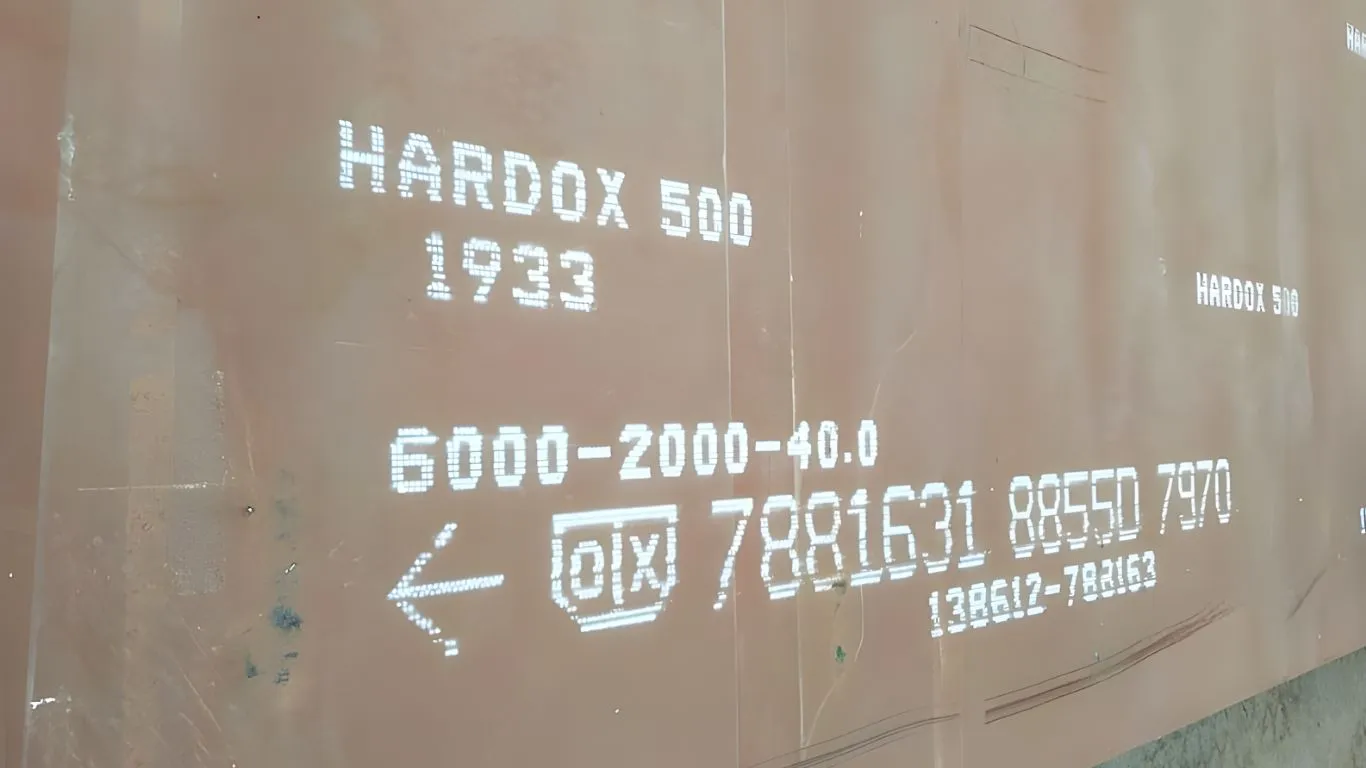
Hardox steel is a wear-resistant steel plate (abrasion-resistant steel plate) manufactured and trademarked by SSAB. It is specifically engineered for applications exposed to high friction, heavy impact, and extreme mechanical loads.
Unlike conventional structural steel plates such as SS400 or A36, Hardox wear-resistant steel offers exceptional surface hardness and outstanding abrasion resistance. As a result, it helps extend equipment service life and significantly reduce maintenance and replacement costs.
Common Hardox Steel Grades
The Hardox grade designation typically represents the nominal hardness measured on the Brinell hardness scale (HBW).
Common grades include:
- Hardox 400
- Hardox 450
- Hardox 500
- Hardox 550
- Hardox 600
- Hardox HiTuf (optimized for impact toughness)
- Hardox Extreme (ultra-high hardness grade)
Among these, Hardox 500 is one of the most widely used grades due to its excellent balance between hardness and machinability.
Chemical Composition of Hardox Steel
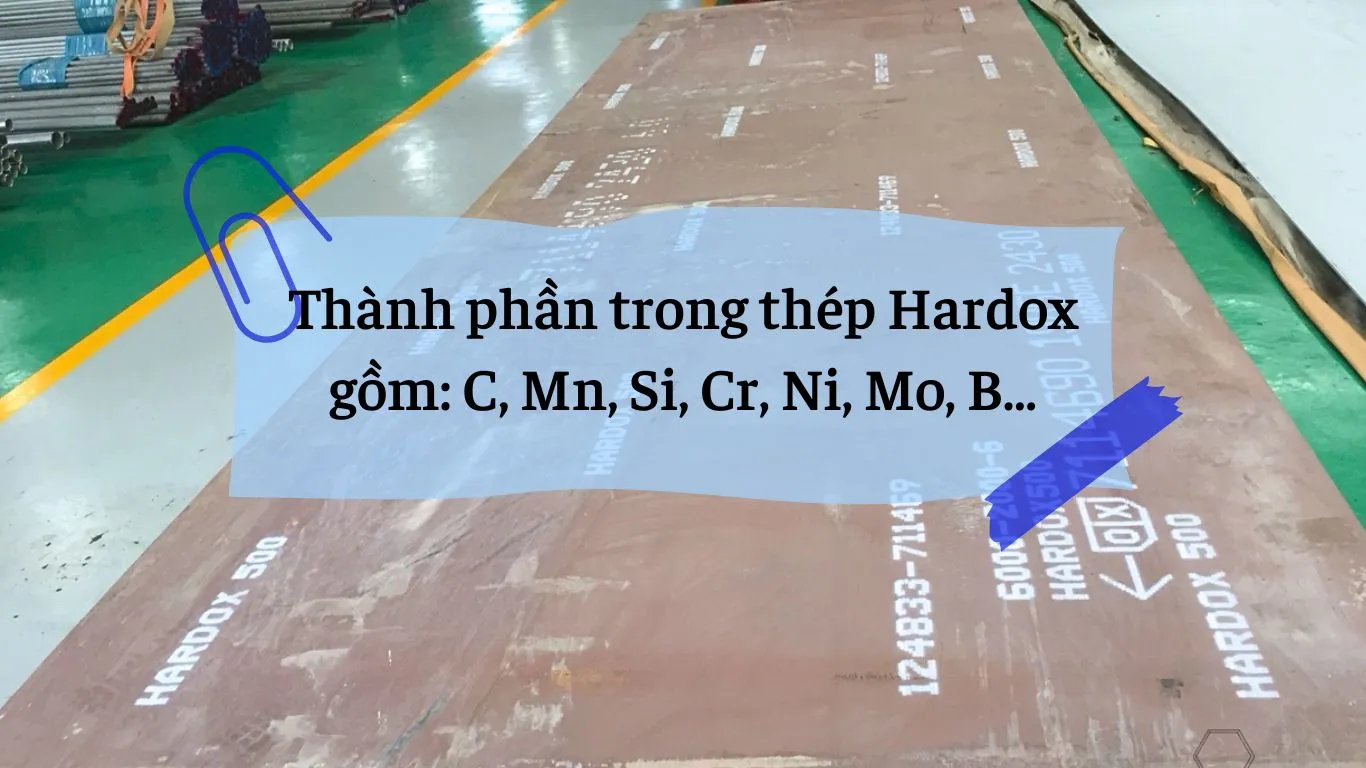
Hardox is a low-alloy steel optimized to achieve high hardness and excellent wear resistance. It typically contains carbon (C), manganese (Mn), silicon (Si), chromium (Cr), nickel (Ni), molybdenum (Mo), and boron (B).
The exact composition varies depending on grade and plate thickness.
Typical Chemical Composition of Hardox Steel
| Hardox Grade | C (Carbon) | Si (Silicon) | Mn (Manganese) | P (Phosphorus) | S (Sulfur) | Cr (Chromium) | Ni (Nickel) | Mo (Molybdenum) | B (Boron) |
|---|---|---|---|---|---|---|---|---|---|
| Hardox 400 | 0.15 | 0.70 | 1.60 | 0.025 | 0.010 | 0.30 | 0.25 | 0.25 | 0.004 |
| Hardox 450 | 0.21 | 0.70 | 1.60 | 0.025 | 0.010 | 0.50 | 0.25 | 0.25 | 0.004 |
| Hardox 500 | 0.27 | 0.70 | 1.60 | 0.025 | 0.010 | 1.00 | 0.25 | 0.25 | 0.004 |
| Hardox 600 | 0.47 | 0.70 | 1.50 | 0.015 | 0.010 | 1.20 | 2.50 | 0.70 | 0.005 |
When Should You Use Hardox Steel?
Many customers often ask:
“Why not just use thicker Q345 steel plates to reduce costs?”
In reality, Hardox steel provides significantly higher wear resistance, meaning thinner plates can often outperform thicker conventional steel, while reducing overall weight and improving efficiency.
Significantly Extends Equipment Service Life
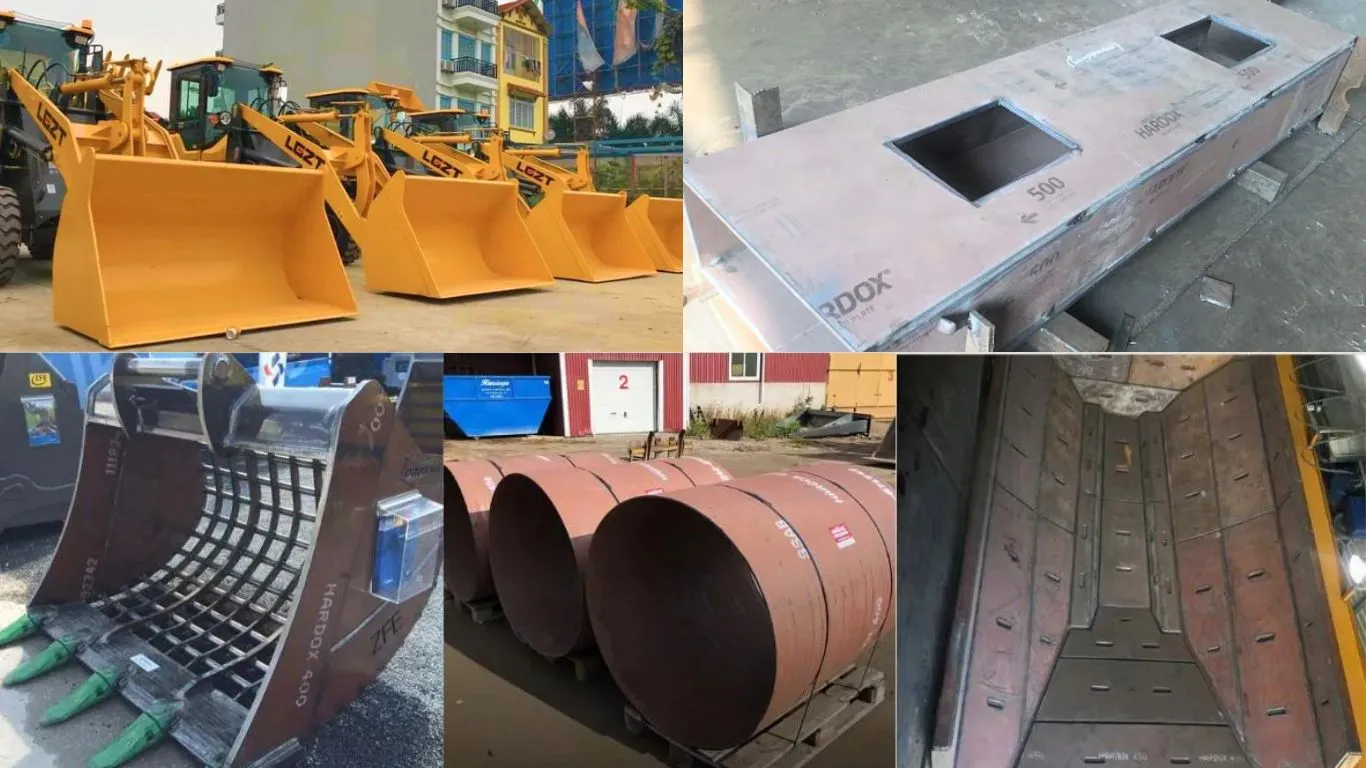
A hopper liner made from ordinary steel may wear out after only three months. However, using Hardox 500 steel can extend service life to 1–2 years.
Common applications include:
- Stone crusher liners
- Ore screening machines
- Cement discharge hoppers
This helps businesses save substantial maintenance and replacement costs annually.
Reduces Vehicle Weight and Increases Payload Capacity (Dump Truck Bodies)
Dump trucks transporting large rocks often require very thick conventional steel plates to withstand heavy impact. This makes the vehicle body heavier and increases fuel consumption.
Therefore, Hardox steel plates are commonly used for the floors and side walls of dump truck bodies and scrap transport vehicles.
As a result:
- The vehicle becomes lighter
- Payload capacity increases
- Fuel consumption is significantly reduced
Maintains Machinery Performance
For cutting and digging components, worn steel parts can significantly reduce the productivity of the entire system.
Therefore, Hardox steel is commonly used for:
- Excavator bucket edges
- Ripper teeth
- Scrap cutting blades
- Wood dust extraction fan blades
Thanks to its excellent wear resistance, the equipment remains sharp, operates more smoothly, and reduces stress on hydraulic systems and motors.
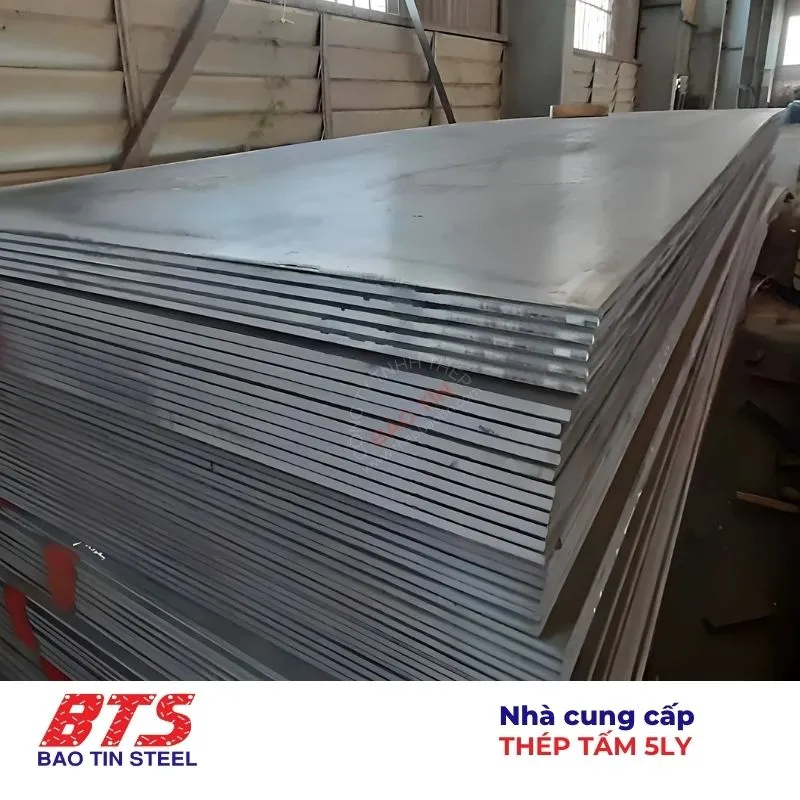
👉 Explore some of the steel plate products currently attracting strong customer interest at Bao Tin Steel

Pricing Information
Steel plate prices, including Hardox and other wear-resistant steels, fluctuate due to raw material costs, production expenses, and transportation fees.
For the latest pricing and consultation, please contact:
Bao Tin Steel
Hotline: 0932 059 176