

 Tiếng Việt
 ភាសាខ្មែរ
Ball valves are already quite familiar. However, ball valves are divided into different types with various characteristics and designs. Among them, flanged ball valves are always highly sought after by customers. So, what exactly is a flanged ball valve? What are its standards and pricing? If you’re interested in this type of valve, let’s check out the article below by Bao Tin Steel!
What is a flanged ball valve?
A flanged ball valve is a flow control device that connects to pipelines using flanges and bolts. The valve is operated manually by a lever, handwheel, or automatically (electric, pneumatic). There are various types of valves (stainless steel, cast iron, steel, plastic) with sizes ranging from DN15 to DN100, meeting standards such as JIS, BS, DIN, ANSI.
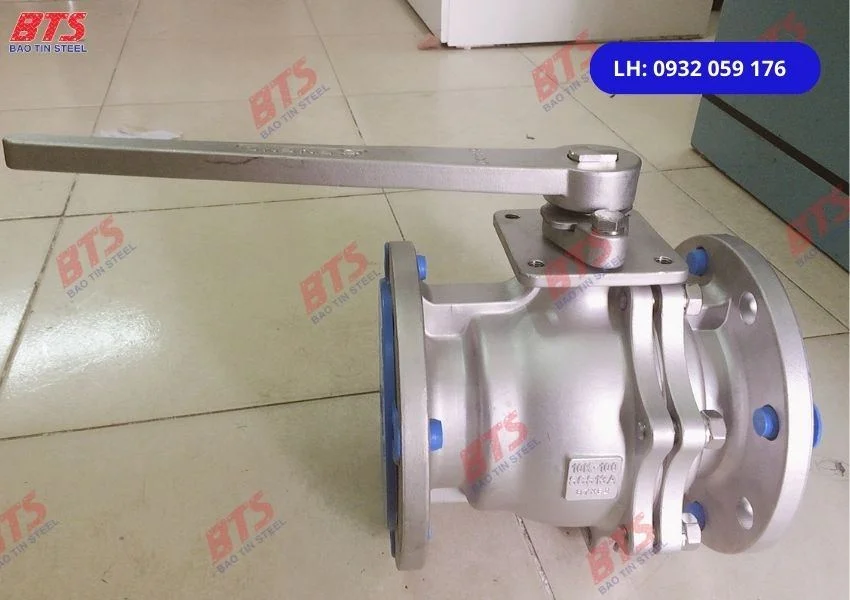
Similar to other flanged valve types, the common sizes of flanged ball valves range from DN15 to DN100. These valves are made from various materials such as stainless steel, plastic, steel, and cast iron. The flanged ball valve can operate under a maximum pressure of 16 kg/cm² and temperatures ranging from -10°C to 180°C. As the name suggests, the flanged ball valve connects to the piping system via flanges. The flange standards are JIS, BS, DIN, and ANSI.
Currently, the Vietnamese market offers a wide variety of flanged ball valves from countries such as South Korea, China, Thailand, Vietnam, etc. Each type comes with distinct features and varying prices, catering to the diverse needs of customers.
Construction of a Flanged Ball Valve:
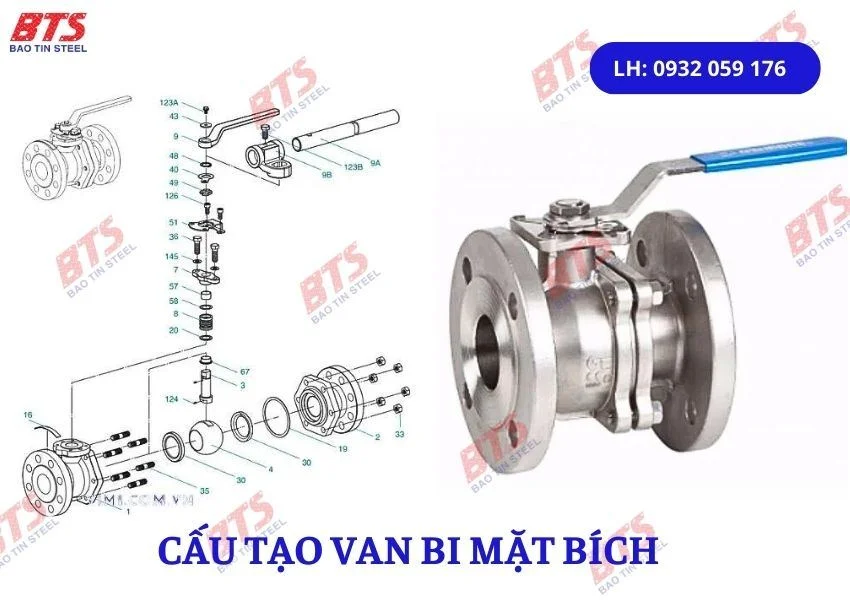
The flanged ball valve has a relatively simple structure. It consists of components such as the valve body, valve stem, ball, gasket, and actuator. The main function of each of these parts is as follows:
-
Valve Body:
Made from materials such as cast iron, stainless steel, plastic, etc., the valve body protects the internal components of the valve. It is also the part that is cast together with the flange to connect the valve to the pipeline. -
Ball:
The ball has a spherical shape with a central hole, is hard, and is highly resistant to corrosion. Its main role is to open/close the valve to regulate the flow of fluid. -
Valve Stem:
This component connects the ball to the actuator. It transmits the force from the actuator to the ball, enabling the opening and closing function of the valve. -
Actuator:
The actuator can be manual (lever or handwheel), electric, or pneumatic. It generates the force needed to move the valve stem and control the ball’s movement. -
Gasket:
The gasket ensures a tight seal between the valve stem and the ball. This prevents any fluid leakage, ensuring that the fluid stays contained while passing through the valve.
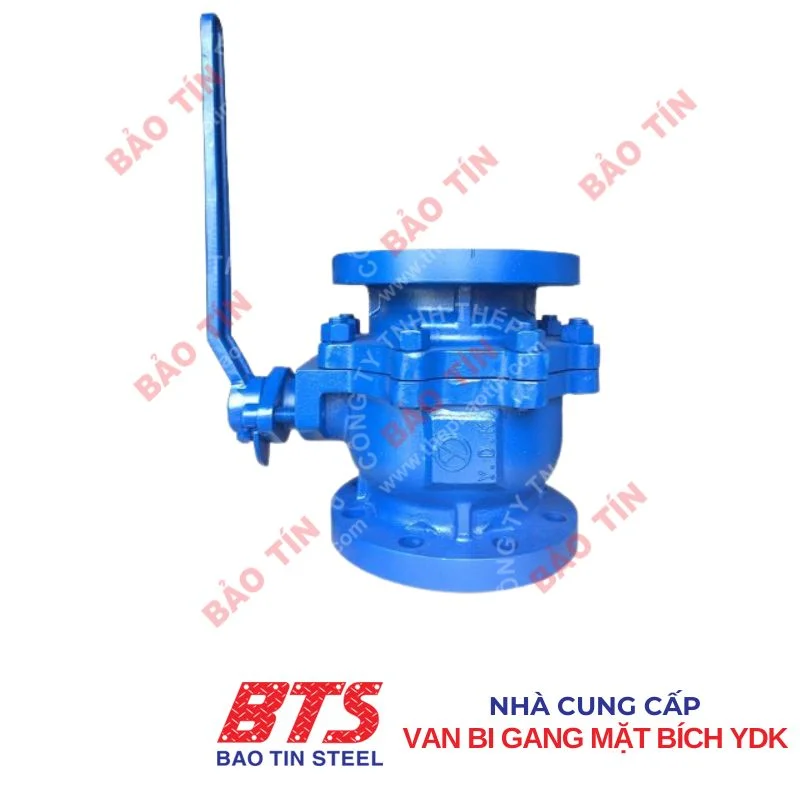
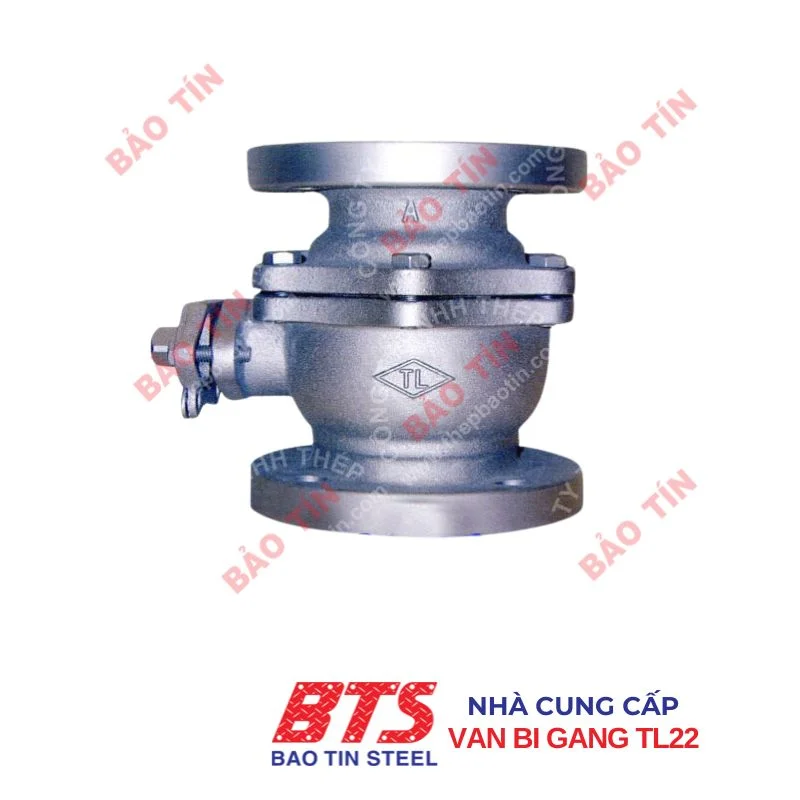
👉👉 Let’s take a look at some types of flanged ball valves distributed by Bao Tin Steel:
Classification of Flanged Ball Valves
Many factors help classify flanged ball valves. To easily identify and choose the right valve, be sure to keep these tips in mind!
Classification by manufacturing materials
As mentioned, flanged ball valves are made from materials such as cast iron, steel, stainless steel, and plastic. Therefore, they can meet the needs of various systems. Specifically:
- Stainless steel flange ball valve: Made from stainless steel 304 or stainless steel 316. Stainless steel flange ball valve has good resistance. At the same time, it is less susceptible to rust and corrosion, so it is suitable for many harsh conditions. Therefore, the price of stainless steel 304 flange ball valve is much higher than other cast iron and plastic valves.
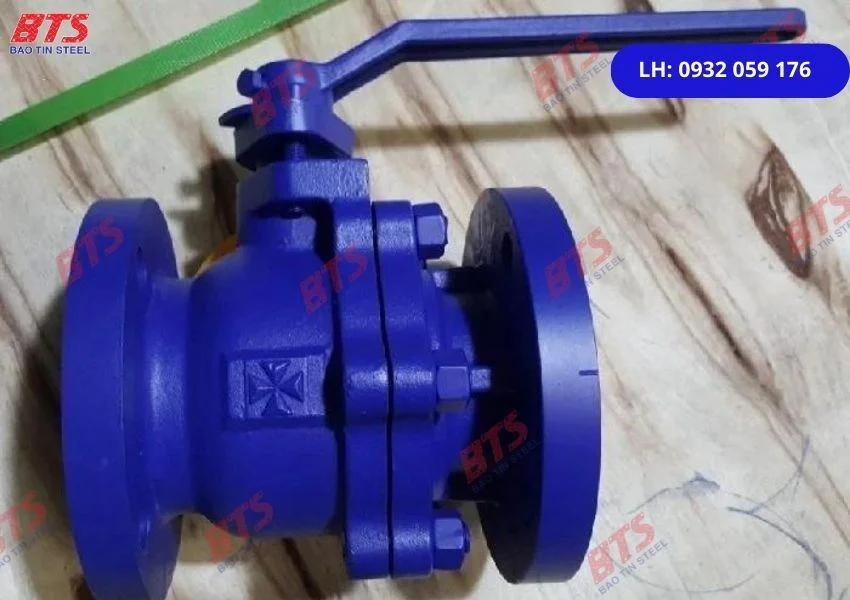
- Ball valve with flange body made of cast iron: The cast iron used here is either ductile iron or cast iron. However, this type of valve is prone to corrosion and needs to be replaced after a certain period of use. Therefore, the price of a cast iron ball valve with a flange body is much lower than that of a stainless steel ball valve.
-
Flanged ball valve made of steel: WCB steel is commonly used to manufacture this type of valve. Similar to stainless steel ball valves, it has good pressure and heat resistance. It is widely used in oil, gas, and thermal power systems.
-
Flanged ball valve made of plastic: The plastics used for these ball valves include PVC, uPVC, and cPVC. The advantage of plastic ball valves is that they are lighter, easier to install, and more portable. However, plastic ball valves cannot withstand acidic or alkaline environments or excessively high temperatures.
See now the flanged ball valve products being distributed by Bao Tin Steel:
Classification by Control Type
The structure of flanged ball valves is quite diverse, and it also determines the control type of the valve. With the naked eye, you can distinguish between different types of flanged ball valves by looking at the following characteristics:
-
Flanged Ball Valve: This type of ball valve has common sizes ranging from DN100 to DN250. It is also considered the best-selling flanged ball valve due to its ease of use. The valve can be operated to fully open or close manually through the lever attached to the valve.
-
Handwheel Ball Valve: This type of valve is used for larger systems. When the lever-operated ball valve is no longer suitable, this handwheel type is a more reasonable alternative.
-
Flanged Ball Valve with Electric Actuator: This valve is automatically controlled by electricity. The electric actuator and the valve body are connected to each other. When powered, the electric motor will rotate the valve stem by 90 degrees.
-
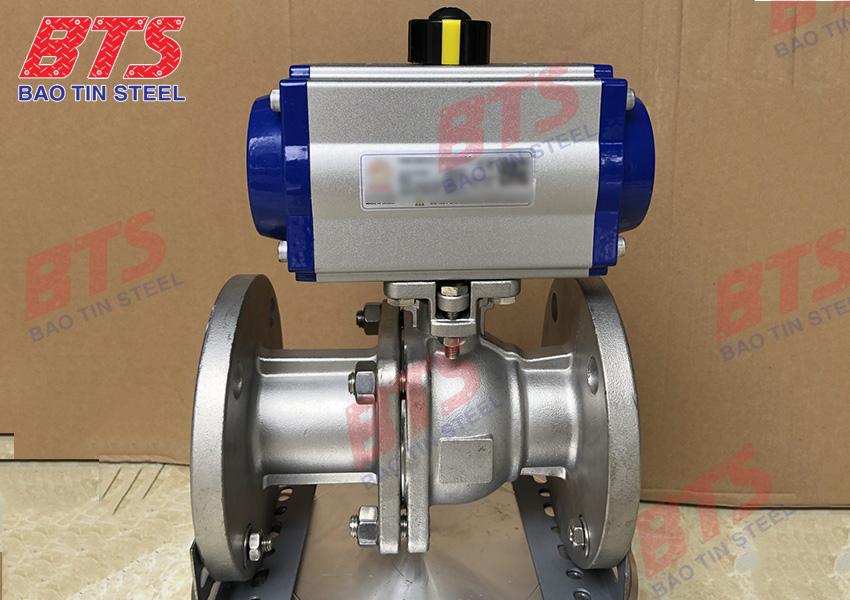
Flanged Ball Valve with Pneumatic Actuator: This type of ball valve is also automatically controlled. However, instead of using electricity, it operates using pneumatic pressure. It functions similarly to the electric actuator valve but has a faster opening and closing capability and is also more cost-effective.
Classification by Number of Valve Bodies:
The valve body is an essential component of a flanged ball valve. Based on the structure and shape of the valve body, they can be classified into two types:
-
Flanged Two-Piece Ball Valve: This valve is constructed with two bodies that are connected by bolts and nuts. This design facilitates easier maintenance of the valve and minimises the risk of leakage.
-
Flanged Three-Piece Ball Valve: This valve is also known by other names, such as three-piece flanged ball valve or 3PC ball valve. Its special construction allows for easy installation, maintenance, and repair in case of damage. The three-piece design provides flexibility and accessibility, making it a popular choice for various applications.
Classification by Flow Direction:
Many systems require the flow to be divided into multiple directions. This necessitates that the flanged ball valve be designed accordingly. Based on these requirements, we have the two-way ball valve and the three-way ball valve. Among them:
-
Flanged Two-Way Ball Valve: This is a common type of ball valve, accounting for approximately 70% of the current market. As its name suggests, this ball valve allows the fluid to pass through and flow in two different directions.
-
Flanged Three-Way Ball Valve: Similar to the two-way type, this valve also helps in directing the flow of the fluid. It has two main configurations: L-shaped and T-shaped. Specifically, the ball inside the valve is machined with wide openings in either an L or T shape to facilitate the flow of the fluid through the valve.
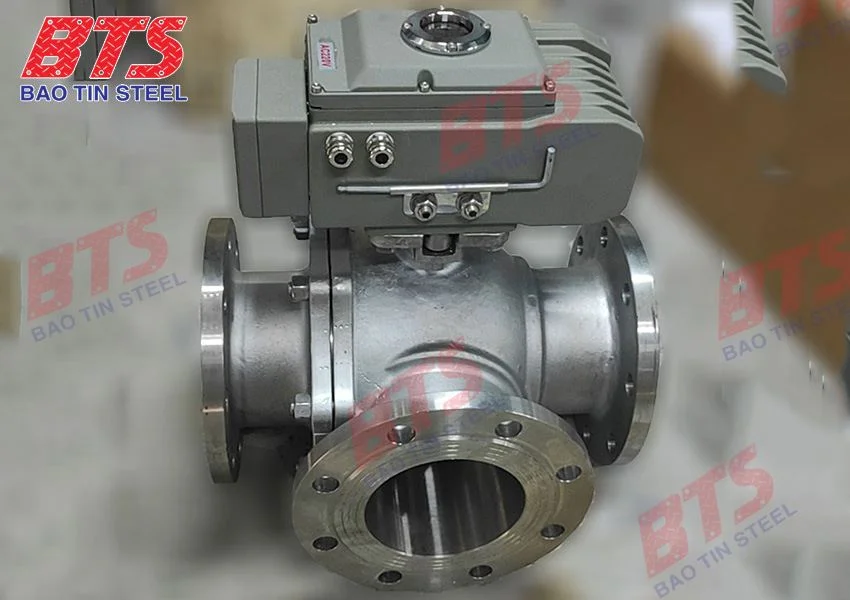
+ With the T-Shaped Flanged Three-Way Ball Valve: The fluid can flow through all three ports simultaneously. Alternatively, if needed, you can choose to close one port and allow the fluid to pass through the other two ports.
+ With the L-Shaped Flanged Three-Way Ball Valve: This design allows the fluid to enter from one port and exit through the other two ports.
If you are looking to purchase flanged valves for your systems, we have a few additional suggestions for you:
Refer to the price list for flanged ball valves
The flanged ball valve made of stainless steel is a type of ball valve that is widely used today. The demand for this type of valve is also very high. Therefore, Bảo Tín Steel will provide information about the prices of stainless steel flanged ball valves for everyone. Accordingly, these prices can vary depending on the standards and sizes (the table will specify). Additionally, prices also differ based on material, brand, and market conditions.
Note: Below is only the REFERENCE PRICE (October 2024) of the cast iron flange ball valve, and the price may change from time to time. Therefore, if you want to know the latest and most accurate price, please call us via Hotline: 0932 059 176.
| Flanged Cast Iron Ball Valve | ||
| Flanged Cast Iron Ball Valve Body Material: Cast Iron Ball: Stainless Steel 304 Seat: PTFE Pressure: 16 bar Max Temperature: 150 °C Connection: JIS 10K |
Size | Price (VND/piece) |
| DN25 | 803.000 | |
| DN32 | 1.100.000 | |
| DN40 | 1.155.000 | |
| DN50 | 1.375.000 | |
| DN65 | 1.760.000 | |
| DN80 | 2.255.000 | |
| DN100 | 3.025.000 | |
| DN125 | 5.225.000 | |
| DN150 | 6.930.000 | |
| DN200 | 12.400.000 | |
| Flanged 2-Piece Stainless Steel 304 Ball Valve with Base | ||
| Flanged 2-Piece Stainless Steel Ball Valve Body / Stem Material: SS304 Ball: SS304 Seat: PTFE Pressure: 16 Bar Max Temperature: 180 °C Connection: JIS 10K |
DN40 | 2.655.400 |
| DN50 | 3.166.900 | |
| DN65 | 4.541.900 | |
| DN80 | 5.320.700 | |
| DN100 | 7.385.400 | |
| DN125 | 10.409.300 | |
| DN150 | 18.220.000 | |
Above are the details about flanged ball valves as well as the prices for these types of valves. You can refer to this information, and if you need assistance, please contact Bao Tin Steel at 0932 059 176!