

 Tiếng Việt
 ភាសាខ្មែរ
Steel Density: Standard Weight, Formula, and Calculation Guide
In construction and mechanical engineering, steel density is a core parameter that directly affects structural calculations and cost estimation. Even a minor error in using this value can lead to discrepancies of dozens of tons of material, resulting in budget overruns or structural safety risks.
This article will help you accurately understand the standard steel density value of 7,850 kg/m³, along with reference tables and formulas for quick steel weight calculations. It also helps optimize quantity takeoff and on-site material verification.
Note: In English technical documentation, the term is accurately translated as “material takeoff” or “quantity takeoff”.
What is the Specific Weight of Steel?
The specific weight of steel is the weight of steel per unit volume, reflecting how “heavy” the material is in space. The unit of specific weight is Newtons per cubic meter (N/m^3).
However, in construction practice and the steel industry, the Newton unit is not used. Instead, people only care about how many kilograms the steel weighs for calculation, estimation, and trading purposes. Therefore, by convention, the specific weight of steel is treated as equivalent to its density, which is equal to 7850 kg/m³.
Specific weight (density) of steel = 7850 kg/m³
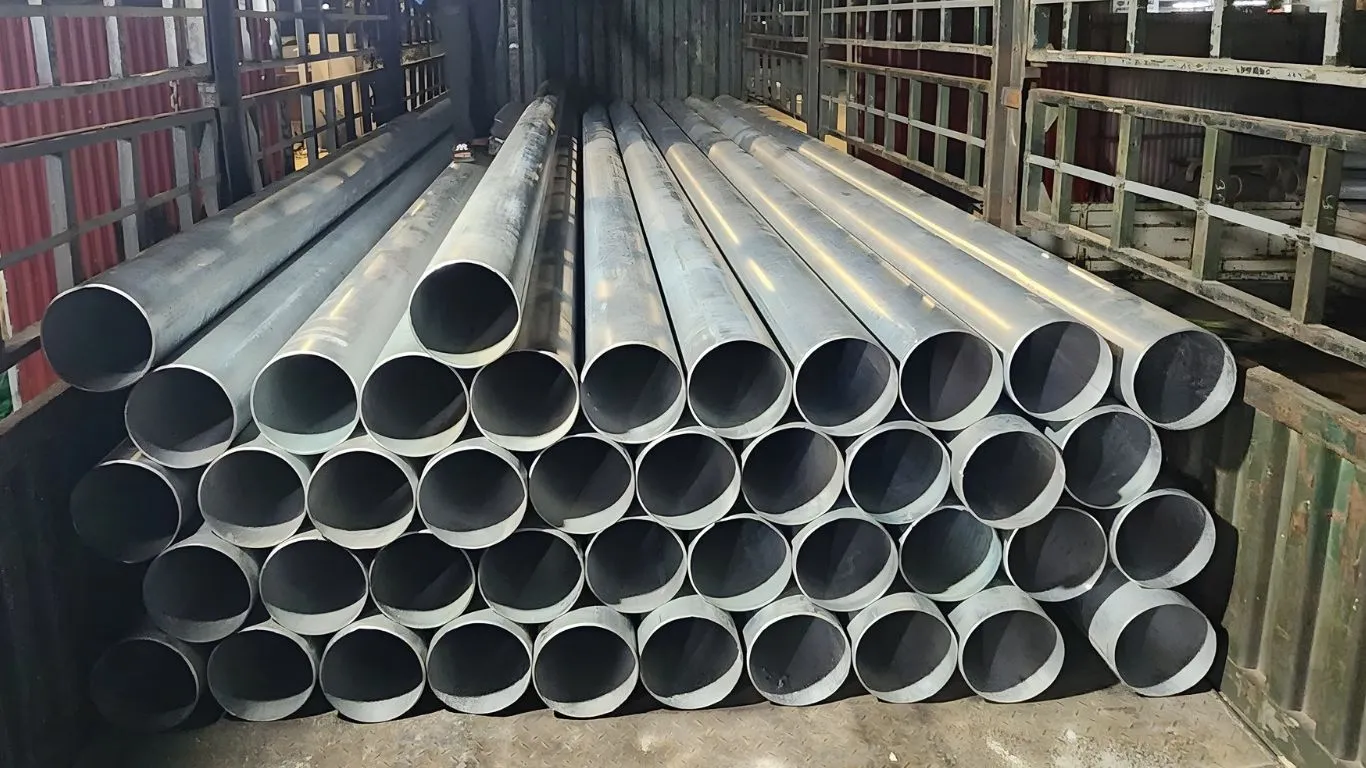
The figure of 7850 kg/m³ is not an arbitrary estimation, but rather:
- The average value of carbon steel and construction steel
- Unified across international standards systems such as ASTM, JIS, and EN
- Widely used in steel design, cost estimation, and trading.
Is there a difference between the specific weight of iron and steel?
Steel Density: Standard Weight, Formula, and Calculation Guide
The specific weight of iron differs slightly from that of steel, though the difference is negligible. Specifically, the specific weight of iron is 7800 kg/m³, while steel (an alloy of iron and carbon) has a specific weight of 7850 kg/m³. This difference occurs because the composition of steel includes additional elements such as Carbon, Manganese, and Silicon, which increase the molecular density within the material structure.
Nevertheless, since the discrepancy is very small (less than 1%), the value of 7850 kg/m³ is still taken as the standard. This is because it helps:
- Simplify the calculation of steel weight on engineering drawings.
- Standardize the delivery, receipt, and trading of materials (steel weight charts/barème).
- Maintain negligible impact on structural safety.
What is the specific weight of steel? Simple calculation methods?
As previously mentioned, in theory, the specific weight and the density of steel are different. Specific weight is calculated as:
d = P/V (1)
Where:
- d represents the specific weight (unit: N/m^3)
- P represents the weight (unit: N)
- V represents the volume (unit: m^3)
*Note that for steel, we have:
- P = m.g (g is the acceleration due to gravity ≈ , 9.81 m/s²)
- m = ρ. V (ρ is the density of steel ≈7850 kg/m³) (2)
From (1) and (2), we have:
d = ρ. g
Therefore, the exact specific weight of steel is:
d = 7850 x 9.81 ≈ 77000 N/m³
Example: Guide to calculating the weight (mass) of an 8mm x 1500mm x 12000mm steel plate.
We have the formula: Weight = Density (g/cm³) x Thickness (mm) x Width (m) x Length (m) Weight = 7.85 x 8 x 1.5 x 12 = 1130 kg
Weight and Density Lookup Table for Steel and Related Materials
Below is the weight and density lookup table commonly used in design documents, cost estimations, and engineering specifications:
| Material | Density (kg/m³) |
|---|---|
| Construction steel | 7,850 |
| Round steel bars/rebar | 7,850 |
| Structural steel/steel pipes | 7,850 |
| Cast iron | 7,200 – 7,400 |
| Normal concrete | 2,300 – 2,400 |
| Reinforced concrete | 2,500 – 2,700 |
| Aluminum | 2,700 |
| Copper | 8,900 |
👉🏻 Refer to the weight chart for various types of round steel pipes.
Why Is It Important to Know the Density of Steel?
Understanding the standard density of steel (7,850 kg/m³) is extremely important for three main reasons:
- It helps engineers accurately calculate the load that steel places on foundations, beams, and columns, preventing risks such as settlement, cracking, or structural collapse caused by incorrect weight calculations.
- It allows quick conversion from dimensions shown in drawings to the required weight (kg/tons) for purchasing. This helps create accurate cost estimates, avoiding excess purchases that lead to waste or shortages that delay project progress.
- It serves as a “benchmark” for detecting counterfeit or underweight steel products. If steel has the correct dimensions but its actual weight is significantly lighter than standard, it may indicate poor-quality materials.
At Bao Tin Steel, all steel specifications, including steel density, are clearly presented in quotations and delivery documents.
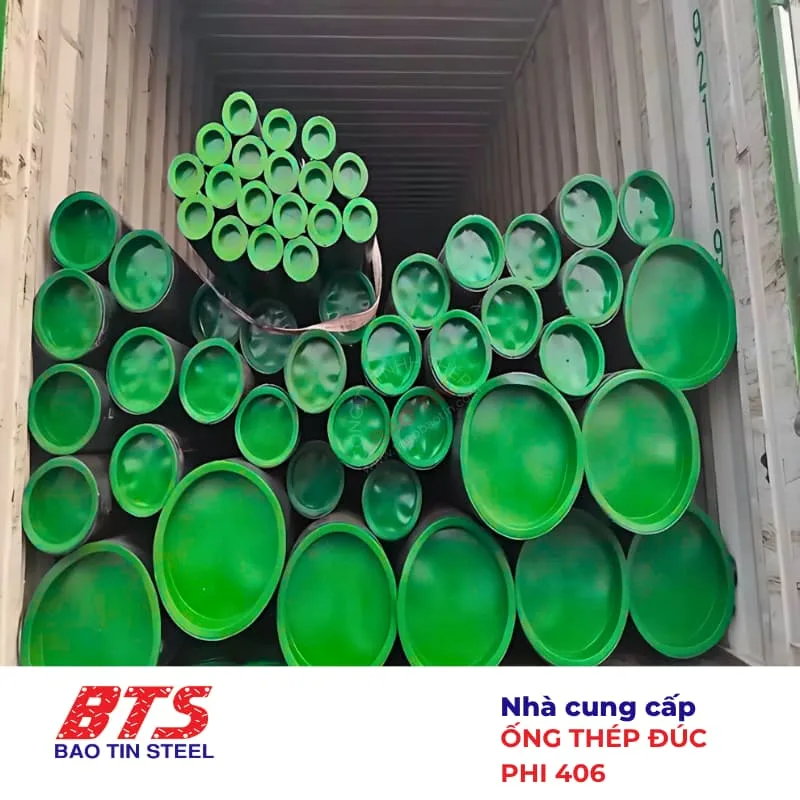
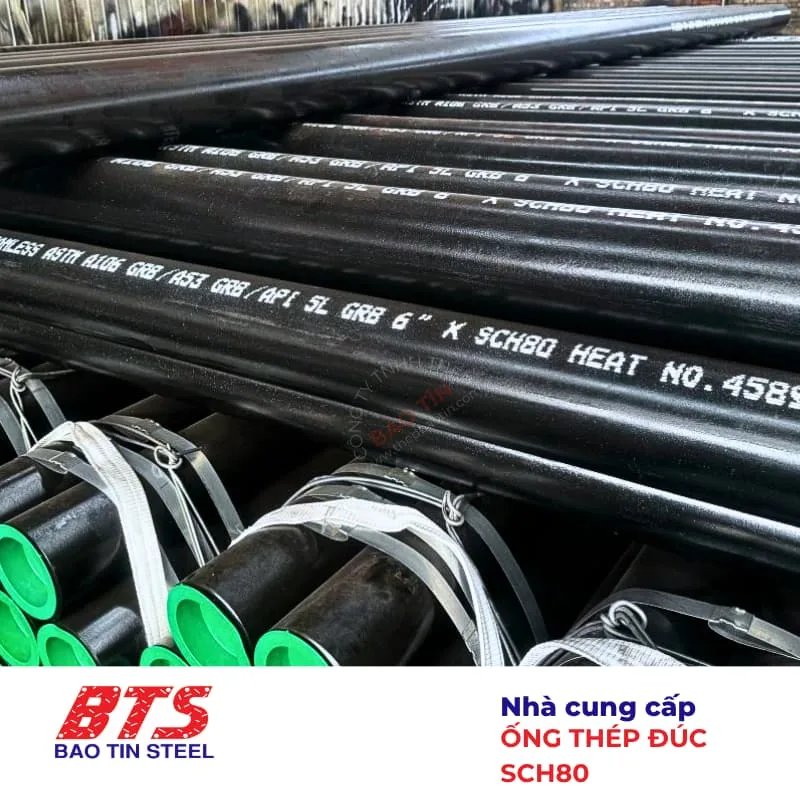
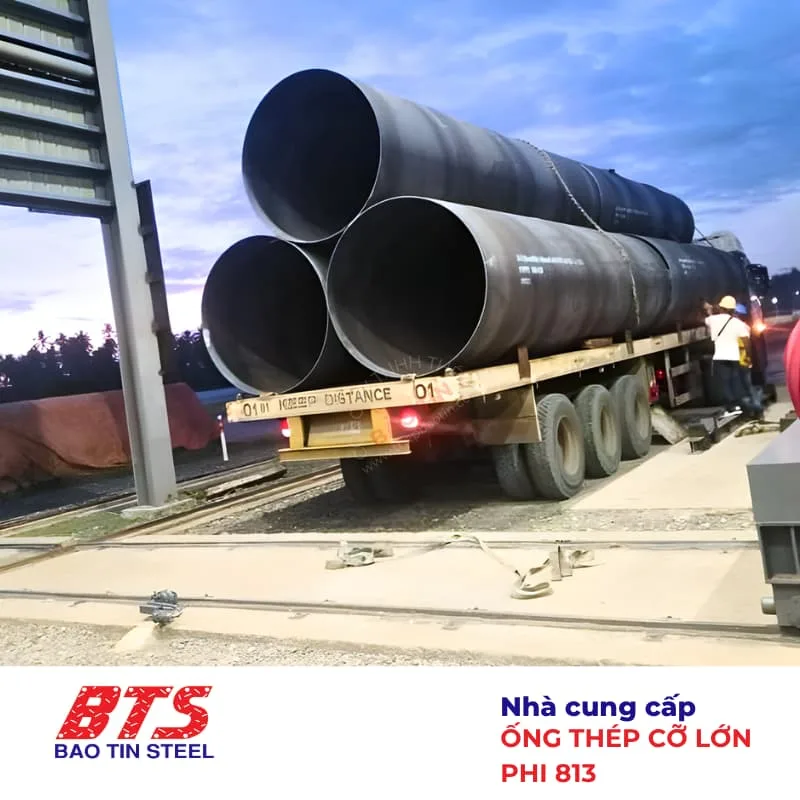
Seamless Steel Pipes and Large Welded Steel Pipes
These products usually have thick walls (Schedule 40, 80, etc.). Knowing their density helps customers calculate the total weight of the piping system to design suitable support structures.
Refer to several seamless steel pipe and large welded steel pipe product lines at Bao Tin Steel.
- Structural steel sections (U, I, V, H) and steel plates: These are the structural framework of industrial buildings. Thép Bảo Tín provides detailed standard weight charts based on the steel density of 7,850 kg/m³, allowing customers to verify specifications immediately upon delivery.
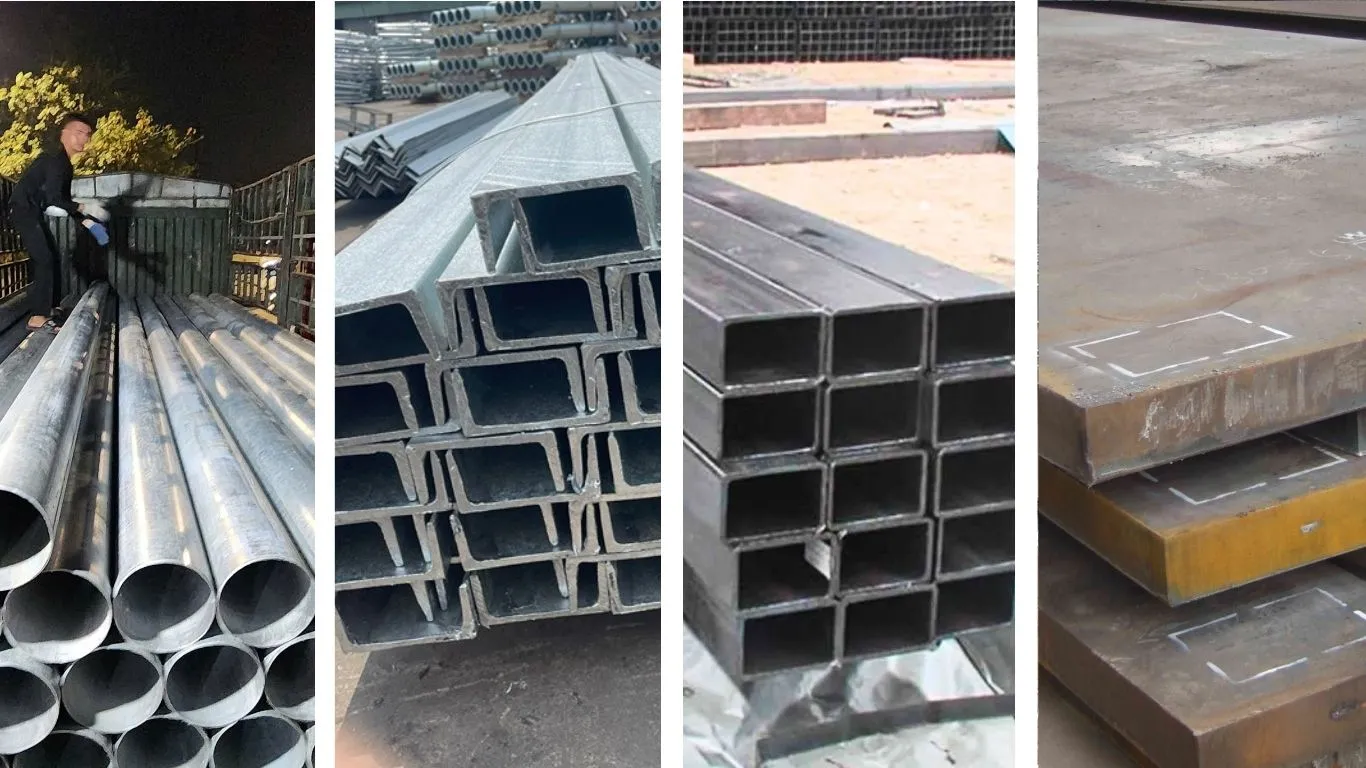
Steel Products from Bao Tin Steel
Above are the important details regarding the density of steel. If you have any further questions, please contact BaoTin Steel for support at 0932 059 176.