

 Tiếng Việt
 ភាសាខ្មែរ
uPVC Ball Valves are becoming an increasingly popular choice in water distribution systems, chemical processing, and light industrial applications. This is due to their reasonable cost, corrosion resistance, and easy installation. However, the question remains: are these valves truly durable and safe enough to replace traditional valve types?
In this article, we will take a detailed look at the structure, operating principle, advantages, and disadvantages of uPVC ball valves. Based on this, we will provide an objective assessment of whether they should be used. Additionally, you will gain insights into suitable alternative solutions if the system requires high temperatures, pressure, or operates in harsh environments.
What is an uPVC Ball Valve?
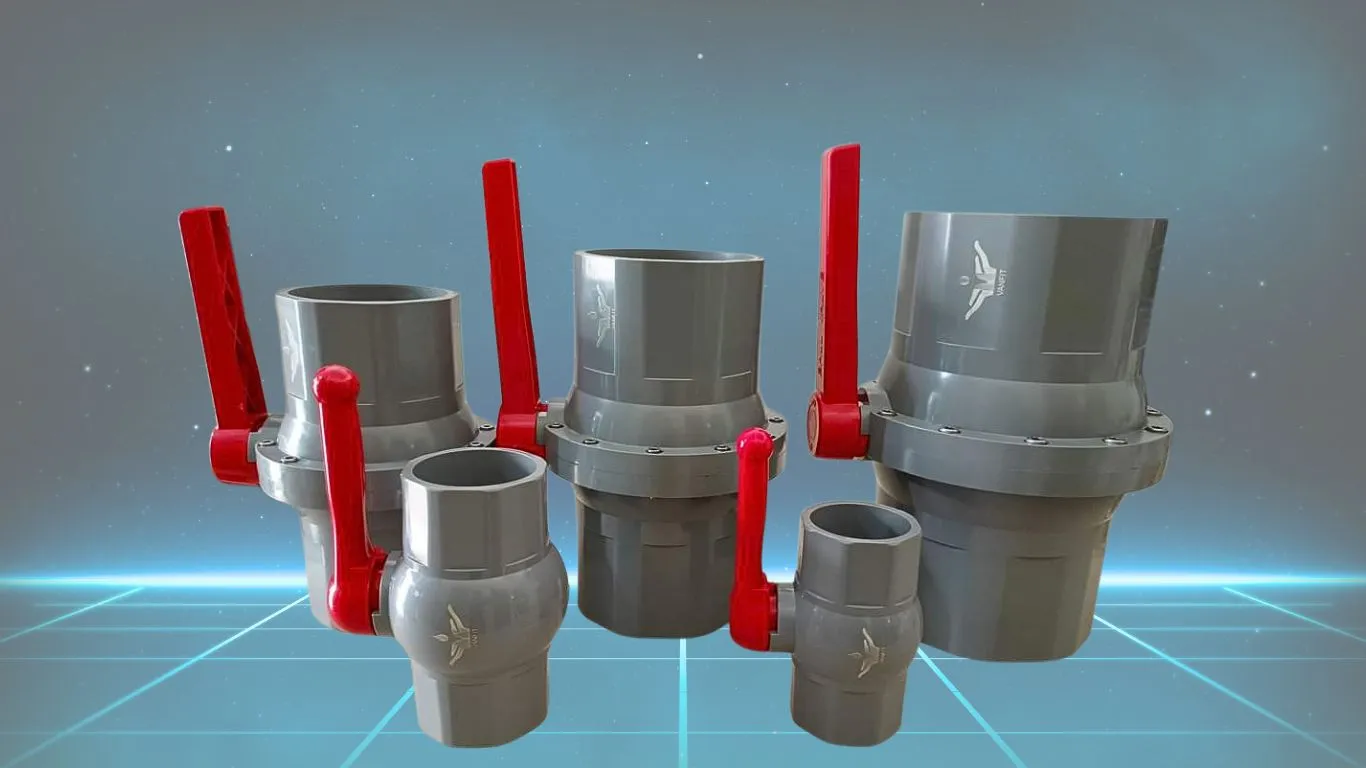
Structure and Operating Principle of uPVC Ball Valves
Detailed Structure
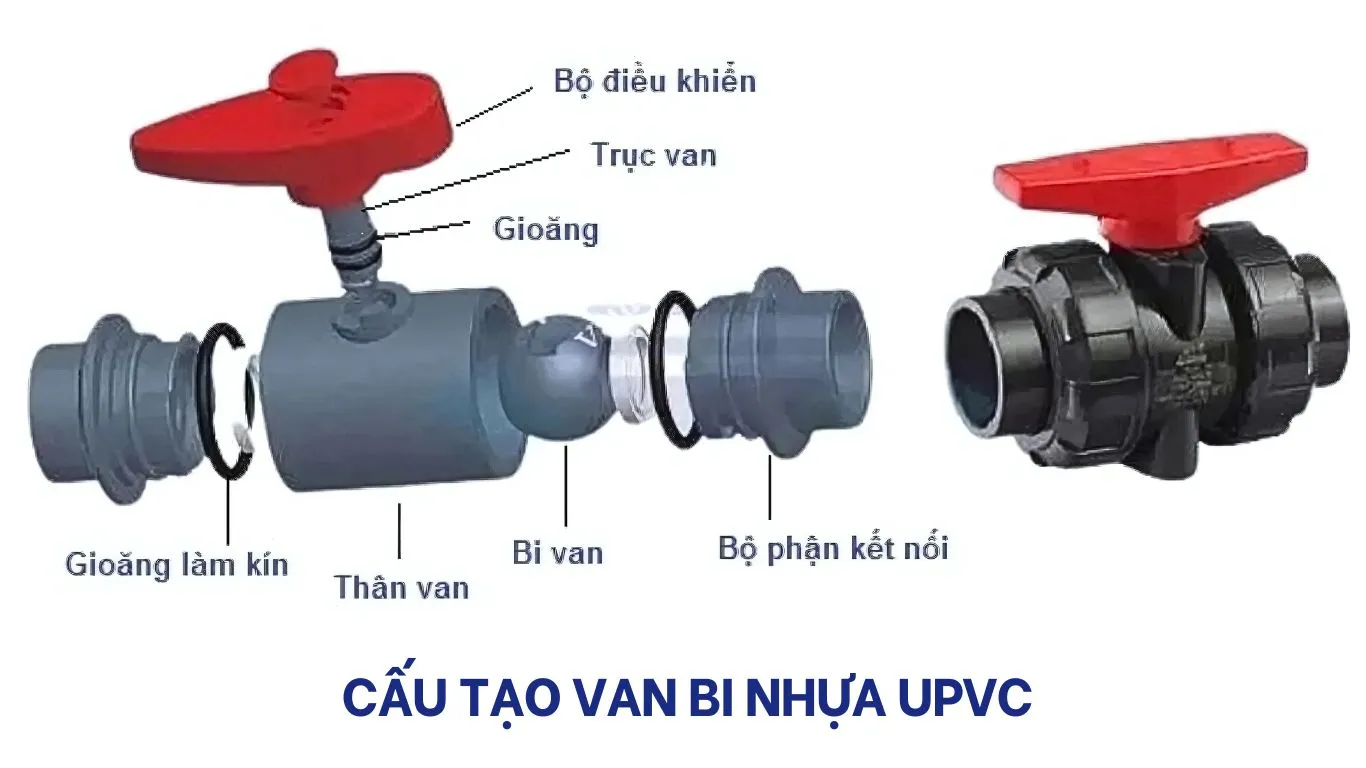
A standard uPVC ball valve typically consists of the following main components:
–
Valve Body:
The valve body is the main component, typically made from high-quality virgin or recycled uPVC material. It features connection ports (usually threaded, glued, or flanged) for installation into the piping system. The valve body also houses other parts such as the ball, sealing gaskets, and valve stem.
- Ball Valve:
The ball is a hollow sphere, usually made from the same uPVC material, located inside the valve body. The ball has a central hole, and when this hole aligns with the pipeline, the fluid passes through. When the ball rotates 90 degrees, the solid part of the ball completely blocks the flow. - Sealing Gasket/Seat:
Typically made from elastic materials such as PTFE (Teflon), EPDM, or NBR, these gaskets are placed around the ball and valve stem. Their function is to create an airtight seal, preventing leaks when the valve is closed or when the fluid passes through the ball when the valve is open. The gasket material needs to be compatible with the fluid and operating temperature. - Valve Stem:
The valve stem connects the ball to the external control mechanism (lever or handwheel). The valve stem transmits rotational motion from the lever/handwheel to the ball to control the valve’s state. The valve stem also requires sealing gaskets to prevent leaks at this connection point. - Lever/Handwheel:
This is the external control component, attached to the valve stem. It facilitates faster and easier operation of opening and closing the valve. - Nut and Bolt:
Used to secure the valve components, particularly the valve body (for 3-piece ball valves) or to attach other accessories.
Operating Principle
- Open Position:
When the lever (or handwheel) is turned to the fully open position, the valve stem transmits the force to rotate the ball inside so that the central hollow hole of the ball aligns with the pipeline.
At this point, the fluid (liquid or gas) can easily flow through the ball’s hole and continue through the system without obstruction.
The flow path is almost straight, which helps minimise pressure drop. - Closed Position:
When the lever (or handwheel) is rotated 90 degrees from the open position, the valve stem rotates the ball so that the solid part of the ball is perpendicular to the flow.
The ball now completely blocks the hole, preventing the fluid from passing through.
The sealing gaskets press tightly against the ball’s surface, ensuring an airtight seal and preventing any leakage.
Advantages and Disadvantages of uPVC Ball Valves
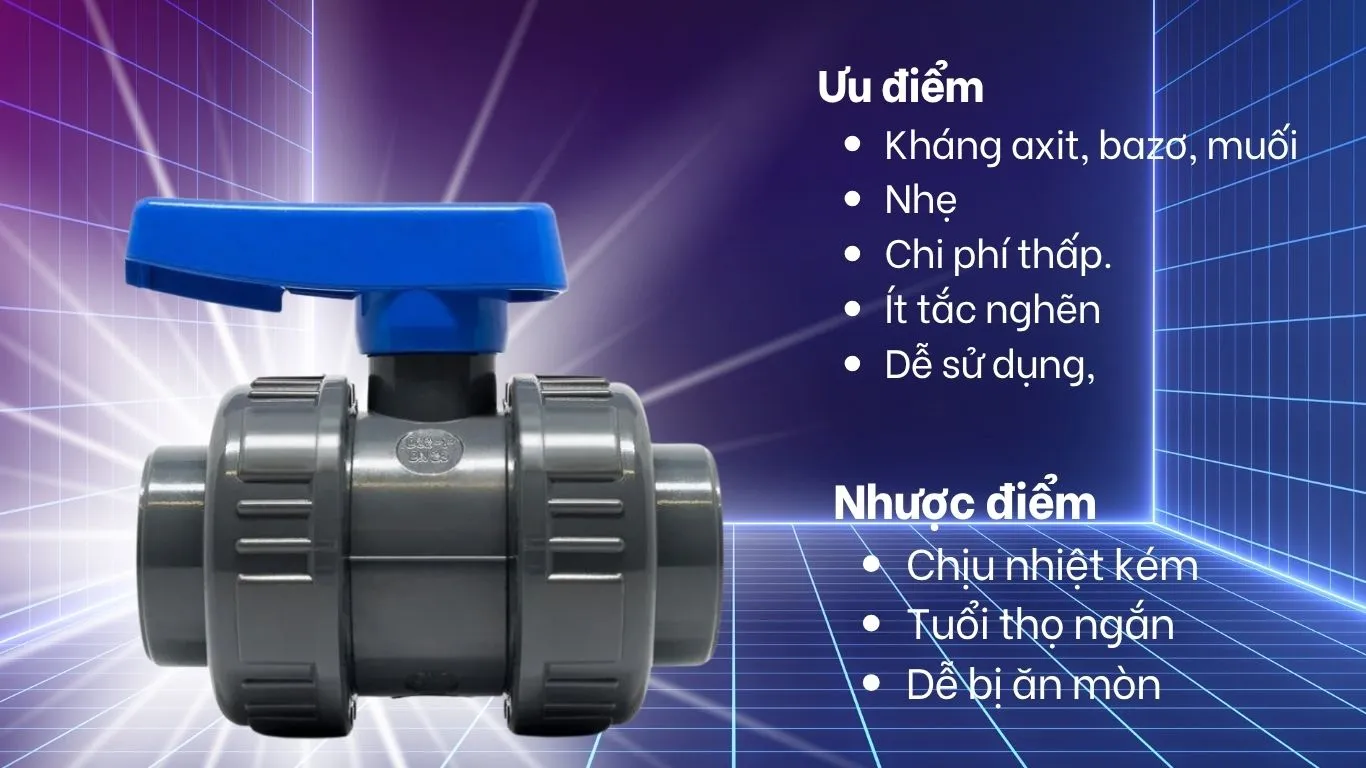
Advantages
- Acid, Alkali, and Salt Resistance:
The valve is resistant to corrosion from acids, alkalis, and salts, making it suitable for use in humid or chemically reactive environments, ensuring high durability. - Lightweight:
The valve is much lighter than metal valves, making it easier to transport and install without requiring additional equipment. - Low Cost:
This makes it ideal for large-scale projects or when working with a limited budget. - Smooth Surface:
The smooth surface of the valve reduces flow friction, minimises clogging, and lowers maintenance costs. - Electrical Safety:
The plastic material ensures safety when used near electrical equipment or in environments requiring insulation. - 90° Lever Mechanism:
The lever mechanism allows for easy operation, enabling quick and convenient opening and closing of the valve.
Disadvantages
- Limited to Low Temperatures and Medium Pressure:
It works best under temperatures below 60°C and medium pressure. It is not suitable for steam systems or high-pressure applications. - Lower Mechanical Strength:
It has a lower mechanical strength compared to metals, making it more prone to cracking or breaking if subjected to strong impacts or improper installation. - Vulnerable to UV Degradation:
Prolonged exposure to direct sunlight can cause aging, brittleness, and a reduction in the lifespan of the uPVC valve. - Not Suitable for Strong Solvents or Highly Corrosive Chemicals:
This valve is not ideal for handling strong solvents, highly corrosive chemicals, or substances containing solid particles that could cause wear and tear on the valve.
Should uPVC Ball Valves Be Used?
The decision to use an uPVC ball valve in your system should be based on a thorough assessment of both technical and economic factors. There is no single answer of “yes” or “no” for all cases. It depends on whether this valve meets your specific requirements.
Factors to Consider
- Temperature:
uPVC valves can only withstand temperatures up to around 60°C. If your system involves hot water or steam, it’s better to choose a different type of valve. - Pressure:
uPVC is suitable for medium-pressure applications. If your system operates under high pressure or fluctuates frequently, a metal valve would be safer and more reliable. - Type of Fluid:
uPVC valves are ideal for clean water, wastewater, dilute acids, and salts. However, they are not suitable for strong chemicals or corrosive solvents. - Budget:
uPVC valves are significantly more affordable compared to stainless steel or brass valves. Therefore, they are an excellent choice if you are looking to save on initial investment costs.
When Should uPVC Ball Valves Be Used?
- Water Distribution Systems, Wastewater Treatment, and Light Chemicals:
Ideal for systems dealing with clean water, wastewater, or mild chemicals. - Corrosive Environments:
Such as those involving dilute acids, saltwater, or chlorine (e.g., swimming pools, aquaculture). - Limited Budget:
uPVC valves are a cost-effective choice when budget constraints are a factor, but performance still needs to be ensured. - Quick Installation and Simple Construction:
If the system requires easy and fast installation, uPVC valves are ideal due to their lightweight and user-friendly design.
When Should uPVC Ball Valves NOT Be Used?
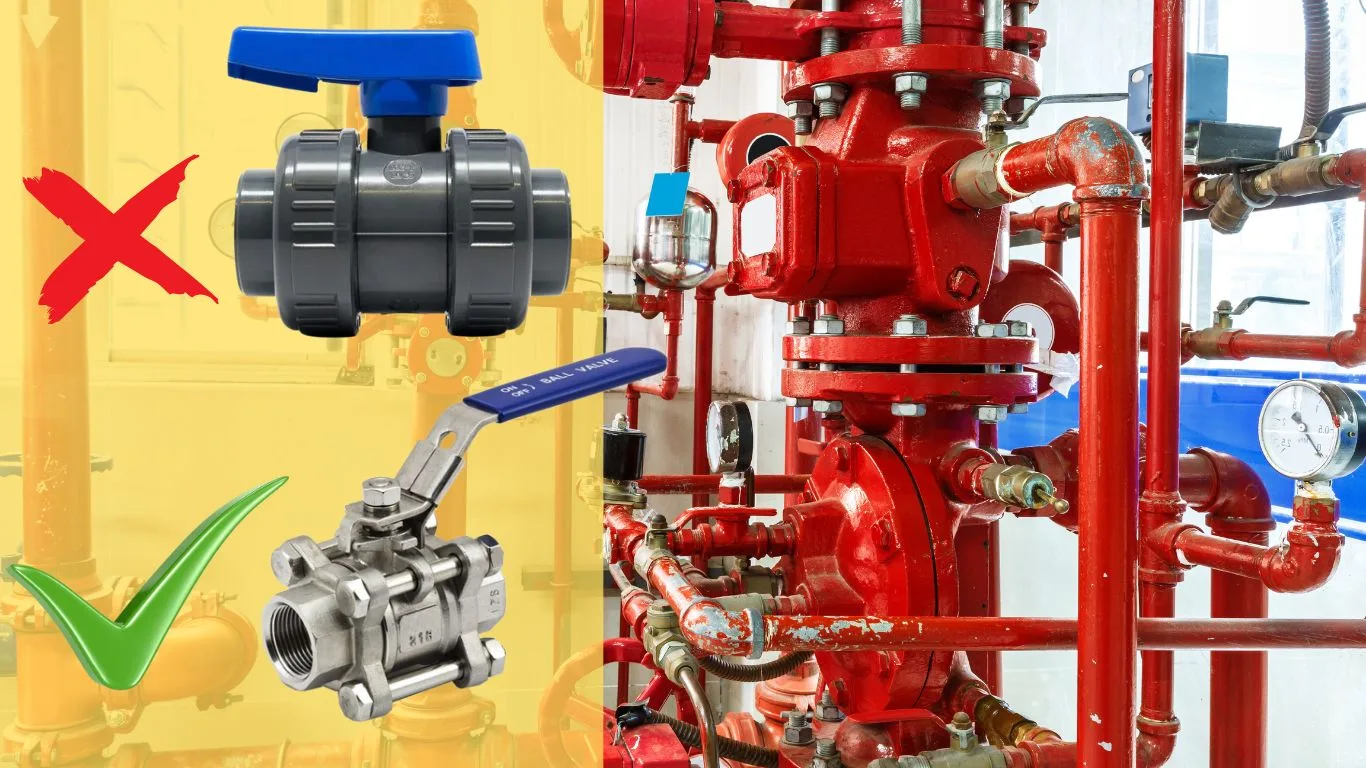
- High-Temperature Systems (above 60°C):
For systems involving steam, hot water, or other high-temperature fluids. - High Pressure or Sudden Pressure Changes:
Systems with high pressure or pressure fluctuations that could damage the valve. - Fire Protection Systems (PCCC):
uPVC valves are not suitable for fire protection systems because they cannot withstand high heat or flames. - Environments with High Mechanical Impact:
In situations where the valve may be subjected to physical impacts, which could cause the valve to crack or break. - Strong Solvents or Highly Corrosive Chemicals:
If the fluid is a strong solvent or a highly corrosive chemical, that could degrade or corrode the plastic material.
Alternative Solutions to uPVC Ball Valves
As mentioned, uPVC ball valves are not suitable for all environments. In such cases, the only solution is to use alternative metal valves. The most common replacements are stainless steel ball valves and brass ball valves. This is due to the advantages that these two types of ball valves offer. Specifically:
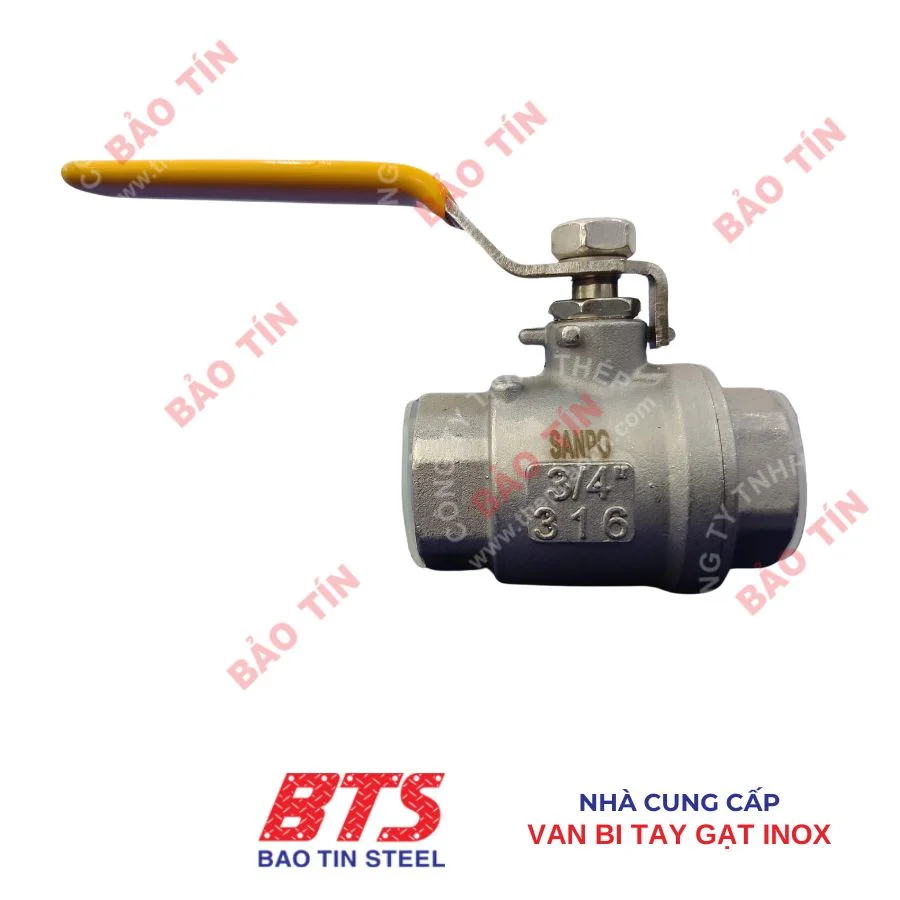
304/316 Stainless Steel Ball Valves – High Durability and Strong Corrosion Resistance
- Works well at temperatures up to 220°C and pressures up to 40 bar.
Especially with 316 stainless steel, it is suitable for acidic, alkaline environments, and organic solvents. - Highly resistant to impact and vibration, thus reducing long-term replacement costs.
- Complies with hygiene standards, making it ideal for use in the food, pharmaceutical, and medical industries.
👉 Check Out Stainless Steel Ball Valves at Bao Tin Steel!
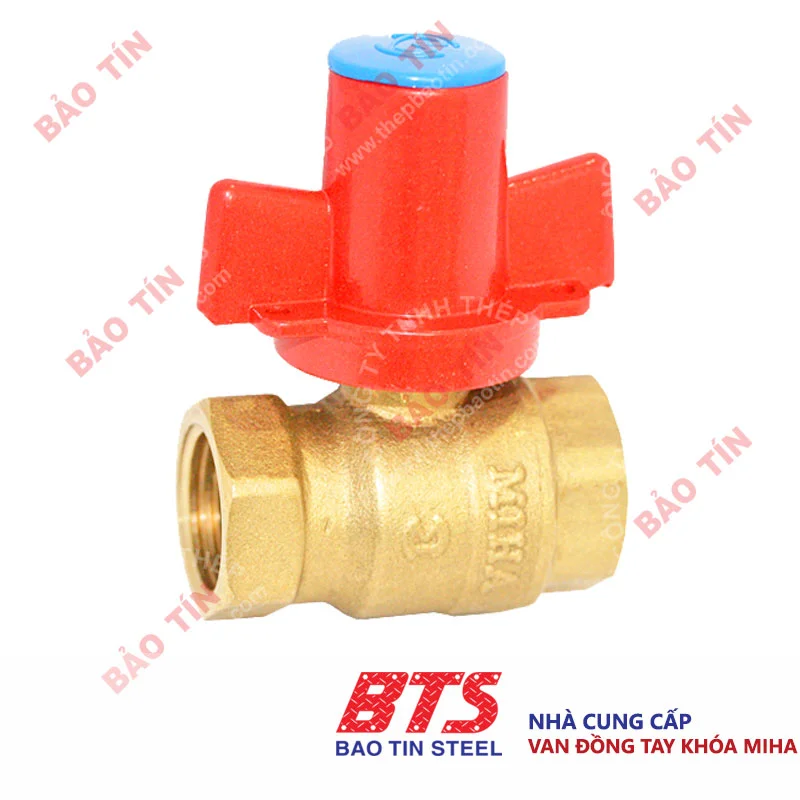
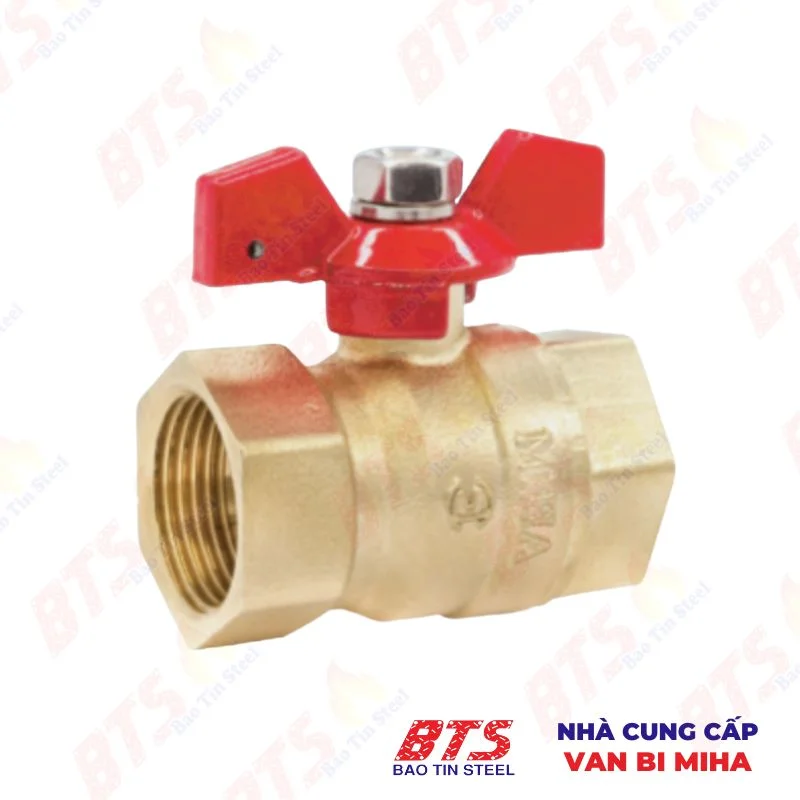
Brass Ball Valve – Efficient, Cost-Effective, Easy to Install
- Ideal for both residential and light industrial systems.
- More affordable than stainless steel, but more durable than uPVC.
- Easy to install with metal piping and can be nickel-plated for increased durability.
👉 Check Out Brass Ball Valves at Bao Tin Steel Now!

Conclusion
uPVC ball valves offer significant advantages in terms of corrosion resistance, lightweight design, quick installation, and low cost. They are ideal for clean water, wastewater systems, or environments with light chemicals, operating at medium temperatures and pressures. However, this material has poor heat resistance (≤60°C), limited pressure tolerance, is prone to cracking upon impact, and is not suitable for strong solvents, hot steam, or applications requiring high mechanical strength.
Therefore, choose uPVC when you need an economical solution, under non-extreme working conditions with quick installation requirements. On the other hand, choose stainless steel or brass ball valves when the system demands heat resistance, high-pressure endurance, or long-term durability and safety.
Bao Tin Steel currently offers a wide range of metal ball valves (brass, stainless steel, cast iron, steel, etc.). For quotations and consultation, feel free to contact us at Hotline: 0932 059 176!