

 Tiếng Việt
 ភាសាខ្មែរ
If you want information about “cast iron flanges,” this article by Bao Tin Steel is the document you should not miss.
In just 15 minutes, you will know what cast iron flanges are and the issues surrounding cast iron flanges. Please follow along!
What is cast iron flange?
Cast iron flanges have the English name Cast Iron Flanges.
“The cast iron flange is a fitting used to connect pipes or different equipment in water supply and drainage systems, fire protection, petrochemicals, water treatment, and other industries. The cast iron flange is made from cast iron material, and it comes in different sizes and standards according to customer requirements.

Cast iron is a type of iron metal that has good strength properties but is not good with corrosive elements and high temperatures. In addition, cast iron is a cheap and easy-to-manufacture material.
On the market today, flanges made from cast iron are designed in various styles to suit the needs of construction projects. The following are common types of flanges.
Specifications and structure of cast iron flanges
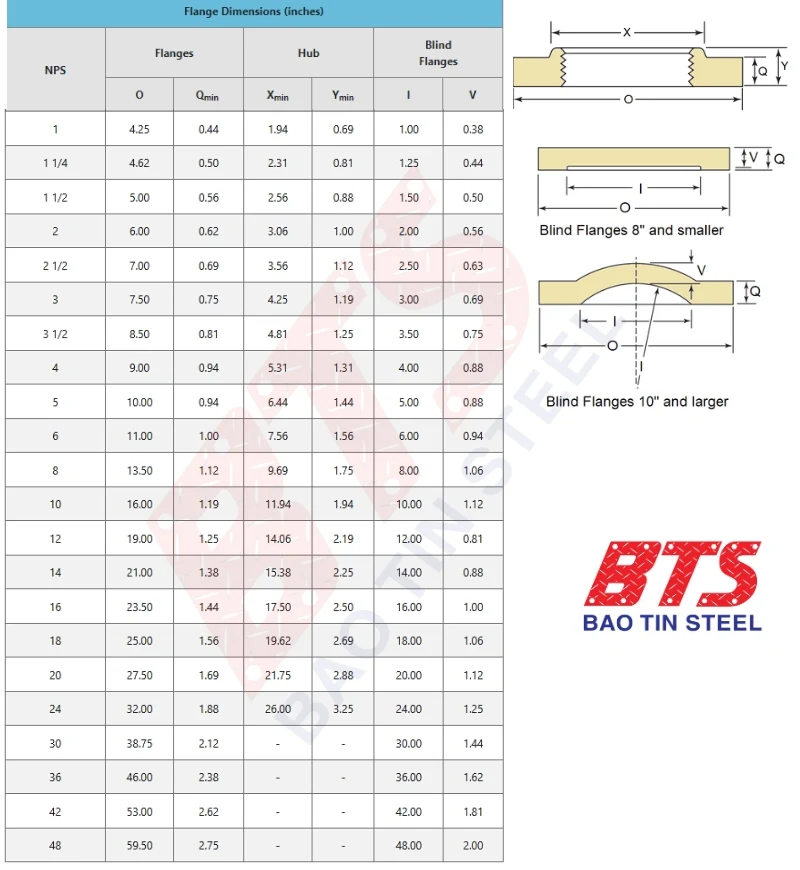
Technical specifications of cast iron flanges
- Diameter: DN15 – DN1200
- Maintenance material: Ductile iron, ductile iron, gray iron
- Connection standards: JIS, ANSI, BS, DIN
- Working pressure: 10 bar, 16 bar, 25 bar
- Using environment: General purpose water, hot steam, compressed air,…
- Origin: Vietnam, Taiwan, China,…
Structure of cast iron flanges
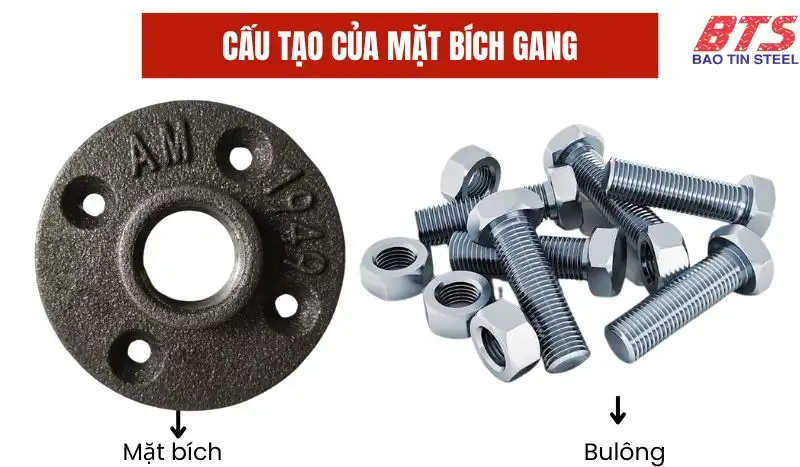
Cast Iron Flanges consist of two main parts:
- Flanges
- Flange bolt
For each type of flange or each different pressure, there will be regulations on the number of bolt holes. Normally, flanges with higher pressure will have more bolt holes and larger sizes to increase the load-bearing capacity and the ability to seal the connection.
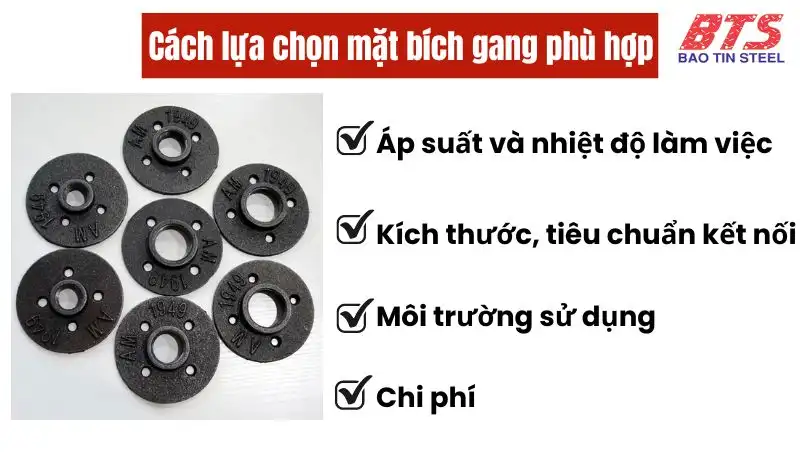
To choose the right type of flanges and the number of bolt holes suitable for the system requirements, it is necessary to refer to technical standards such as ASME/ANSI, DIN, JIS, or BS.
Popular types of cast iron flanges today
1. A hollow cast iron flange is a type of flange made from cast iron material with a round hole in the middle, used for installation in the middle, at the end, or with valves.
=> These hollow flanges made of cast iron are often used in water supply and drainage systems, fire protection, petrochemicals, etc.
2. A blind cast iron flange (also known as a solid flange) is a type of flange made from cast iron material without a round hole in the middle, used to seal pipes or equipment.
=> This cast iron blind flange is often used when it is necessary to stop the operation of a part of the system, or when it is necessary to create a waiting point for system expansion.
Advantages and disadvantages of cast iron flanges
Advantage

Below are some outstanding advantages of Cast Iron Flanges:
- Makes the construction, installation, maintenance, and servicing of pipeline systems easier.
- Able to flexibly connect pipes, industrial valves, pumps, and equipment to form a complete and safe system.
- Cast iron flanges are cheaper than stainless steel, copper, and steel flanges. There are a variety of sizes and
- types according to many standards. Therefore, it is suitable for most civil and industrial pipeline systems.
- Cast iron flanges are easy to machine, creating custom designs or modifying existing designs. Cast iron
- flanges are durable and can withstand heavy loads and impact.
If there are advantages, there will be disadvantages. Because nothing is perfect. Let’s learn about the disadvantages of cast iron flanges to choose the right type of flange for the project.
Disadvantages
- Although cast iron flanges are less expensive than many other types of flanges, they are not suitable for applications with a high probability of corrosion.
- Flanges made of cast iron are susceptible to corrosion. Therefore, additional coatings are needed to protect them from rust.
- The cast iron flanges is heavier in weight than many other types of flanges, so it requires more manpower to handle and install.
- Cast iron is a brittle material, prone to cracking when subjected to force or strong impact. This can lead to the need for more frequent replacement than steel or stainless steel.
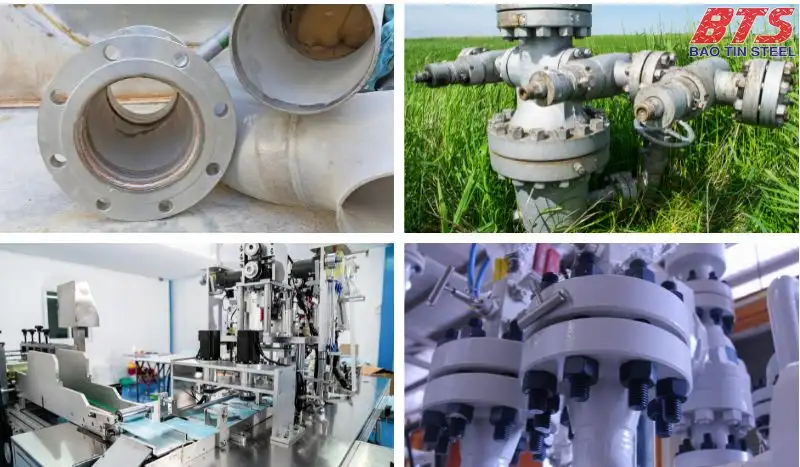
Cast iron flange application
Cast iron flanges are widely used in many different fields. Below are some common applications of cast iron flanges:
- Applied in animal feed and fertilizer processing factories
- Installed water pipes in residential areas and industrial production zones
- Fire protection systems in high-rise buildings
- Wastewater treatment systems in large urban areas
- Applied in boiler systems, steam boilers, and compressed air transmission pipes.
- Installed in food and pharmaceutical processing factories
- Used in interior designs using water pipes.
- Installed in irrigation systems for crops and agriculture
To get the most accurate quote for cast iron flange, please provide Bao Tin Steel with complete information about flange type, size, and material. Then Bao Tin Steel will provide the right product you need.
In addition to cast iron flanges, Bao Tin Steel also provides steel flanges, stainless steel flanges, etc., and pipe-related accessories with many different materials.
So, we have learned about cast iron flanges together. Hopefully, through this article, you will know what cast iron flanges are, the advantages and disadvantages, as well as the applications of cast iron flanges.