

 Tiếng Việt
 ភាសាខ្មែរ
Currently, many users, even technical staff, often confuse “electromagnetic ball valve” and “electric ball valve.” The main reason for this confusion is their similar names and both operate using electricity. This leads to the misunderstanding that they are the same or have similar functions.
In reality, these two industrial valves differ significantly in terms of construction, operating principles, control capabilities, and application areas. If you make the wrong choice, the system could operate inefficiently or experience unnecessary malfunctions. This article will help you analyse and compare the electromagnetic ball valve and the electric ball valve. From there, you’ll be able to easily choose the right and high-quality valve for your needs.
What is a solenoid valve? What is an electric ball valve?
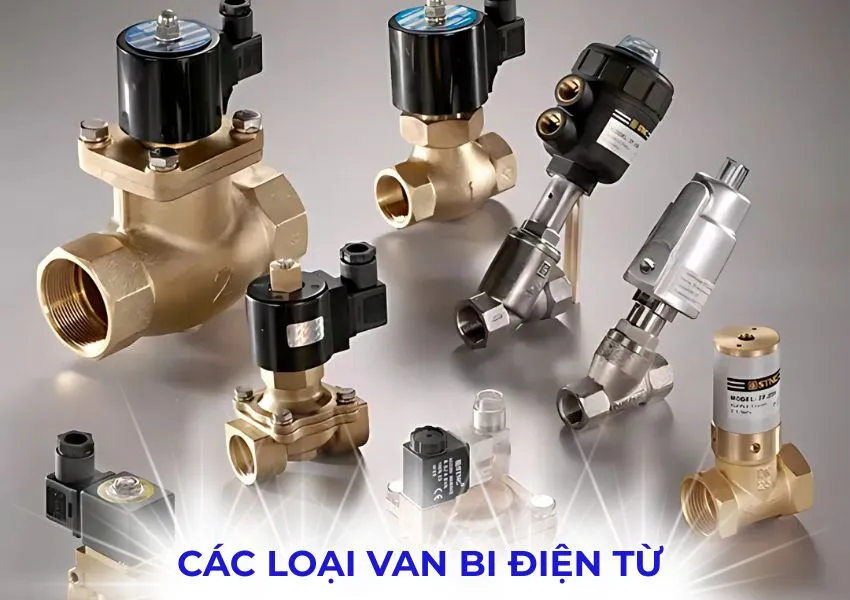
An electromagnetic ball valve is a type of valve that uses an electromagnetic coil to control its open or closed state. When current flows through the coil, the magnetic field pulls the valve core, allowing the flow to pass through or be blocked. Electromagnetic ball valves typically operate with very fast opening/closing actions. They only have two states: fully open or fully closed
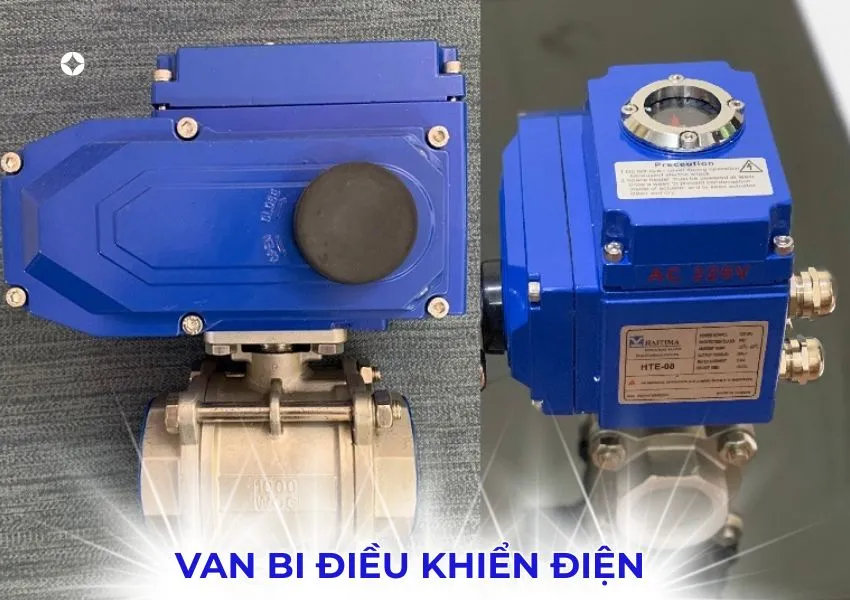
An electric ball valve (also known as an electric control ball valve) is a type of ball valve equipped with an electric actuator (motor). When powered, the motor slowly rotates the ball valve stem by 90 degrees to either open or close it. The valve can either be fully opened/closed or can regulate the opening angle, depending on the type of controller used.
Compare a solenoid ball valve and an electric ball valve in detail
These are two distinct types of ball valves, each with its characteristics and advantages. If you are still confused between them, refer to the information below:
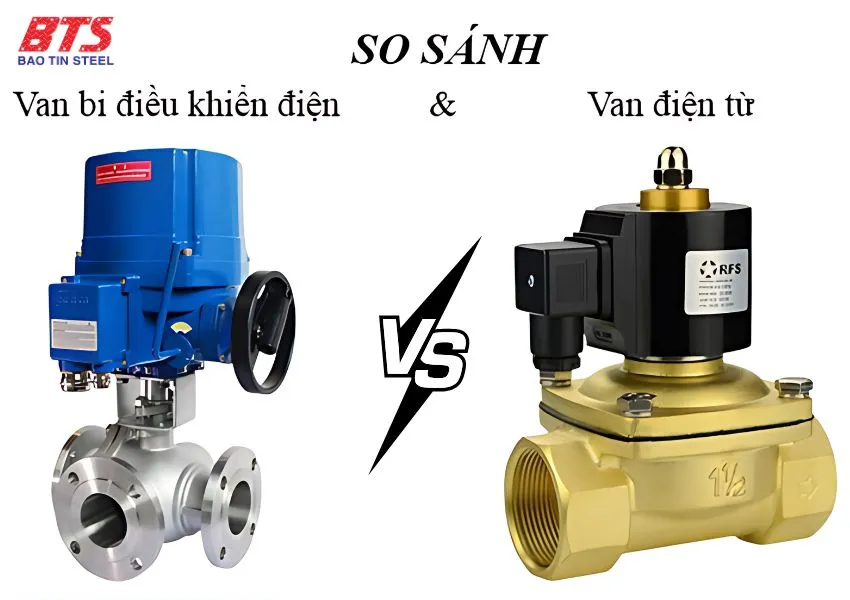
Opening/Closing Mechanism
- The electromagnetic ball valve operates in a quick on/off manner. When powered, the valve opens almost instantly, and when the power is cut off, the valve closes immediately. The response is very fast, with almost no delay.
- In contrast, the electric ball valve opens/closes more smoothly because it is controlled by an electric motor that gradually rotates the valve stem. Although it is slightly slower, it operates more steadily and quietly. It is ideal for systems that require smooth opening and closing actions.
Regulation Capability
-
The electric ball valve can be designed to adjust the opening angle flexibly (linear type). This allows for precise flow control based on the specific needs of the system.
-
On the other hand, the electromagnetic ball valve only has 2 states: fully open or fully closed. Therefore, it is not suitable if you need to regulate partial flow.
Durability and longevity
- The electric control ball valve is generally more durable, operates stably with long opening/closing cycles, and generates less heat. It is suitable for continuous operation systems.
- While the electromagnetic ball valve is convenient, it is more prone to overheating if opened/closed continuously for extended periods. This is especially true for coils that do not have good heat dissipation.
Suitable application
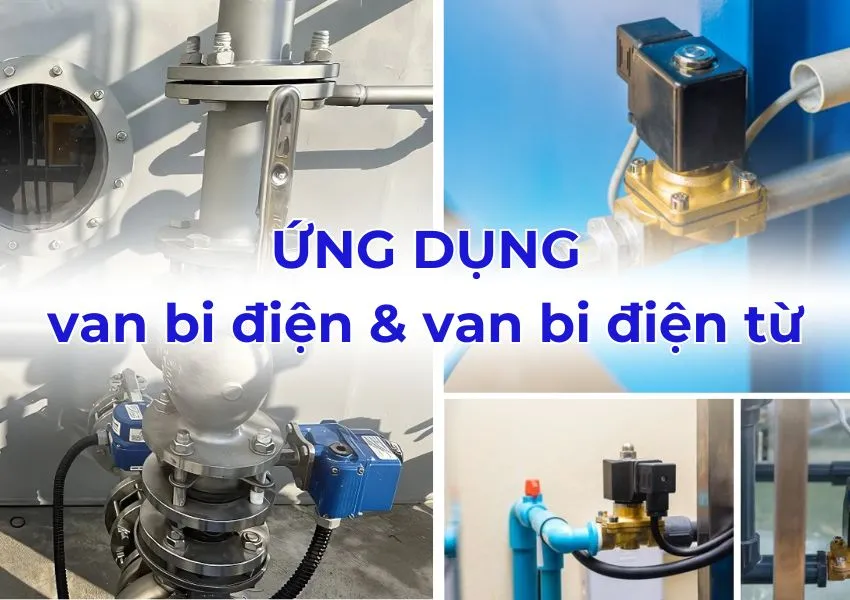
- The electromagnetic ball valve is highly suitable for systems that require quick responses, such as pneumatic systems, clean water, and automatic irrigation systems, etc. These are systems that only need instantaneous opening/closing and do not require flow regulation.
- On the other hand, the electric ball valve is ideal for environments with viscous fluids, high temperatures, or where precise control is needed. For example, in chemical processing systems, hot oil, industrial wastewater systems, etc.
Investment and operating costs
- The electromagnetic ball valve has a lower cost and is easier to install. It is a good choice for small projects or simple systems.
- The electric ball valve has a higher initial investment cost. However, it excels in durability, energy efficiency, and long-term operational performance. It is especially suitable for large systems or systems with high technical requirements.
Conclude
- Both electromagnetic ball valves and electric control ball valves have their own advantages. If you need fast opening/closing, lower cost, and use it in simple environments like clean water or pneumatic systems, the electromagnetic ball valve is a reasonable choice.
- On the other hand, if the system requires precise control, stable operation, and works in complex conditions—such as high temperatures, chemicals, or viscous fluids—the electric control ball valve would be more suitable.
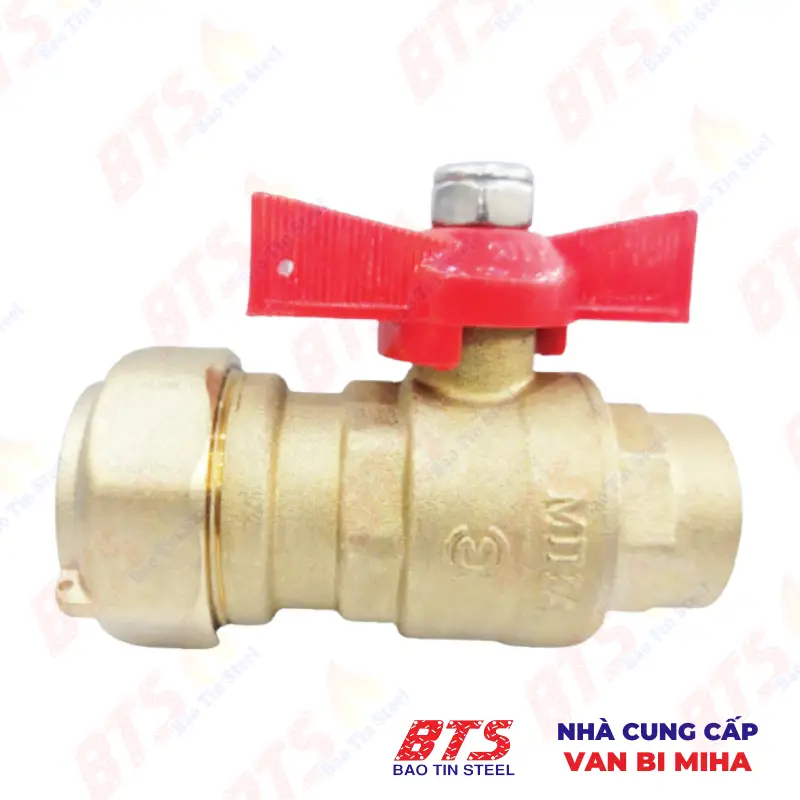
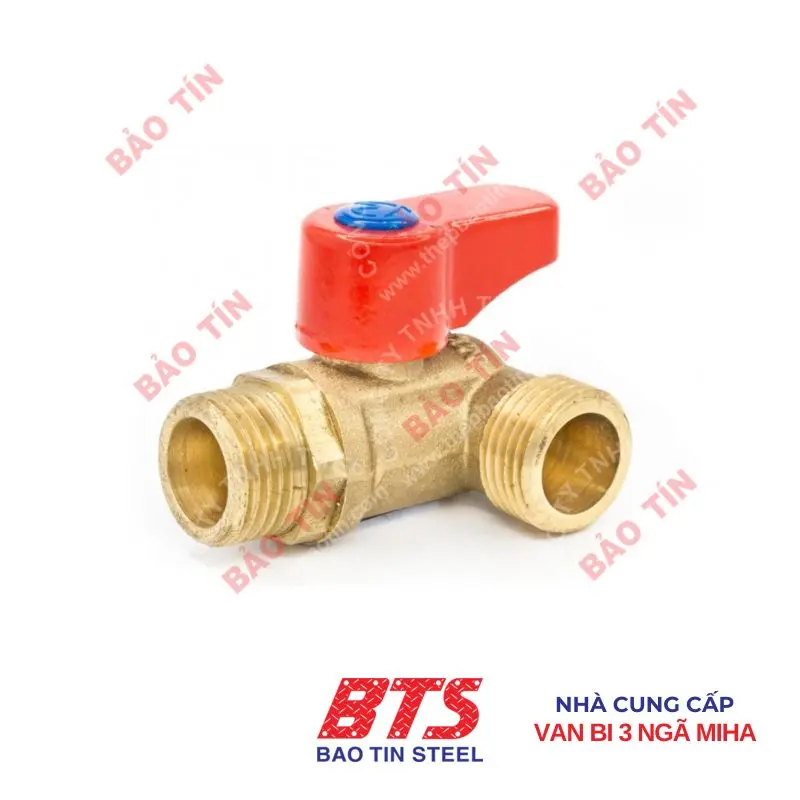
👉👉 You can refer to a few other types of ball valves at Bao Tin Steel:

Advice when Choosing to Buy
Before making a decision, you should:
- Clearly define the working environment: Temperature, pressure, type of fluid (clean water, corrosive chemicals, hot steam, gas, oil, etc.), and whether there is dirt or not. This determines the appropriate valve body material and sealing gasket.
- Evaluate the operating frequency: If the valve has to be opened/closed continuously with high cycles, the electric ball valve will be a better choice.
- Prioritise genuine products: Always choose to buy from reputable suppliers, with clear origin, full quality certificates (CO, CQ).
- Focus on warranty and technical advice: A good supplier will provide a clear warranty policy and a team of specialised technicians to support you in the selection, installation and operation process.
Choosing the right valve from the start will help your system operate efficiently, last longer and save you money in the long run.
I hope this information helps you make the right decision for your system. Would you like to learn more about any specific aspect of the electromagnetic ball valve or electric control ball valve? Feel free to contact Bao Tin Steel for assistance!
Hotline: 0932 059 176.
Tiger Steel is a subsidiary of Bao Tin Steel.