

 Tiếng Việt
 ភាសាខ្មែរ
Pneumatic globe valves play an important role in making the opening, closing, and flow regulation in piping systems faster, safer, and more precise. Instead of time-consuming manual operation, users can easily operate the valve remotely, reducing labour and improving production efficiency. This makes them an ideal choice for factories, industrial zones, water treatment systems, and automated production lines—where speed and stability are critical.
Today’s article from Bao Tin Steel will help you better understand the definition, structure, operating principle, and installation of this type of valve. If you are considering using this valve, don’t miss any of the information below!
What is a pneumatic globe valve?
A Pneumatic control valve is a type of globe valve combined with a pneumatic actuator. It allows automatic opening, closing, or flow regulation. Instead of manually turning a handwheel, compressed air directly acts on the valve stem to operate the valve.
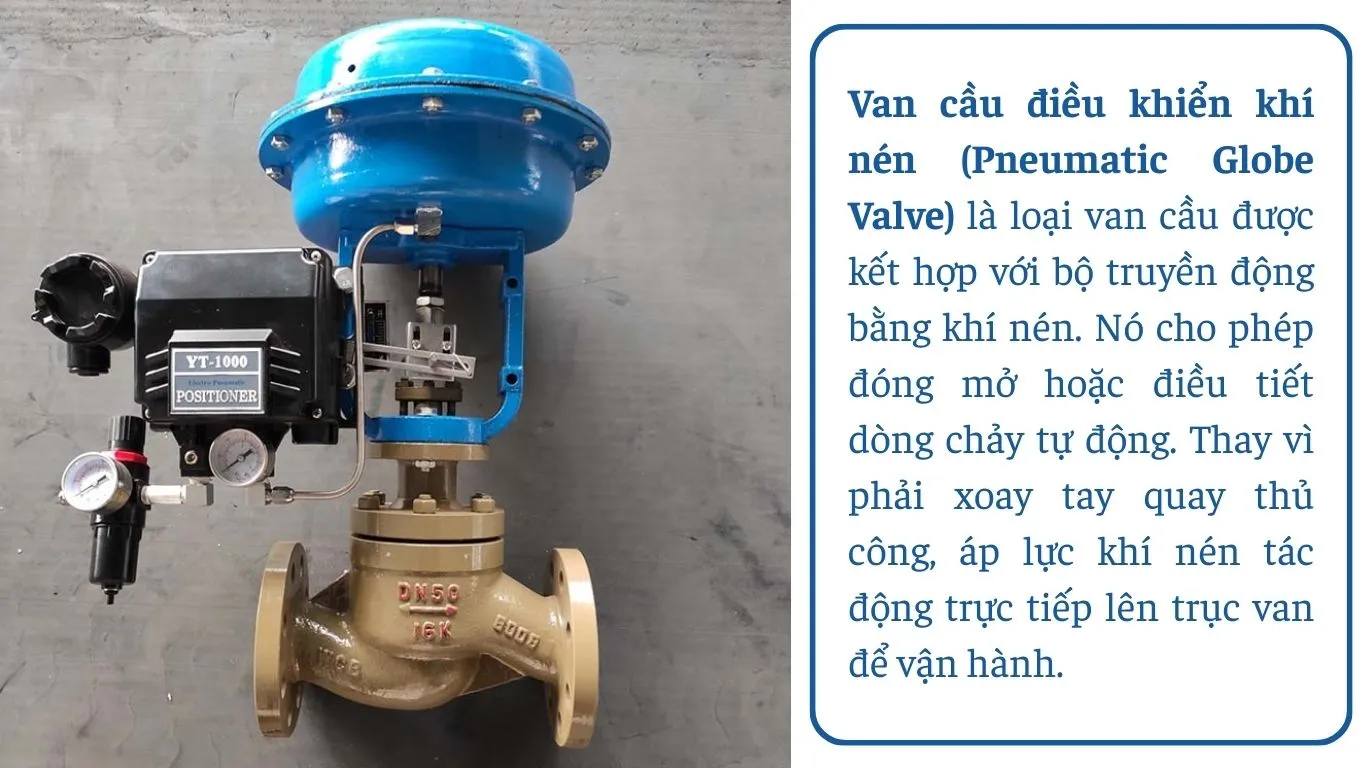
Unlike manual handwheel globe valves, this type of valve allows remote control and full automation, providing fast opening and closing speeds with high accuracy. This is why pneumatic globe valves are increasingly trusted and widely used by factories and businesses to optimise their production lines.
Structure and Operating Principle of a Pneumatic Globe Valve
Structure of a Pneumatic Globe Valve
A pneumatic globe valve consists of two main parts: the valve body and the pneumatic actuator. In addition, there are auxiliary components that ensure tight sealing and durability. Specifically, these include:
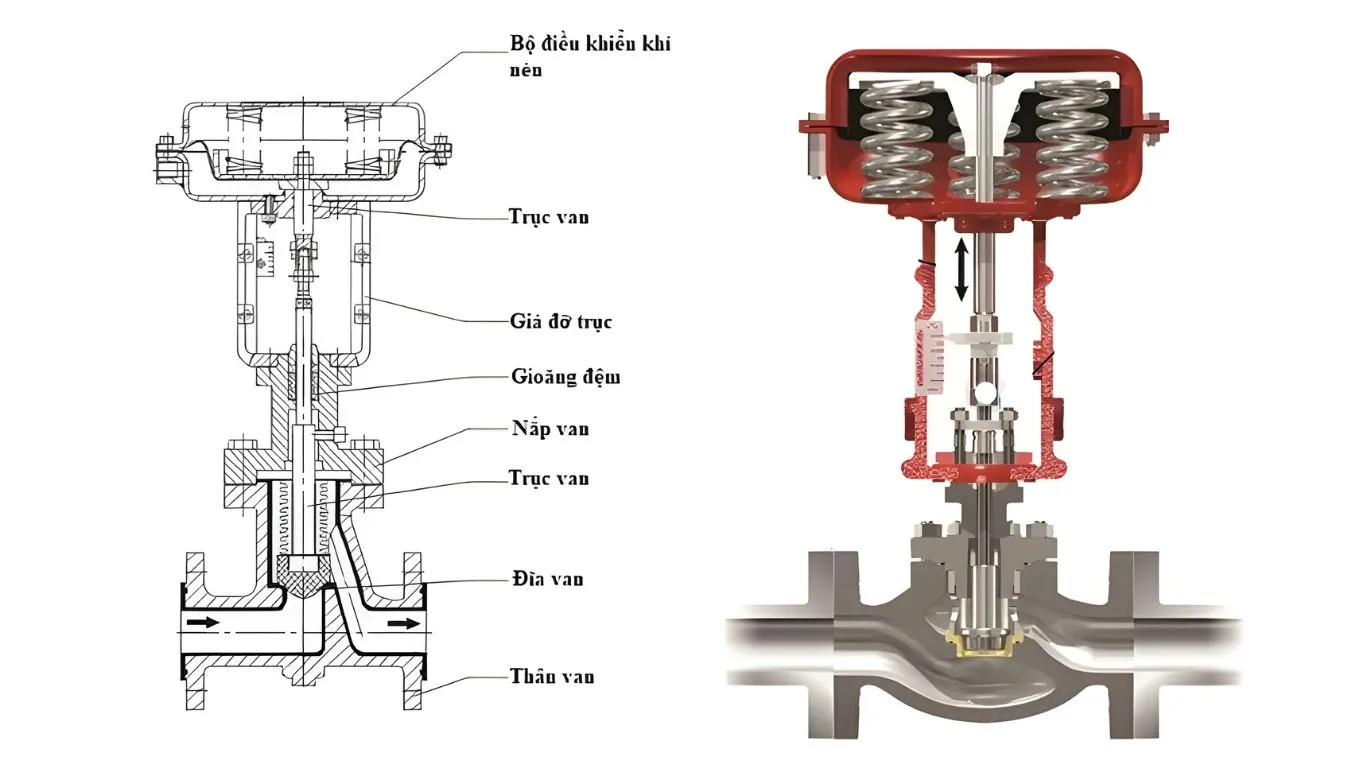
Structure of a Pneumatic Control Globe Valve
– Valve body: Usually made of cast iron, carbon steel, or stainless steel 304/316, depending on the operating environment. It has a globe-shaped design, with both ends connected by flanges or threads.
– Valve disc: Directly attached to the valve stem, responsible for opening and closing to regulate the flow of liquid, gas, or steam.
– Valve stem: Transmits motion from the actuator to the valve disc. Typically made of corrosion-resistant stainless steel with good mechanical strength.
– Sealing gasket: Ensures tight sealing when the valve is closed, preventing fluid leakage.
– Pneumatic actuator: The most important component, using compressed air pressure to generate a mechanical force that acts on the valve stem. There are two common types:
- Single-acting: The valve automatically returns to its original position using a spring.
- Double-acting: The valve is fully opened and closed by supplying compressed air in both directions.
Operating Principle
When compressed air is supplied to the actuator, the air pressure pushes the piston or diaphragm inside the actuator to move.
This movement directly acts on the valve stem, causing the valve disc to move up or down.
When the disc moves downward, the flow is blocked (valve closed). When the disc moves upward, the fluid passes through at the adjusted flow rate.
For single-acting actuators, when the air supply is cut off, the spring automatically returns the valve to its original position (usually closed). For double-acting actuators, compressed air must be supplied in both directions to open or close the valve.
Technical Specifications of Pneumatic Globe Valves
- Size: DN15 – DN500
- Material: Stainless steel 304, Stainless steel 316, Cast iron, Carbon steel
- Pressure rating: 10 kg/cm², 16 kg/cm²
- Working media: Water, air, steam, petroleum products, chemicals, etc.
- Operating temperature: -5°C – 200°C
- Connection type: Threaded or flanged
- Operation type: ON/OFF or linear (modulating) control
- Origin: Japan, Taiwan, China, Korea
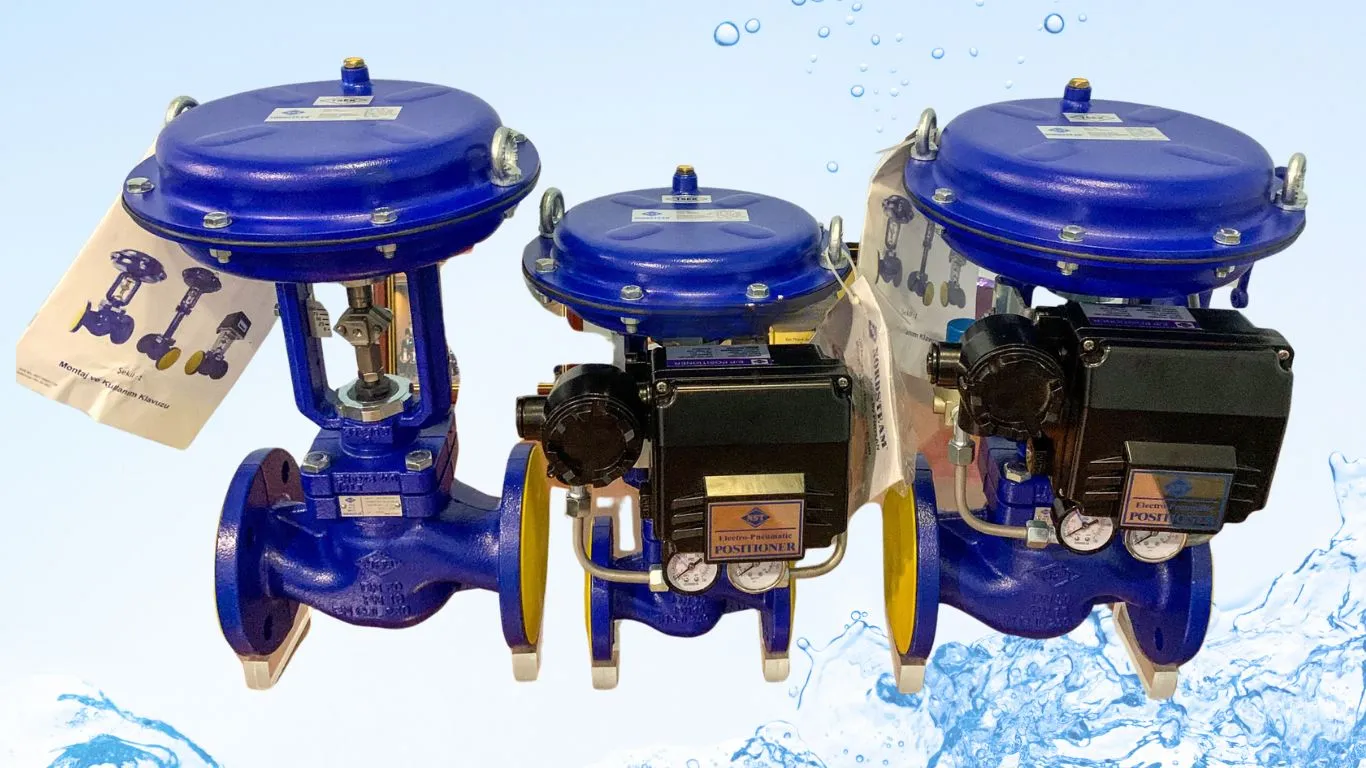
Reference Price List for Pneumatic control valve
Below is a REFERENCE PRICE LIST FOR PNEUMATIC GLOBE VALVES. Currently, there are many brands supplying these valves. Prices vary depending on size, material, manufacturing standards, country of origin, and order quantity. Therefore, this list is for general reference only.
| Pneumatic globe valve size (DN) | Material | Reference Price (VND/unit) |
|---|---|---|
| DN15 | Stainless steel | 2,500,000 – 4,000,000 |
| DN20 | Stainless steel | 3,000,000 – 4,500,000 |
| DN25 | Stainless steel | 3,500,000 – 5,000,000 |
| DN32 | Stainless steel | 4,000,000 – 6,000,000 |
| DN40 | Cast iron / Steel | 4,500,000 – 7,000,000 |
| DN50 | Cast iron / Steel | 5,000,000 – 8,000,000 |
| DN65 | Cast iron / Steel | 7,000,000 – 10,000,000 |
| DN80 | Cast iron / Steel | 8,000,000 – 12,000,000 |
| DN100 | Cast iron / Steel | 10,000,000 – 15,000,000 |
| DN125 | Cast iron / Steel | 13,000,000 – 18,000,000 |
| DN150 | Cast iron / Steel | 16,000,000 – 22,000,000 |
Classification of Pneumatic Globe Valves
Pneumatic control globe valves are classified based on the material of the valve body. Specifically:

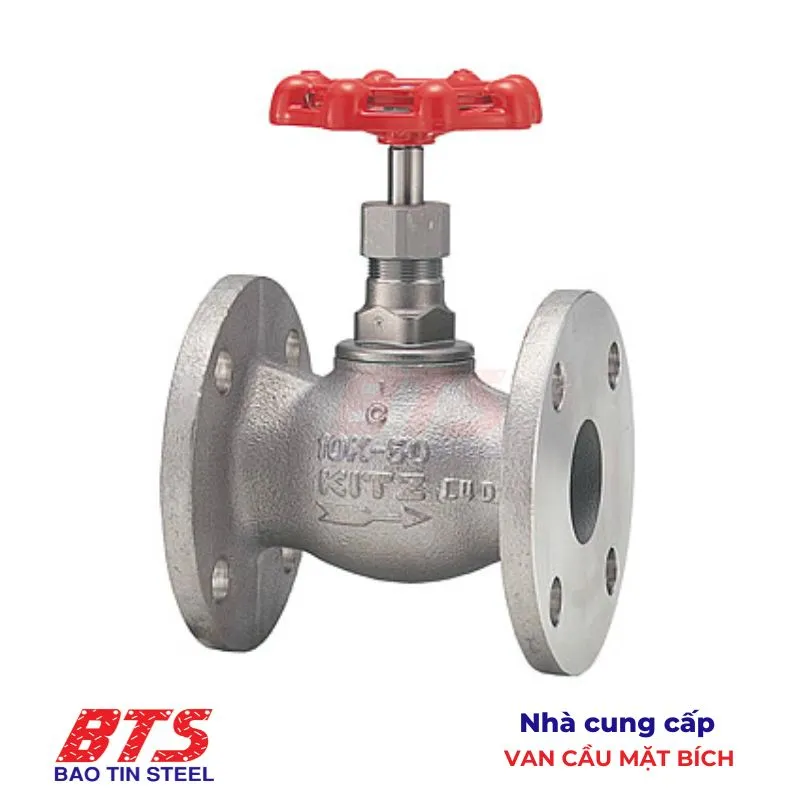
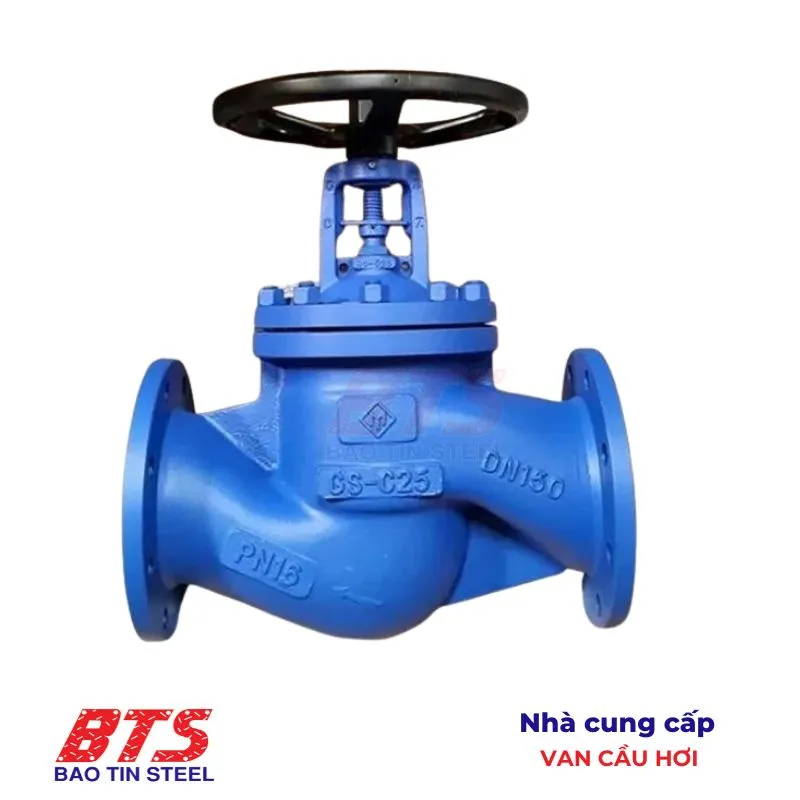
- Cast iron: Low cost, suitable for water, compressed air, and low to medium pressure applications.
- Steel / forged steel: High heat and pressure resistance, commonly used for steam, oil, and industrial gases.
- Stainless steel (304, 316): Excellent corrosion resistance, ideal for environments requiring high cleanliness and safety, such as food, chemical, and pharmaceutical industries.
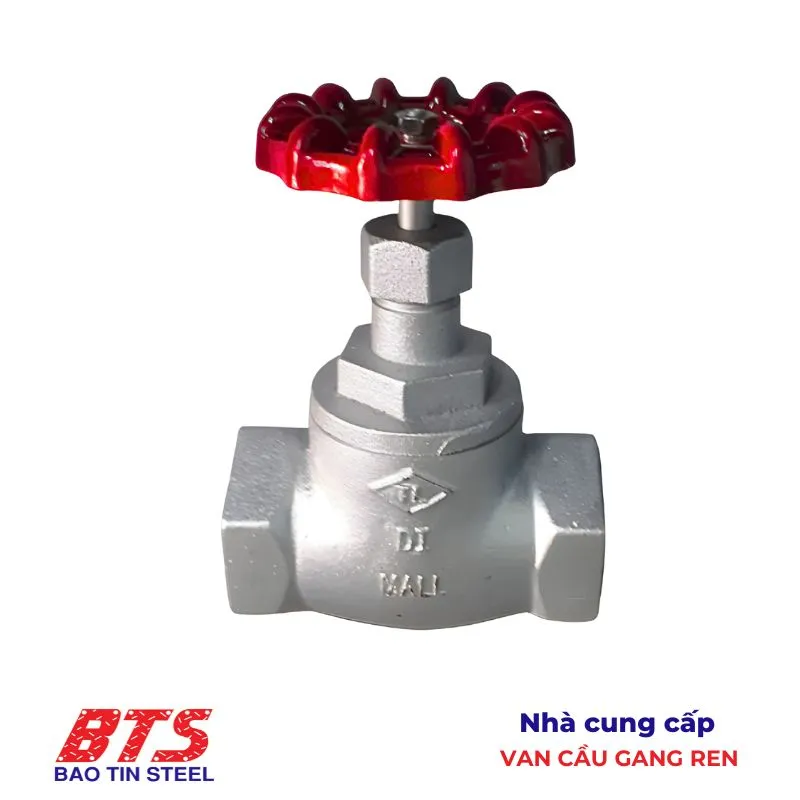
👉👉 Check out some cast iron, steel, and stainless steel globe valve models at BTS.
Advantages and Applications of Pneumatic Globe Valves
Advantages
Pneumatic globe valves offer several outstanding benefits compared to traditional valves:
- Using compressed air for operation allows easy integration into automated control systems, reducing manual labour.
- The valve enables flexible flow regulation, ensuring high accuracy in production lines.
- Suitable for high-pressure, high-temperature environments or areas with fire and explosion risks, where manual operation is not feasible.
- Reduces labour costs and machine downtime, thereby optimising maintenance expenses.
- Sturdy construction with low failure rates and long service life, even under harsh working conditions.
Applications
Pneumatic globe valves are widely used in various industries due to their heat and pressure resistance, as well as their effective flow control capabilities:
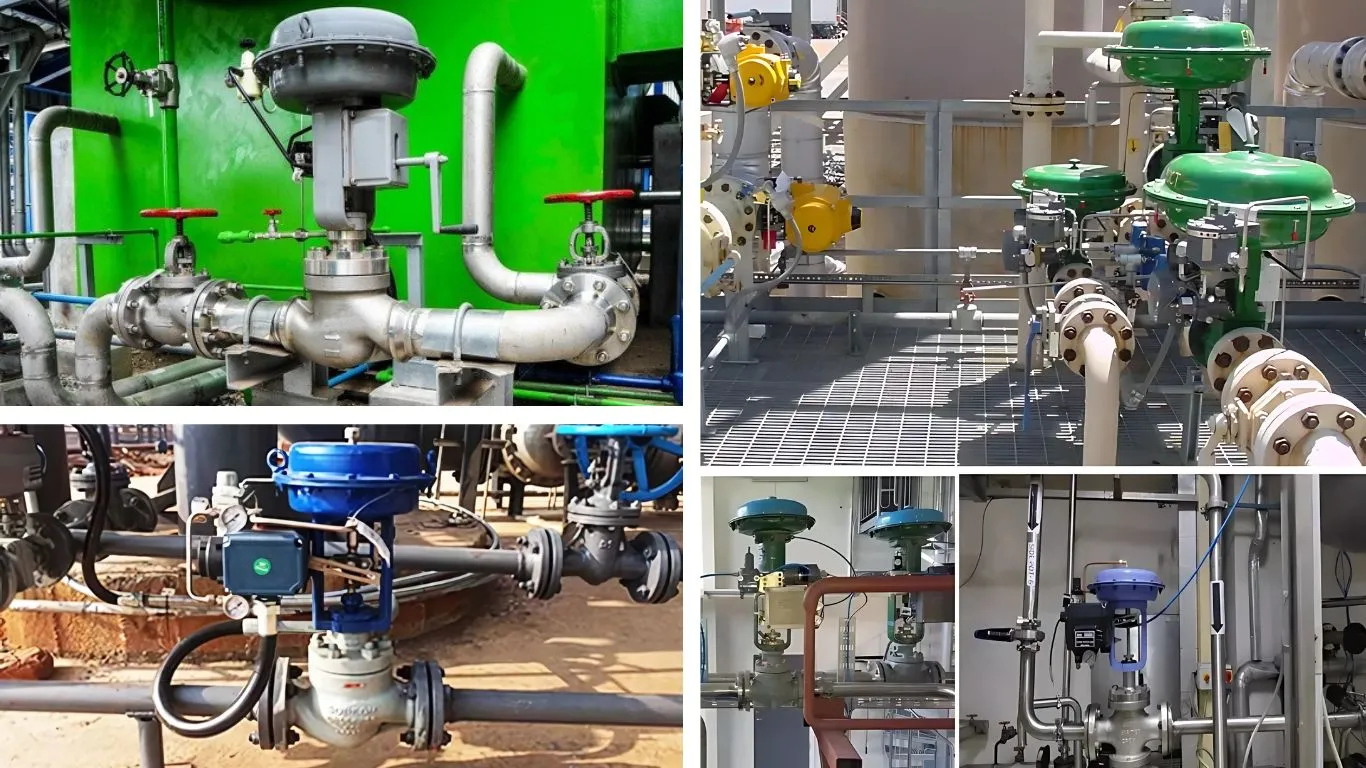
- Oil, gas, and chemical industry: Controls the flow of liquids, toxic gases, or flammable substances.
- Steam systems and boilers: Regulates steam flow in thermal power plants, textile, dyeing, and paper industries.
- Food and pharmaceutical industry: Ensures safe and precise fluid control in environments with high hygiene requirements.
- Water and wastewater treatment: Used in clean water plants and industrial wastewater treatment facilities.
- Firefighting (F&FS) and HVAC systems: Controls water and air flow in firefighting systems and air conditioning networks.
Operational Notes
- Do not supply compressed air exceeding the manufacturer’s specified pressure to avoid damaging the actuator.
- Avoid repeatedly opening and closing the valve too quickly, as this can cause pressure shocks in the pipeline.
- Minimise keeping the valve in a “partially open” position for extended periods, as this may wear the valve disc and sealing surface.
- Always monitor actual pressure and flow to avoid exceeding the valve’s design limits.
Periodic Maintenance to Extend Service Life
- Check the pneumatic actuator: Ensure all connections and air lines are leak-free, and the piston operates smoothly.
- Lubricate the stem and joints: Reduces friction and prevents sticking.
- Regular cleaning: Clean gaskets, valve disc, and body to remove deposits and prevent clogging.
- Timely replacement: Replace worn or damaged gaskets, valve discs, or pneumatic components immediately to avoid affecting the entire system.
The above provides essential and practical information about pneumatic globe valves. We hope this helps you choose the right valve. If you have any questions, contact Bao Tin Steel for the fastest support – Hotline: 0932 059 176.