

 Tiếng Việt
 ភាសាខ្មែរ
Along with many other industrial supplies, galvanized steel is widely used in many fields. However, not everyone knows what galvanized steel is. or how to distinguish galvanized steel from stainless steel. Today’s article will help you gain more interesting knowledge about this material.
Galvanizing, or zinc plating, is a form of plating a layer of zinc on the metal surface to create a protective coating for the surface. The use of plating helps prevent corrosion and rust, improve quality, and especially increase the aesthetics of the product.
What is galvanized steel?
Galvanized steel is a material covered with a layer of zinc through the hot-dip plating or electrolysis process. The zinc layer protects the steel surface from corrosion and rust while increasing the thickness, quality, and aesthetics of the material.
Galvanized steel also has many different types to suit the needs of each project as well as each customer. Below are some types of galvanized steel available today:
- Galvanized steel pipe. This type is often used to make water pipes, stair railings, light poles, ultrasonic poles, etc.
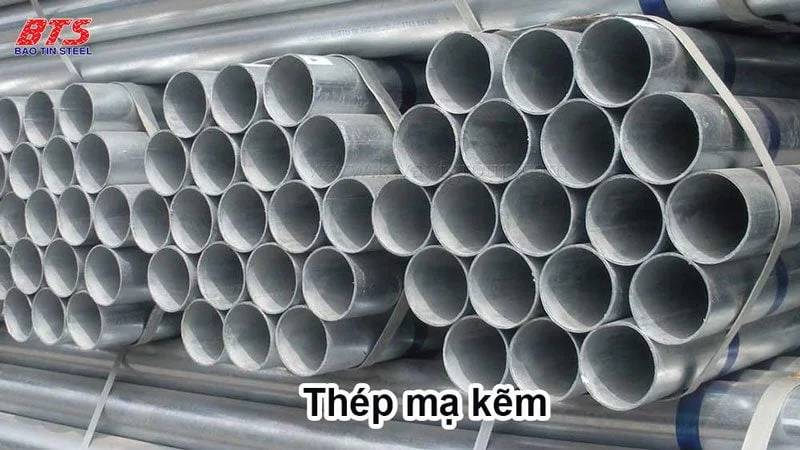
- Galvanized square steel. Used a lot in construction and civil projects such as roof frames, scaffolding, furniture, motor vehicle parts,…

- Oval galvanized steel pipe. This type of pipe is often used mainly in the fields of furniture, car frames, motorbikes, bicycles, etc.
Above is the classification of galvanized steel, and in this article, Bao Tin Steel will delve into galvanized steel pipe products as well as share with you the popular round zinc pipe types today.
The most popular types of galvanized steel pipes today
Currently, there are two popular types of galvanized steel pipes on the market: galvanized steel pipes made from galvanized steel sheets and hot-dip galvanized steel pipes.
Regular galvanized steel pipes – Galvanized steel pipes
Galvanized steel pipes are usually steel pipes that use a conventional galvanizing method to coat the zinc layer on the surface. The plating layer is completed before welding into steel pipes.
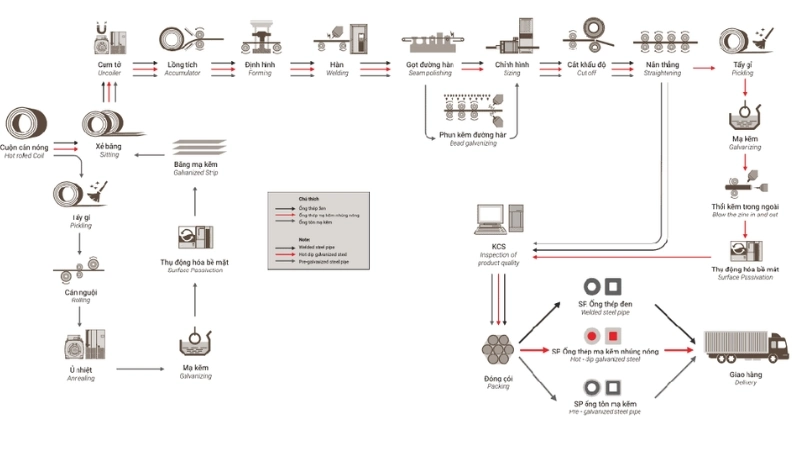
1. Galvanized steel pipe production process:
- Step 1: Remove rust and clean the surface
- Step 2: Cold roll to the required thickness
- Step 3: Heat incubation
- Step 4: Galvanized.
- Step 5: Passivation of the surface. As a technique, passivation is the use of a light coating of a protective material, such as metal oxide, to create a corrosion-resistant shell.
- Step 6: Cut the tape to the required diameter. The essence of slitting is to divide steel into many smaller-sized plates.
- Step 7: Insert the cluster.
- Step 8: Put it into the storage cage.
- Step 9: Shape the steel tape into a tube shape.
- Step 10: Weld the joint body lengthwise to form a complete steel pipe.
- Step 11: Trim the weld line, spray zinc on the weld line, and adjust the shape.
- Step 12: Cut the aperture and straighten it.
- Step 13: Check and pack according to regulations.
2. Signs to identify regular galvanized pipes:
The plating layer is thin and does not cover the entire surface of the product. However, the surface of steel pipes is brighter and smoother than other types of steel pipes.
3. Advantages and disadvantages of regular round galvanized pipes:
| Advantage | Disadvantages |
| – Product surface is shiny, high aesthetic value | –The surface zinc layer is uneven, the thickness is only from 15μ to 25μ |
| – Has low price |
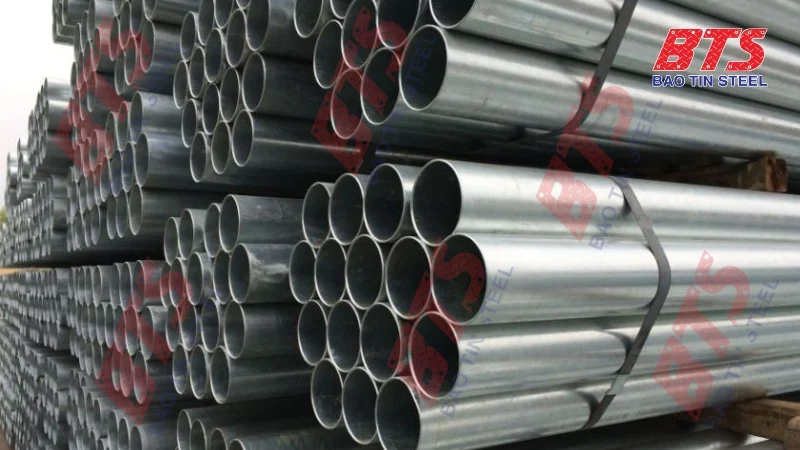
Hot-dip galvanized steel pipes
Hot-dip galvanized steel pipes are shaped steel pipes. Then it is galvanized in a molten zinc furnace at a temperature of 815 – 850℉.
1. Hot-dip galvanized steel pipe production process:
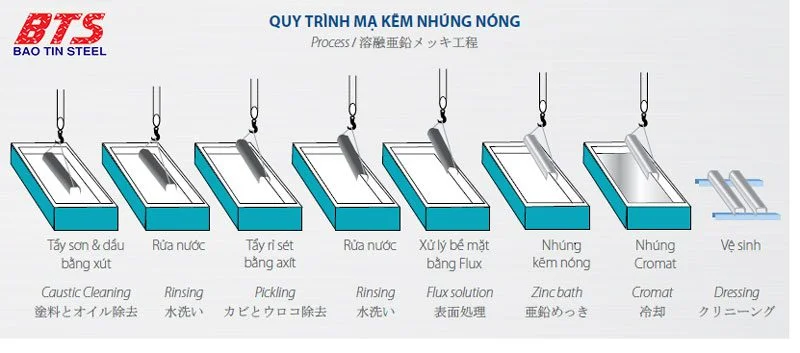
- Step 1: Cut the bandage
- Step 2: Insert into a cluster
- Step 3: Put into the storage cage
- Step 4: Shape the steel tape into a tube shape
- Step 5: Weld the joint body lengthwise to form a complete steel pipe
- Step 6: Trim the weld line, spray zinc on the weld line, and adjust the shape
- Step 7: Cut the aperture and straighten it
- Step 8: Remove rust, and clean the inside and outside of the steel pipe.
- Step 9: Galvanized. Dip the entire steel pipe into the molten zinc bath to form a hot-dip galvanized steel pipe evenly inside and outside. Then, the steel pipe is put into the cooling tank.
- Step 11: Passivation of the surface
- Step 12: Check and pack according to regulations
2. Signs to identify hot-dip galvanized steel pipes:
The plating layer is even, covering the entire product surface from inside to outside. The surface will be rough and unattractive because the plating process does not involve machinery or people.
3. Advantages and disadvantages of hot-dip galvanized pipes:
| Advantage | Disadvantages |
| – Long lifespan, can last over 50 years. | – High price |
| – The surface zinc layer is even and thick, about 40μ to 80μ. | – For thin materials, hot dipping will easily cause deformation |

Round galvanized steel pipe
Steel plates (steel sheets) after the slitting process are rolled up and welded along the pipe body. Round galvanized steel pipes are often used for water and gas pipes, load-bearing scaffolding, motorcycle and bicycle frames, etc.
Application of galvanized steel pipes
With high durability, good bearing capacity, and low rust resistance, steel pipes are commonly used in many different industries and fields, such as:
- Water pipes in buildings, apartment complexes, etc.
- Construction works (civil construction, prefabricated temporary floor support frames, fences, stair railings, scaffolding, etc.)
- Industrial production (car frames, motor parts, etc.)
- Interior decoration (materials for tables, chairs, beds, cabinets, etc.)
- Materials for making lamp posts, lighting poles, etc.
With diverse and flexible applications, round zinc pipes are an important material in many fields and have made significant contributions to the development of many industries and construction.
>>>> If you are interested in the product and want to know the current price of galvanized pipes. Please refer to the latest 2024 galvanized steel Pipe Price Quote
Good galvanized steel pipe brands today
To answer the question, which brand of galvanized round zinc pipe is good? We invite you to explore the manufacturers below:
Hoa Phat
The Hoa Phat brand is famous in the market for its high-quality products. Hoa Phat zinc pipe products are not only aesthetically pleasing but also ensure a long life for the projects used.

Hoa Sen
Hoa Sen galvanized pipe is quite a famous brand on the market today. Because their quality comes with the price of the product. Hoa Sen round zinc pipe products are galvanized to high quality. Used for civil and industrial projects. Suitable for enduring harsh conditions thanks to the quality of each steel pipe.
SeAH
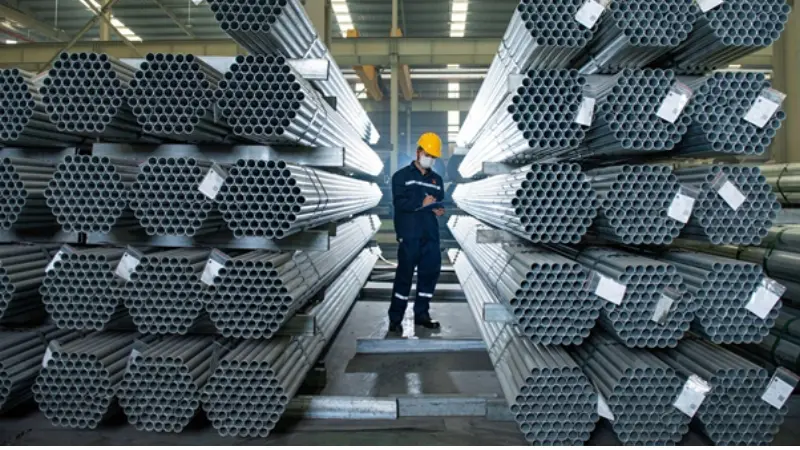
SeAH is one of the leading galvanized pipe manufacturing brands in our country, besides Hoa Phat and Hoa Sen. SeAH uses modern technology to produce steel pipes to create high-quality, aesthetically pleasing products. They always ensure product quality through strict quality testing processes and compliance with international standards.

Viet Duc
Galvanized steel pipes of the Viet Duc brand have load-bearing capacity, high durability, and are rust-resistant. This is a material used in many projects, such as buildings, factories, and large projects.
Viet Duc galvanized steel pipe products are quality-guaranteed through strict testing processes and compliance with international and Vietnamese standards.

Vinapipe
The advantages of Vinapipe galvanized steel pipes lie not only in their durability, quality, and applicability in many fields but also at a more competitive price compared to other brands.

Distinguish between galvanized steel and stainless steel
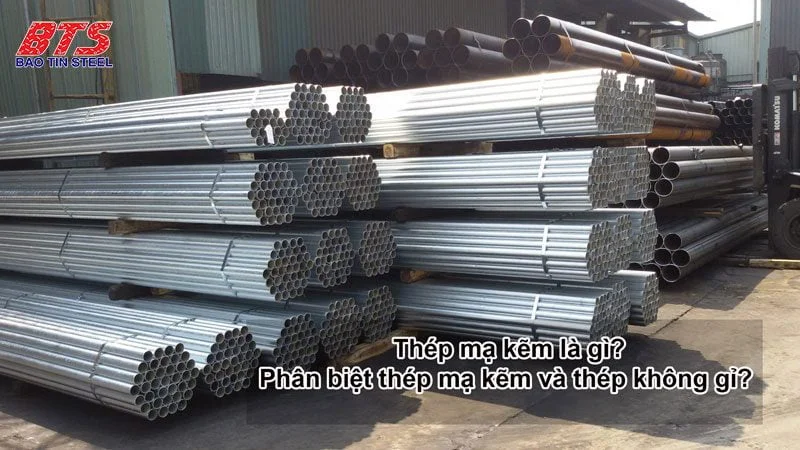
Although corrosion resistance is highly regarded, galvanized steel and stainless steel are two completely different types of steel. The most basic points to distinguish these two types of steel include production method, composition, hardness, application, and price. Specifically:
Production methods
- Galvanized steel: is a type of steel coated with zinc on the outside by hot dipping or electrolysis.
- Stainless steel, also known as stainless steel, refers to a form of iron alloy containing at least 10.5% chromium. Instead of creating a galvanized layer on the outside to protect against environmental factors, Stainless steel enhances capabilities right from the inside.
Ingredient
- Galvanized steel is steel dipped in zinc or galvanized, often chosen as carbon steel. This is a common type of steel, with the main ingredients being iron and carbon.
- In contrast, stainless steel not only contains iron and carbon but also needs a minimum of 10.5% chromium.
Stiffness
Comparing the hardness between galvanized steel and stainless steel, the majority will favor stainless steel. Because the chromium component not only helps steel resist corrosion and oxidation but also has an outstanding hardness,

Application and cost
- Stainless steel (304 stainless steel, 201 stainless steel) has a higher price, so it is often used in projects that require high modernity, functionality, and aesthetics. It is even used to make household appliances such as meat slicers, dough mixers, vacuum presses, food dryers, etc.
- Galvanized steel has a lower price and is mainly used in manufacturing industrial supplies such as steel pipes, steel plates, etc.
Note when preserving galvanized steel
– It should be kept in a dry, covered warehouse or covered with tarpaulin. This helps to limit rust.
– Place them at least 30 cm above the ground and 10 cm above the cement floor.
– In places with special climates, such as floods or coastal areas, to best preserve steel, we can:
- Use anti-rust oil.
- Spray paint the surface.
- Use anti-rust chemicals (phosphoric acid, citric acid, muriatic acid, etc.).