

 Tiếng Việt
 ភាសាខ្មែរ
Steel is essential in construction, ranging from residential buildings to large-scale infrastructure projects. As of October 2024, global crude steel production reached 152.1 million tons, highlighting the significant growth of this industry. This article will provide an overview of steel in construction, covering concepts, classifications, quality standards, and applications to help you better understand this important material.
What is steel?
Steel is an alloy of iron and carbon, sometimes with other elements such as copper, nickel, etc. to create many types of steel with different properties. The hardness of steel depends on the amount of carbon: the more carbon, the harder the steel and the more brittle.
Steel is symbolized by the letter CT, including 3 subgroups A, B, and C according to Vietnamese standard (TCVN) 1765 – 75.
Steel is widely used in construction, mechanics, machinery manufacturing, etc., and is one of the indicators used to evaluate a country’s technological development.
Steel making process
Steel Classification
Based on chemical composition, shape, manufacturing method and application, steel is classified as follows:
1. By chemical composition
- Carbon Steel: Includes low carbon steel (≤ 0.25% C), medium carbon steel (0.25% – 0.6% C) and high carbon steel (> 0.6% C). Low and medium-carbon steels are widely used due to their ease of machining and reasonable price, while high-carbon steel has higher hardness, suitable for heavy-duty applications.
- Stainless steel (alloyed with chromium)
- High alloy steel (special purpose; post-heat treatment)
- Low alloy steel
- High strength low alloy steel
- Tool steel (very hard; post-heat treatment)
- Silicon steel (alloyed with silicon)
2. By shape
- Round steel pipe: Round shape, hollow, good load-bearing capacity, often used as columns, beams, roof structures, water and gas pipes.

- Profile steel: Including I, H, U, V… shaped steel, mainly used as the main load-bearing frame in factories and industrial works, where high rigidity and load-bearing capacity are required.

- Square steel: Rectangular or square shape, hollow, diverse applications in construction and mechanics.
- Steel plate: is a type of steel in the form of flat plates widely used in many fields of construction, mechanics, shipbuilding, etc.
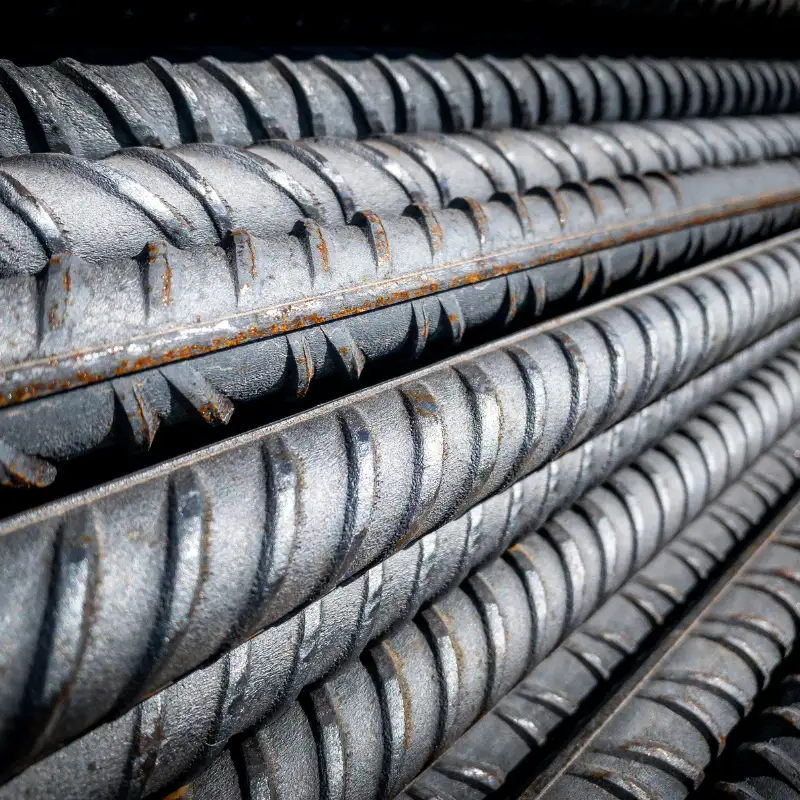
- Steel bar: Has embossed ribs, increases adhesion to concrete, often used as reinforcement.
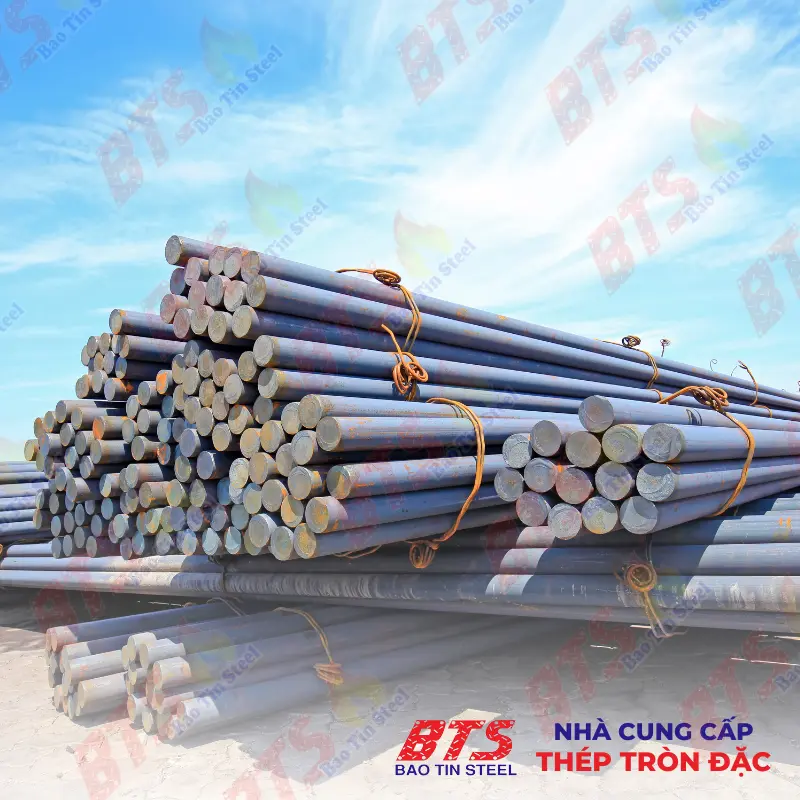
- Round bar: Smooth surface, solid core, used in manufacturing machine parts, bolts, and screws.
- Coiled steel: Is a type of steel wire rolled into a circle, with a smooth or ribbed surface, often used for constructions that require bending, such as welded wire mesh in special structures.
3. By production method
- Hot rolled steel: Produced at high temperatures, rough surface, suitable for applications that require easy cutting and bending, such as steel bars and steel profiles.
- Cold rolled steel: Produced at room temperature, smooth surface, higher precision, suitable for applications requiring precision in size and form
=> Please read more about how to distinguish between hot-rolled steel and cold-rolled steel.
4. By application
- Structural steel: Used as load-bearing frames for large structures such as high-rise buildings, bridges, and roads.
- Reinforcing steel: Used as reinforcement to reinforce concrete, improving load-bearing capacity.
- Fabricated steel: Steel is used to manufacture machinery and equipment parts in industry.
Important mechanical properties of steel
To ensure the quality of steel in construction, some important physical and mechanical indicators need to be tested, including:
- Yield Strength: The stress limit at which steel begins to plastically deform.
- Tensile Strength: The maximum stress that steel can withstand before breaking.
- Elongation: The ability to stretch before breaking, indicates the ductility of steel.
- Impact Strength: The ability to absorb impact energy, which helps evaluate the steel’s ability to resist fracture when impacted.
Steel standards in Vietnam and internationally
To ensure the quality and safety of construction steel, Vietnam and other countries have specific steel standards:
- TCVN 1651-1:2018 and TCVN 1651-2:2018: Standards for hot-rolled steel bars and coils for reinforced concrete in Vietnam.
- TCVN 1765:1975 on ordinary structural carbon steel.
- ASTM A615: American standard for ribbed steel bars for concrete structures.
- JIS G3112: Japanese ribbed steel standard.
- ISO 6935: An international standard for steel for the reinforcement of concrete.
The above standards will help contractors and investors easily choose the right type of steel to suit project requirements.
Practical applications of steel

- Residential housing: Steel is used as reinforcement for foundations, columns, beams, and floors, helping to make the structure durable.
- Industrial construction: Reinforced steel and structural steel are used to make factory and warehouse frames.
- Bridges and roads: Structural steel ensures load-bearing capacity for large structures such as bridges and highways.
- Technical infrastructure: Construction steel is also used as a structure for television towers, electric poles, and other technical infrastructure.
Guide to choosing the right steel
Choosing the right construction steel plays an important role in ensuring the quality and durability of the project. Factors to consider when choosing steel include:
- Type of construction: Each construction has different requirements for steel strength and properties.
- Technical standards: Choose steel that meets technical standards with clear factory certificates.
- Supplier reputation: Choose a supplier with a reputable brand in the market.
- Price and budget: Compare prices between suppliers to ensure cost-effectiveness.
Bao Tin Steel suggests some steel products for construction projects:


The Consequences of Using Poor Quality Steel
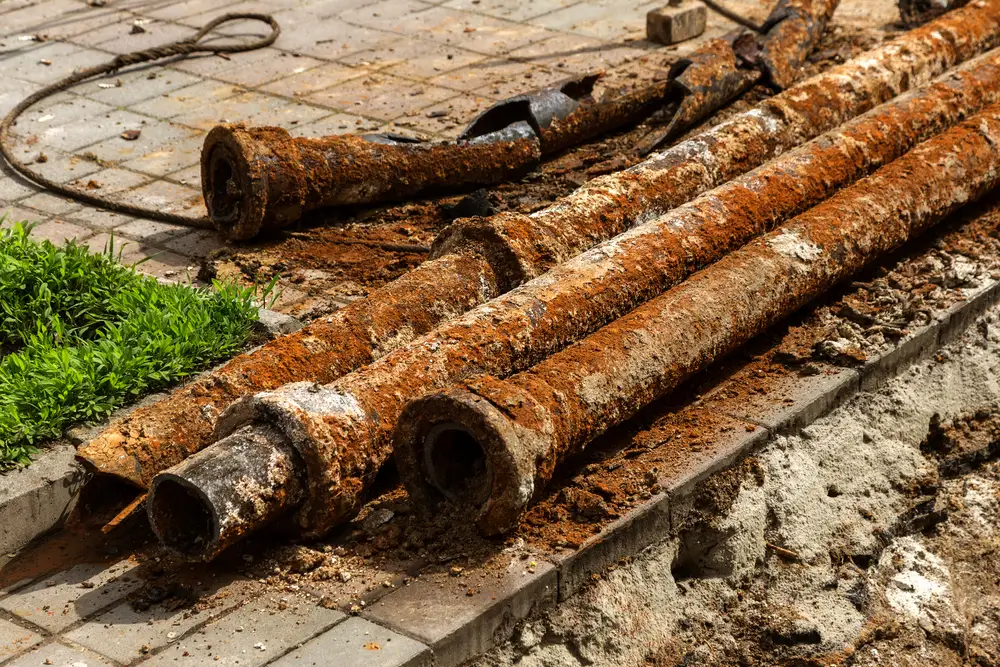
Using poor-quality steel can seriously affect the construction:
- Reduced load-bearing capacity: Can lead to cracking, even collapse of the structure.
- Reduced lifespan: Steel is susceptible to corrosion and rust, reducing the lifespan of the structure.
- Economic loss: Costly for maintenance and repair later.
Bao Tin Steel – Reputable steel supplier
- Steel products meet quality standards.
- Competitive prices.
- Dedicated consulting services.
Conclude
Steel is an important construction material, ensuring the safety and durability of every project. Hopefully, this article has provided you with useful information about what steel is and how it is used in construction. Choose the right type of steel and a reputable supplier to ensure the quality of your project.
Tiger Steel is a subsidiary of Bao Tin Steel