

 Tiếng Việt
 ភាសាខ្មែរ
Instructions on how to properly tighten flange bolts
As mentioned, depending on the application and bolt strength, the flange bolt tightening process is also different. To make it easier for you to imagine, Bao Tin Steel will provide instructions for tightening flange bolts with 2 types of low pressure.
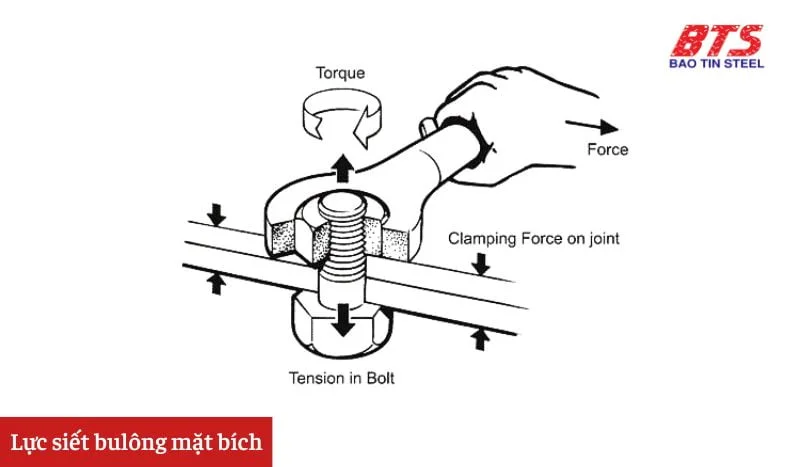
Tighten the low-pressure flange bolts
STighten by hand
You can easily tighten the low-pressure flange by hand. This procedure applies to 8-bolt flanges, including:
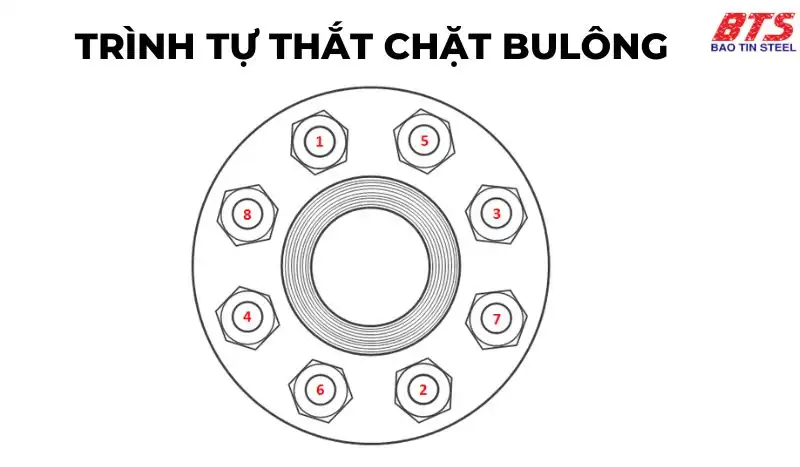
- Step 1: You proceed to tighten symmetrically perpendicular to each other once. At this time, you use a closed wrench or a curved handle to tighten. And be sure to tighten in order from 1 to 8 (as shown).
- Step 2: When tightening bolt number 8, you tighten 1 turn starting from 8 with the correct tightening force as required. The order for tightening this flange bolt is: 1→2→3→4→5→6→7→8→4→6→2→7→3→5→1
*Note:
- When tightening low-pressure flange bolts by hand, only one person can do it. This is to ensure the tightening force is evenly distributed.
- Use a caliper or ruler to check the gap at the 4 flange corners. If the gap at these 4 corners is not equal, you need to tighten it symmetrically to the place with the largest gap.
- o the same with 12, 16, and 24 hole flanges.
Tighten with a hydraulic wrench
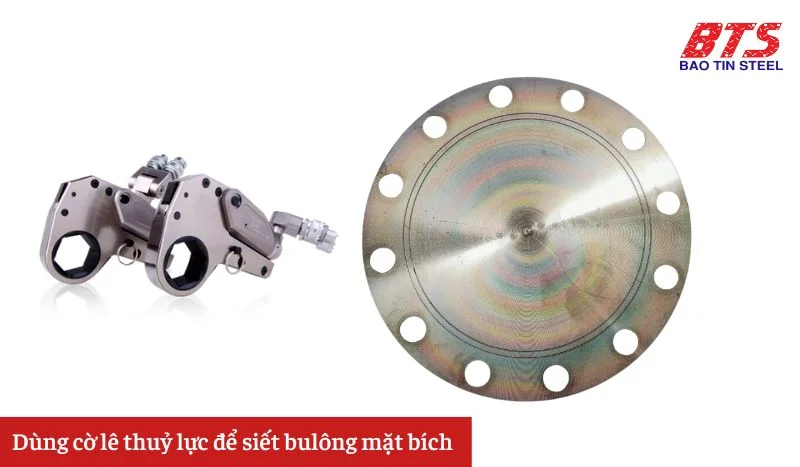
With the same steps as above, you can also tighten the low-pressure flange bolts with a hydraulic wrench. With this tightening method, you need to perform 3 symmetrical tightening times with 3 prescribed force levels. Specifically:
- Step 1: You do the same as when tightening flange bolts by hand. You tighten in order from 1 to 8 with force level 1.
- Step 2: You also tighten the flange bolts from 1 to 8 with force level 2. Then, increase to force level 3 to tighten the third time.
- Step 3: Using force level 3, tighten the bolts evenly. At this point, the bolts have been tightened securely.
The process of tightening low-pressure flange bolts with a hydraulic wrench is as follows:
1->2->3->4->5->6->7->8->1->2->3->4->5->6->7->8->1->2->3->4->5->6->7->8->4->6->2->7->3->5->1->8
Tighten high-pressure flange bolts
>> There is another way to connect flanges to pipes or other fittings. You can see how to weld a flange to get more useful knowledge!
Principles when tightening flange bolts
Below are the basic principles to minimize errors or dangers that can occur during the process of tightening flange bolts:
- Select appropriate bolts and flanges to limit cracking and breaking causing leaks. See more: Causes and solutions for flange leaks.
- Clean and lubricate bolts, flanges, and nuts to help connect parts more securely. At the same time, eliminates corrosive factors that cause rust, affecting the longevity and operation of mechanical systems.
- Use the appropriate bolt-tightening tool. This helps ensure connectivity and safety for each steel structure
- Distribute flange bolt tightening force evenly and appropriately. Reciprocal tightening is required to keep the tightening force balanced.
- After following the correct procedure for tightening flange bolts, you need to check the tightening joints to make sure the bolts are not loose, misaligned, or slipped out.
Note: Each application will require a different flange bolt tightening technique. If you are not sure about your skills, you should carefully refer to the instructions from the manufacturer. This helps minimize possible errors.
It can be seen that following the instructions for tightening flange bolts is extremely necessary. Hopefully, the information that Bao Tin Steel just provided will help you better understand the tightening process. At the same time, perform correct technical operations. If you have any issues and need assistance, don’t hesitate to contact us immediately – 0932 059 176!