

 Tiếng Việt
 ភាសាខ្មែរ
Ball valves are inherently very familiar. However, different ball valves exist, each with unique characteristics and structures. In particular, many customers always seek flanged ball valves. So, what is a flanged ball valve? What are its standards and prices? If you are interested in this type of valve, please see the article below by Bao Tin Steel!
What is a flanged ball valve?
The flanged ball valve is a device that helps control and regulate fluid flow in the system. The flanged ball valve is connected to the pipeline by flange through bolt connections. The valve is opened/closed through parts such as a lever, handwheel, and automatic control.
Many people also wonder what the English name for flanged ball valve is. Searching for this valve line in English also helps you get a lot of good documents from foreign experts. The answer to this question is Flanged Ball Valve. As we know, Flange means flange, and Ball Valve is the English name of the ball valve.
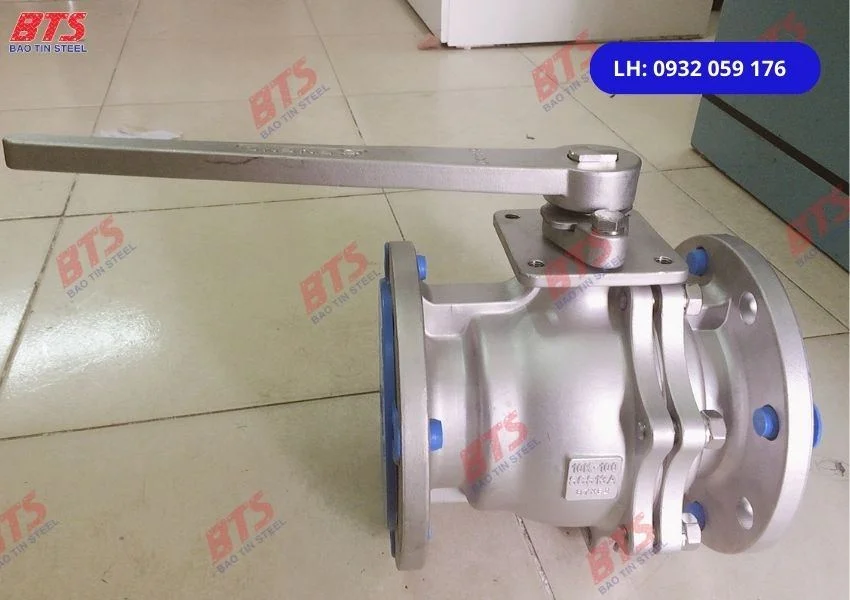
Like flanged valve lines, the common flanged ball valve size ranges from DN15 to DN100. It is made from many different materials, such as stainless steel, plastic, steel, and cast iron. This ball valve is capable of working under a maximum pressure of 16 kg/cm2 and a temperature of -10 to 180 degrees C. As its name suggests, the flanged ball valve will connect to the pipeline system through the flange. Flange standards are JIS, BS, DIN, and ANSI.
Currently, we will see the Vietnamese market selling many types of flanged ball valves from Korea, China, Thailand, Vietnam, etc. And each type will have different characteristics and prices. Maximum response to customer needs.
Structure of flange ball valve
The flanged ball valve has a not-too-complicated structure. It consists of parts such as a valve body, valve shaft, ball, gasket, controller. The main function of each of these parts is specifically:
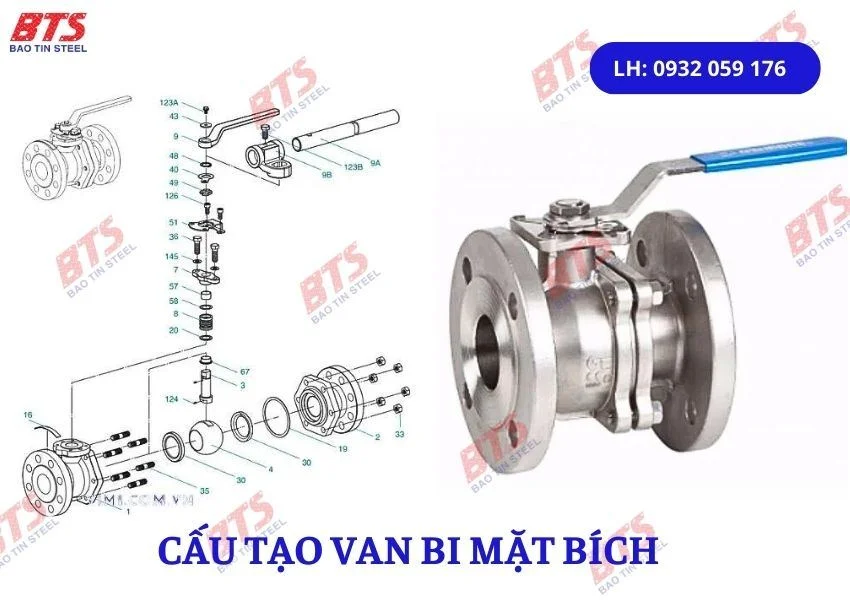
- Valve body: Made of cast iron, stainless steel, plastic, etc. to preserve the internal parts of the valve. This is also the part that is cast with the flange to connect to the pipe.
- Valve ball: This ball is spherical, perforated, hard, and less corrosive. It plays the role of opening or closing the valve to regulate the flow of fluid.
- Valve shaft: This part helps connect the ball to the valve controller. This shaft will transmit the force from the controller to the valve ball and perform the opening and closing operations.
- Controller: This part can be a lever, handwheel, electric, or pneumatic. It will create force to act on the valve shaft.
- Gasket: Creates a tight seal between the valve shaft and the ball. Thanks to that, the fluid does not leak and cause damage when passing through.
Flanged ball valve classification
Many factors help classify flanged ball valves. To easily identify and choose the right valve, please save these shares!
Classification by manufacturing materials
As mentioned, flanged ball valves are made from materials such as: cast iron, steel, stainless steel, and plastic. Therefore, it can meet many different systems. Specifically:
- Stainless steel flange ball valve: Made from stainless steel 304 or stainless steel 316. The stainless steel flange ball valve has good resistance. At the same time, it is less susceptible to rust and corrosion, so it is suitable for many harsh conditions. Therefore, the price of stainless steel flange ball valve 304 is much higher than other types of cast iron and plastic valves.
- Cast iron flange ball valve: The cast iron used here is ductile iron or ductile iron. However, this type of valve is easily corroded and must be replaced quickly after a period of use. Therefore, the price of cast iron flange ball valves is also much lower than that of stainless steel ball valves.
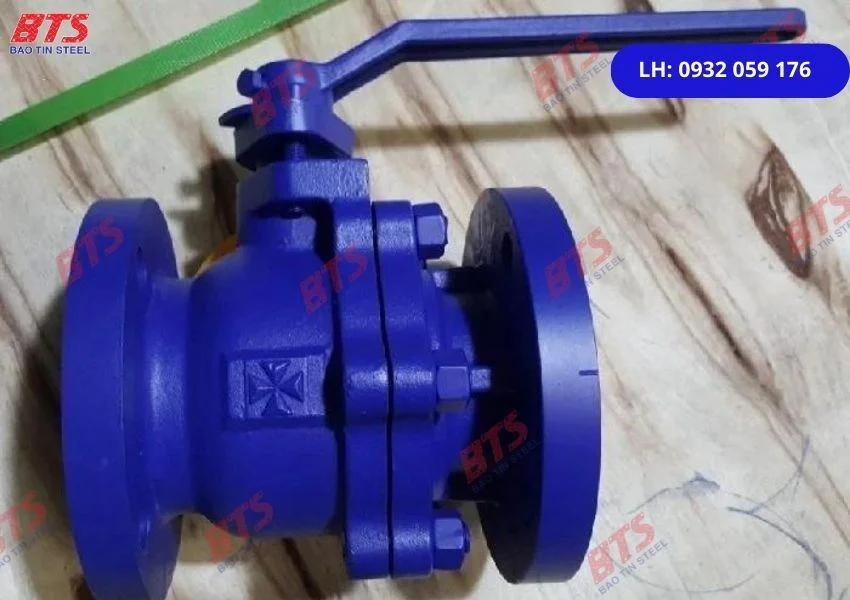
- Steel flange ball valve: WCB steel is the type of steel commonly used to manufacture this valve. Similar to stainless steel ball valves, this valve has good pressure and heat resistance. It is widely used in oil, gas, and
- thermal power systems. Plastic flange ball valve: The types of plastic used to manufacture this ball valve are PVC, uPVC, and cPVC. The valve has the advantage of being lighter, easier to install, and easier to move. However, plastic ball valves cannot withstand acidic, alkaline, or overheated environments.
Classification by control type
The structure of flanged ball valves is very diverse. It also determines the control style of this valve line. With the naked eye, you can rely on these characteristics to distinguish the types of flanged ball valves:
- Flange lever ball valve: This type of ball valve has a popular size from DN100 to DN250. This is also considered the best-selling flange ball valve line thanks to its ease of use. We can operate the valve completely open/close manually through the lever on the valve.
- Handwheel flange ball valve: This type of valve is used for larger systems. When the lever ball valve is no longer suitable, this type of lever is a more reasonable replacement.
- Electrically controlled flange ball valve: It is automatically controlled by electricity. The electric control head and the valve body will be connected. When supplied with electricity, the electric motor will make the valve shaft move at a 90-degree angle.
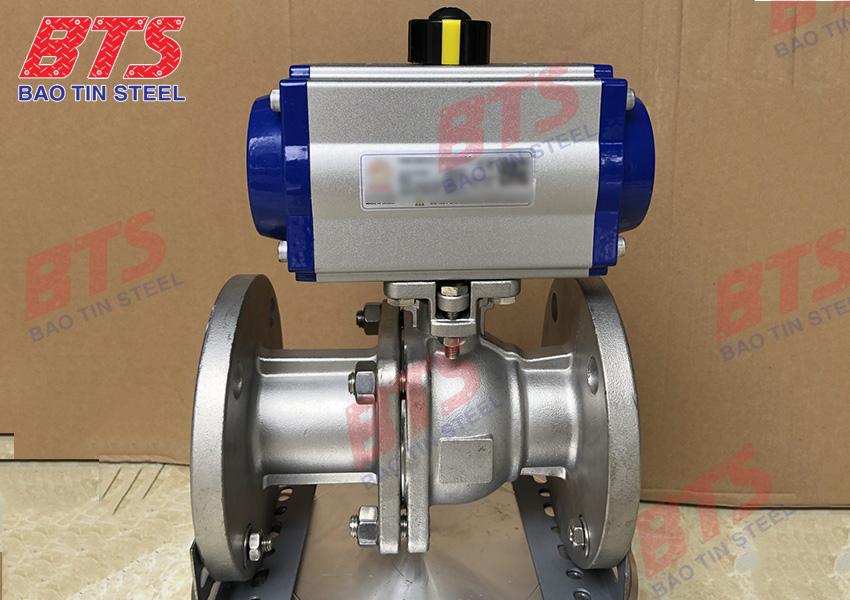
- Pneumatically controlled flange ball valve: This type of ball valve is also automatically controlled. But instead of electricity, it uses pneumatic pressure. It works similarly to an electric control valve, but the ability to open and close is faster, and the price is also cheaper.
Classification by number of valve bodies
The valve body is also an indispensable part of a flanged ball valve. Based on the structure and shape of the valve body, you can divide them into 2 types:
- 2-body flange ball valve: This valve consists of 2 bodies, connected by bolts and nuts. It makes valve maintenance easier. At the same time, it minimizes valve leakage. 3-body flange ball valve: This valve also has
- other names such as 3-piece flange ball valve, 3PC ball valve,… The special structure makes this type of valve easy to install, maintain, and repair when damaged.
Classification by flow direction
Many systems require the flow to be divided into multiple directions. This requires the flanged ball valve to have a suitable structure. Based on these requirements, we have 2-way ball valves and 3-way ball valves. In which:
- 2-way flange ball valve: This is a popular type of ball valve, accounting for about 70% of the current market. As its name suggests, this ball valve allows fluid to pass through and flow in 2 different directions. 3-way flange
- ball valve: Similar to the 2-way type, this valve also helps to direct the flow of fluid. This valve has 2 main types: L and T. Specifically, the valve ball will be drilled with a wide hole in the shape of an L or T for the fluid to pass through.
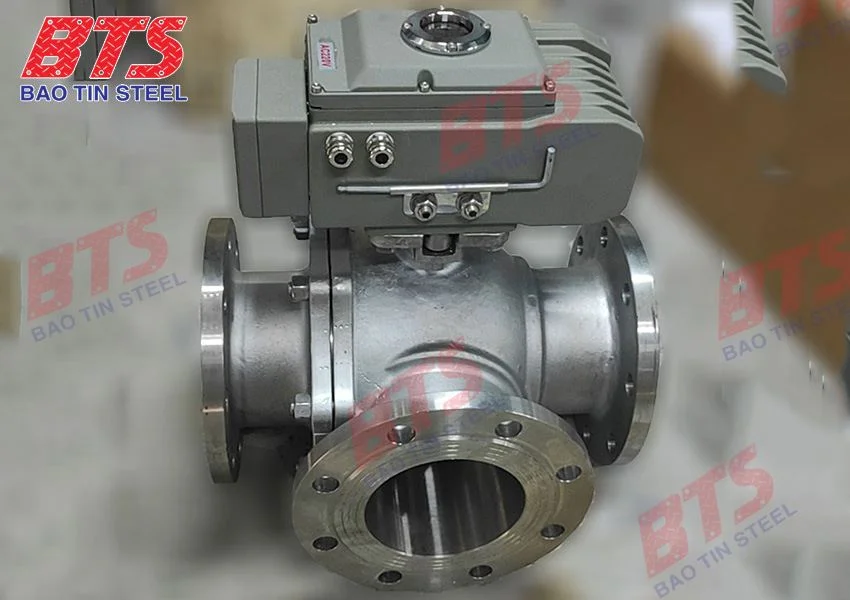
+ With a 3-way T-flange ball valve, fluid can pass through 3 ports at the same time. Or, when necessary, you can choose to close 1 port and let the fluid pass through the remaining 2 ports.
+With the L-shaped 3-way ball valve: This design allows the fluid to enter from one port and exit through the other 2 ports.
Refer to the flange ball valve price list
A stainless steel flange ball valve is a type of ball valve that is commonly used today. The demand for this type of valve is also very large. Therefore, Bao Tin Steel will provide information on the price of stainless steel flange ball valves for everyone. Accordingly, this price also has a difference depending on the standard as well as the size (the table will be specified). In addition, the price also has a difference due to the material, brand, and market situation.
>> Note: Below is only the reference price of the stainless steel flange ball valve. The price may change from time to time. Therefore, if you want to know the latest and most accurate price, please call us via hotline: 0932 059 176.
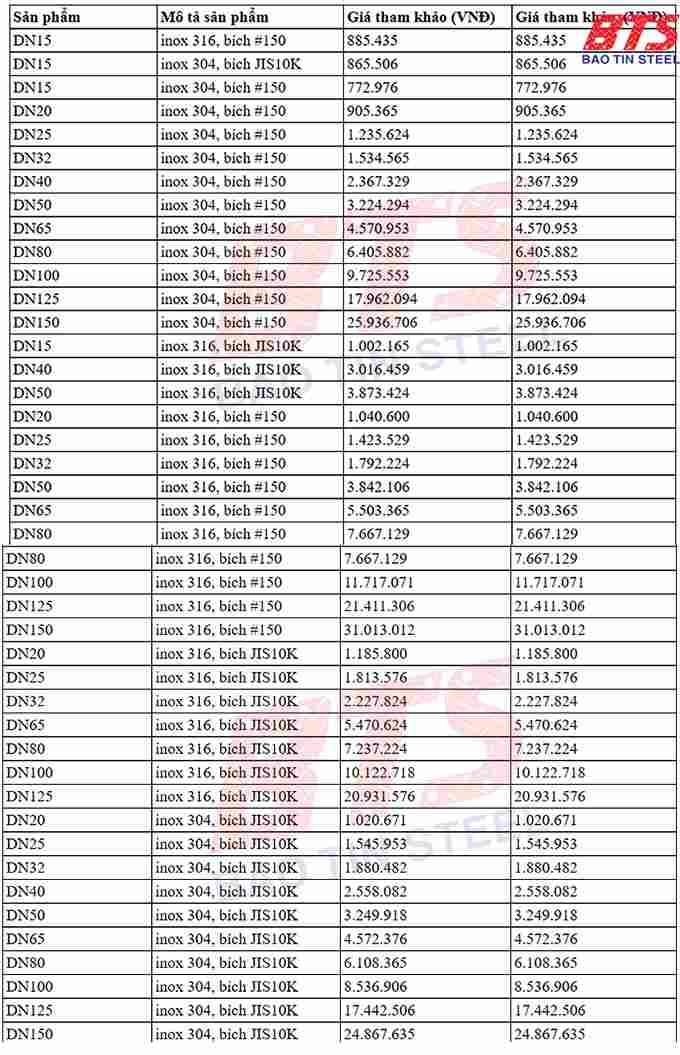 Above is information about flange ball valves as well as the price of this type of valve. You can refer to it, and if you need support, please contact Bao Tin Steel at 0932 059 176!
Tiger Steel is a branch of Bao Tin Steel.